

Burnout is recognized as an increasingly prevalent mental health problem among athletes, with potential to exacerbate other mental and physical health issues. The article, “Mental and physical health outcomes of burnout in athletes: a systematic review and meta-analysis” by Glandorf, Madigan, Kavanagh, and Mallinson-Howard (2025), presents the first comprehensive systematic review and meta-analysis to investigate the association between athlete burnout and various health outcomes.
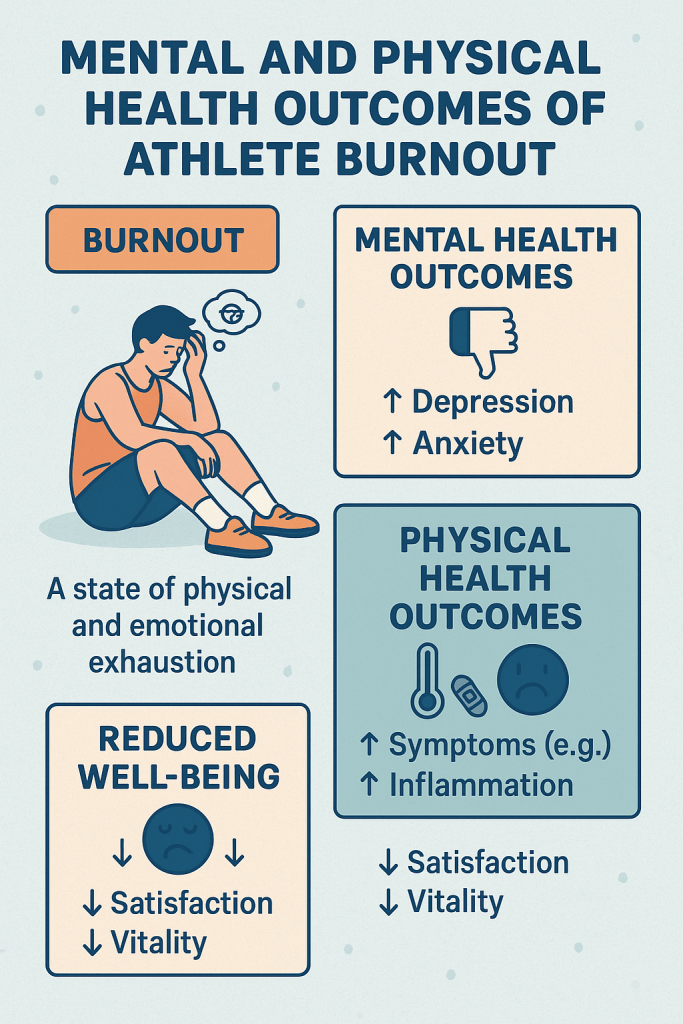
The authors define athlete burnout as a multidimensional psychological syndrome characterized by physical and emotional exhaustion, devaluation (a negative attitude towards one’s sport), and a reduced sense of athletic accomplishment. This condition is increasingly common, with over 10% of athletes potentially experiencing moderate to severe symptoms at some point in a season, and its prevalence has been on the rise for the past two decades. Burnout is theorized to impact health through mechanisms such as allostatic overload, where chronic stress leads to multisystem dysfunction, and through its physiological and behavioral responses as outlined in models like Smith’s (1986) cognitive-affective stress model.
This study synthesized findings from 54 studies, encompassing 13,976 athletes, to examine its links with negative mental health, positive mental health, and physical health outcomes. Key findings from the systematic review and meta-analysis indicate that:
- Athlete burnout is consistently associated with negative mental health outcomes, including depression, anxiety, insomnia, worry, and body image dissatisfaction. The meta-analyses for depression and anxiety showed medium-sized effects.
- Burnout is also linked to decreases in positive mental health outcomes, such as satisfaction (life, team, performance) and subjective vitality/wellbeing. Meta-analyses indicated medium-sized effects for both satisfaction and vitality.
- Evidence for an association between athlete burnout and physical health outcomes was mixed. While there was a consistent association with physical/somatic symptoms (e.g., headaches, dizziness), findings for biomarkers (like cortisol or immune system markers) and physiological indices were less clear or inconsistent across studies. The meta-analysis for physical symptoms showed a medium-sized effect.
- Longitudinal studies provided stronger evidence, showing that burnout can predict increased depression and insomnia over time, and a decrease in life satisfaction.
These findings underscore that burnout has significant negative implications for athletes’ overall health, extending beyond its primary symptoms. The authors emphasize the urgent need for systematic monitoring of athlete well-being, along with the development and implementation of prevention and intervention strategies for burnout in sport, drawing upon insights from occupational contexts where an evidence base already exists.
Reference:
Glandorf, H. L., Madigan, D. J., Kavanagh, O., & Mallinson-Howard, S. H. (2025). Mental and physical health outcomes of burnout in athletes: A systematic review and meta-analysis. International Review of Sport and Exercise Psychology, 18(1), 372–416. https://doi.org/10.1080/1750984X.2023.2225187
Cite this page (APA 7)
Kurutkan, M. N. (2025, July 14). Athlete Burnout: Mental and Physical Health Outcomes. The Health Topics. https://healthtopic.org/topics/athlete-burnout-mental-and-physical-health-outcomes/