

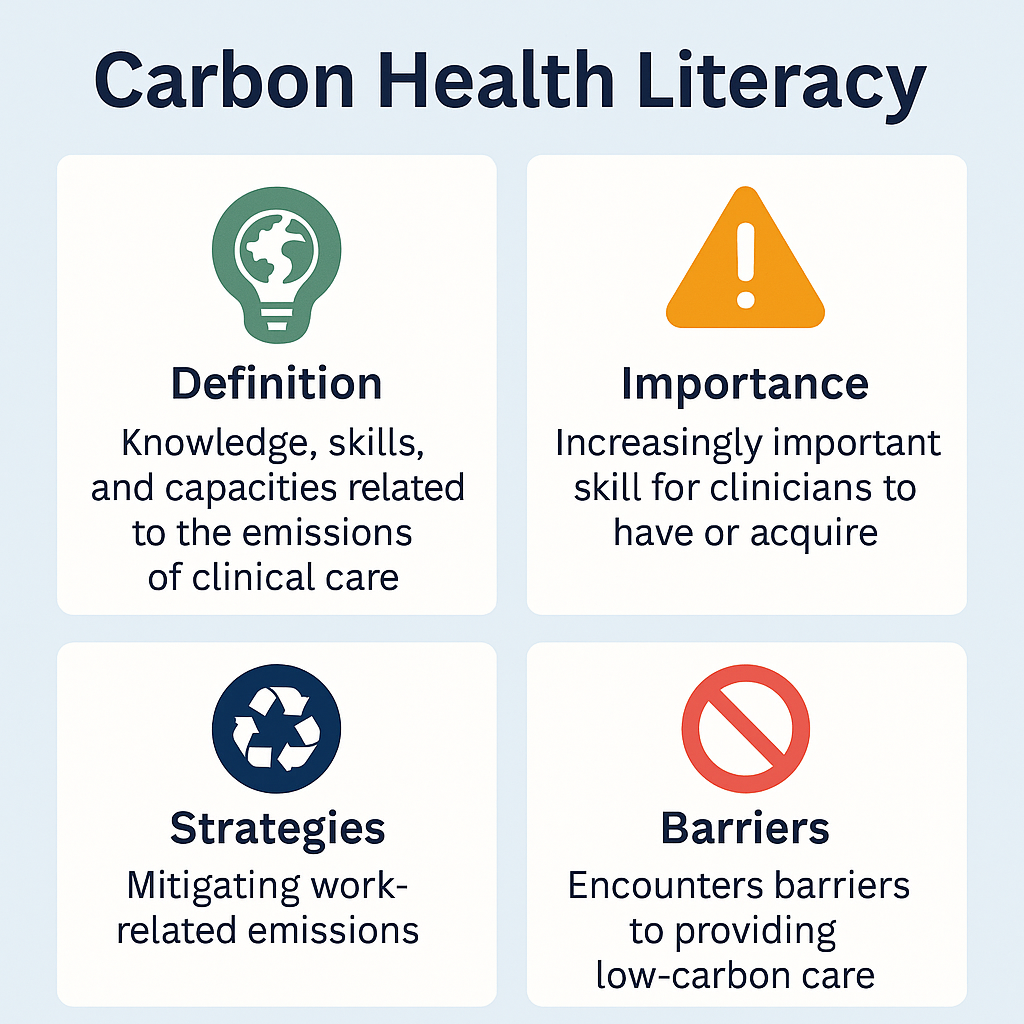
This qualitative study, published in BMC Health Services Research in 2024, delves into the novel concept of ‘carbon health literacy’ among clinicians in Australia and Canada. Authored by Michelle Lynch, Kirsten McCaffery, Alexandra Barratt, Katy Bell, Fiona A. Miller, Forbes McGain, Philomena Colagiuri, and Kristen Pickles, the research addresses the significant environmental impact of healthcare. Clinical care is responsible for at least 50% of the healthcare sector’s total greenhouse gas (GHG) emissions, with Australia and Canada having notably large healthcare GHG footprints. A substantial portion of these emissions comes from harmful or low-value care, which adds avoidable emissions without improving health outcomes. Recognizing clinicians’ influential position to drive emissions reductions, this study aimed to explore their views on ‘carbon health literacy’ and how knowledge, skills, and capacities related to the GHG emissions of clinical care are applied in practice.
The researchers conducted in-depth qualitative interviews with 28 clinicians (15 from Australia and 13 from Canada) between August 2022 and February 2023. Participants were recruited from various clinical specialties, including primary care, nursing, anaesthetics, and emergency medicine, and shared an interest in climate change and healthcare sustainability.
Key findings indicate that clinicians generally perceive carbon health literacy as an increasingly important skill. However, the perceived level of knowledge needed varies by job role, specialty, and individual capacity for system change. While many clinicians reported implementing strategies to mitigate work-related GHG emissions, such as reducing waste or choosing lower-carbon commuting options, there was limited awareness of reducing low-value care as a strategy to decrease emissions. Significant barriers to providing low-carbon care were identified, including managing patient expectations, inadequate training and information, resource constraints, and a limited capacity to generate systemic change within their organizational roles.
The study concludes that building clinicians’ carbon health literacy is crucial to support the delivery of high-value, low-carbon healthcare. This requires not only improving knowledge but also removing existing barriers that impede clinicians’ capacity to practice and promote sustainable clinical care. The authors suggest integrating training on lower-emissions healthcare into clinical education, providing practical toolkits and knowledge aids, and addressing structural and contextual factors that constrain sustainable practices.
Reference for this Article:
Lynch, M., McCaffery, K., Barratt, A., Bell, K., Miller, F. A., McGain, F., Colagiuri, P., & Pickles, K. (2024). Australian and Canadian clinicians’ views and application of ‘carbon health literacy’: a qualitative study. BMC Health Services Research, 24(1), 1457. https://doi.org/10.1186/s12913-024-11903-2
Key concepts in this article
Low-value care Health literacyConcepts link to the Glossary. Explore the knowledge graph →
Cite this page (APA 7)
Kurutkan, M. N. (2025, August 21). Clinicians’ Carbon Health Literacy and Sustainable Care. The Health Topics. https://healthtopic.org/topics/clinicians-carbon-health-literacy-and-sustainable-care/