

Abstract
A safety case is a written, auditable argument, supported by evidence, that a system is acceptably safe for a specific use in a specific context. This chapter is an introductory text for readers who have never met the concept. It first traces the history of the idea from the Robens Report to Piper Alpha and the Cullen Report, and from the Nimrod accident to healthcare and artificial intelligence. It then compares the definitions in the literature on a six-axis conceptual schema. The internal structure of the concept is explained through Toulmin’s model of argument, in terms of claims, arguments, evidence and context, and the safety case is distinguished from neighbouring concepts such as the assurance case, hazard analysis, the safety management system and certification. Five typologies (regulatory regime, life-cycle phase, subject, notation and temporal character) and maturity layers ranging from a simple compliance checklist to dynamic and model-based safety cases are presented. A bibliometric review of the 76 studies that remained after relevance screening of a 140-record Web of Science corpus shows that the literature is concentrated in nuclear waste disposal, that the engineering and machine learning strand has grown markedly since 2016, and that the healthcare strand is still very thin. The chapter closes with the main criticisms of the concept and a practical roadmap for readers in health management.
Keywords: safety case, assurance argument, goal-based regulation, patient safety, health management
1. Introduction: why is saying “it is safe” not enough?
Ask a hospital manager, an aircraft manufacturer or a nuclear plant operator whether their system is safe and the answer will almost always be “yes”. The real question comes next: “How do you know, and how can you show me?” The safety case is the structured answer to that second question. In its shortest form, a safety case is a written and auditable claim, supported by evidence, that a system is safe enough for a given use in a given environment (Bishop & Bloomfield, 1998; Kelly, 1998).
Three words in this definition carry the whole logic of the concept. The first is claim: a safety case is not a measurement or a test result but a proposition that is defended. The second is evidence: the claim is tied to concrete grounds such as test reports, hazard analyses, field data and expert judgement. The third is argument: the logical bridge between evidence and claim, explaining why the evidence supports the claim. A courtroom analogy helps here. The English word “case” already carries the legal meaning of a case file. Just as a prosecutor combines exhibits into a narrative to persuade a jury, a safety case combines technical evidence into an argument to persuade the regulator, the operator and, ultimately, society.
What makes the safety case worth learning is that it is not merely a type of document. It represents a deep shift in how we think about safety: from a prescriptive approach that says “I followed the rules, therefore I am safe” to a goal-based approach that says “I have understood the risks, brought them under control, and I can show you” (Health and Safety Executive [HSE], 2006; Kelly, 2018). This shift moves responsibility from the regulator to the operator. It is no longer enough to say “tell me what to do and I will do it”; the operator must identify the hazards of its own system, choose its own controls and defend their adequacy.
The chapter proceeds like an introductory “101” course. It explains where the concept came from (Section 2), compares definitions on a conceptual schema (Section 3), dissects the internal structure (Section 4), separates the safety case from neighbouring concepts (Section 5), presents its types (Section 6) and builds the concept up layer by layer from the simplest to the most sophisticated form (Section 7). The quantitative picture of the literature (Section 8) and current directions (Section 9) bring the discussion up to date; criticisms (Section 10) and a roadmap (Section 11) complete it. The reader should leave able to say in one sentence what a safety case is and is not, to recognise its parts, and to start a simple safety case draft for their own setting, for example a hospital information system, a clinical decision support tool or a medical device.
2. History of the concept: from Robens to Nimrod, from Nimrod to AI
The safety case was not born in an engineering laboratory but in the inquiry commissions set up after major disasters. Its history can be read in five phases, each bearing the trace of an accident and a report (Figure 1).
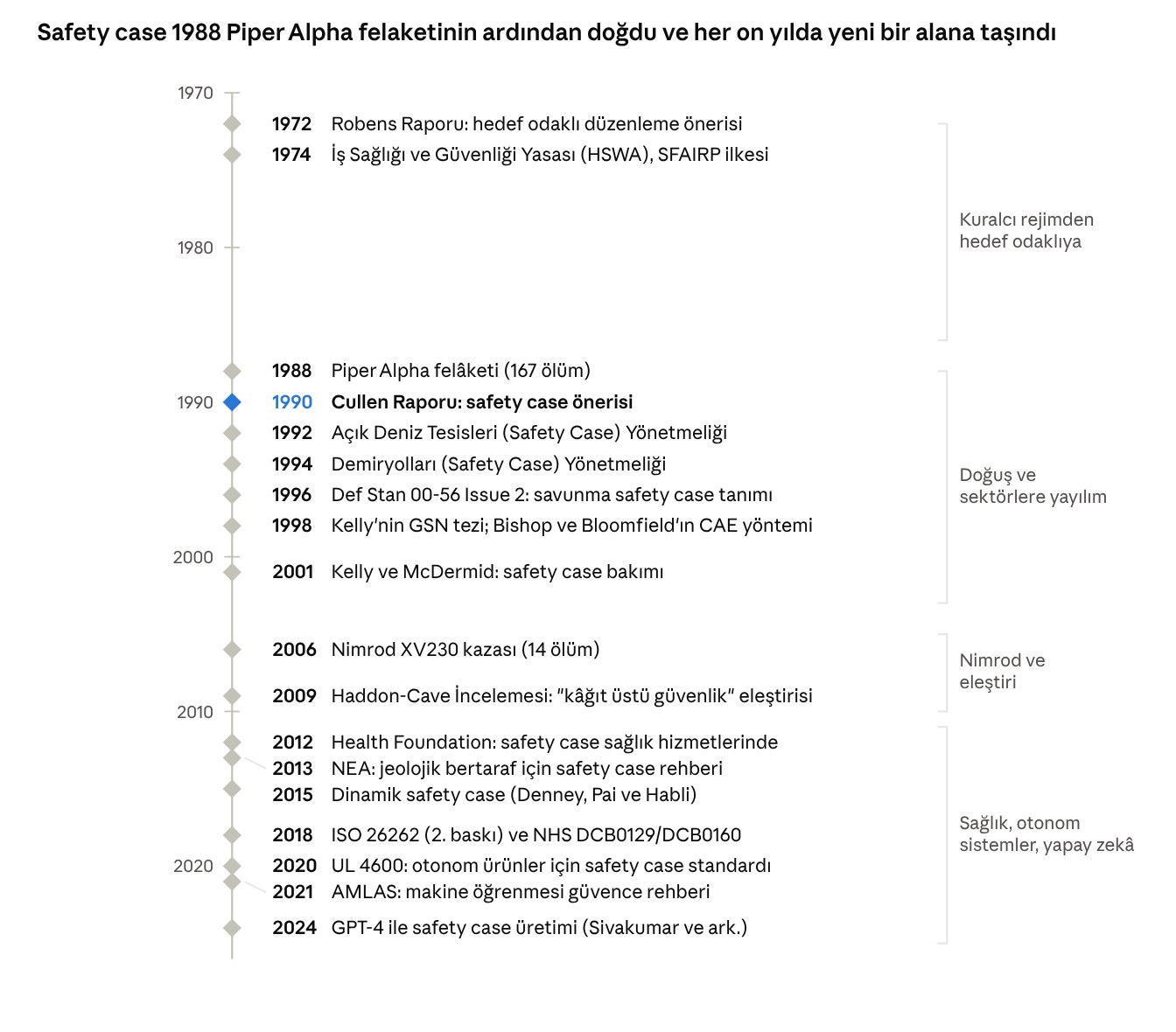
Figure 1. History of the safety case concept: milestones and five phases (1972-2024)
As Figure 1 shows, the decade between 1988 and 1998 was the most intense period, when both the legal and the methodological foundations of the concept were laid; the period after 2010 is a second wave in which the concept moved into new fields.
2.1. From prescriptive to goal-based regulation (1972-1988)
In the early 1970s, occupational safety law in the United Kingdom consisted of hundreds of detailed, sector-specific and prescriptive regulations. The committee chaired by Lord Robens identified two weaknesses in its 1972 report: the rules lagged behind technology, and operators regarded safety as “the state’s job” (Robens, 1972). The remedy was to give responsibility to the party that creates the risk and to shift legislation from detailed rules to general goals (goal-setting regulation). The Health and Safety at Work etc. Act 1974 enacted this philosophy and made “so far as is reasonably practicable” (SFAIRP) a legal standard (HSE, 2006). This phrase is the legal root of the notion of “adequately safe” that later became the core of the safety case. At the same time, the nuclear industry already required licensees to justify the safety of their plants, which is why some authors locate the origin of the safety case in nuclear safety justification (Bloomfield & Bishop, 2010; Kelly, 2018).
2.2. Piper Alpha and the Cullen Report: the birth of the safety case (1988-1992)
On the night of 6 July 1988, a gas leak on the Piper Alpha oil platform in the North Sea led to a series of explosions and fires that killed 167 people. Lord Cullen’s 1990 inquiry showed that the disaster happened even though the platform appeared to comply with all applicable rules (Cullen, 1990). Complying with the rules was not the same as being safe. Cullen’s central recommendation was that every operator should prepare and submit to the regulator a document identifying the major hazards of the installation, explaining how they were controlled and demonstrating that the safety management system was adequate. That document was called the “safety case”, and the recommendation took effect through the Offshore Installations (Safety Case) Regulations 1992. For the first time the safety case became a legal duty: the installation could not operate until the regulator had accepted it. Two features became clear in this period. The subject of the document was a facility and its operation, not a product; and the document was not a one-off approval but a living document to be updated whenever the installation changed.
2.3. Spread to defence, rail and nuclear (1990s-2000s)
The Cullen model spread quickly to other high-risk sectors. The UK Ministry of Defence made the safety case a mandatory part of military procurement through Defence Standard 00-56 (first issued in 1991, revised in 1996), which also gave the concept one of its most quoted definitions (Ministry of Defence [MoD], 2007). The Railways (Safety Case) Regulations 1994 and the engineering safety management guidance known as the “Yellow Book” established a similar regime for railways (Railtrack, 2000). In the nuclear field, Lord Cullen’s report on the Ladbroke Grove rail accident (Cullen, 2001) and the regulator’s Safety Assessment Principles placed the safety case at the centre (Office for Nuclear Regulation, 2014).
In the same years the concept developed a separate lineage in the geological disposal of nuclear waste. Because the safety of a facility that must perform for tens of thousands of years cannot be shown through conventional testing and experience, the OECD Nuclear Energy Agency (NEA) and the International Atomic Energy Agency developed a post-closure safety case built on multiple lines of evidence, uncertainty management and transparency (NEA, 2013; Mohanty & Sagar, 2002). As Section 8 shows, this lineage now accounts for the largest share of journal publications on the safety case.
This diffusion turned the concept from a regulatory document into a research topic. Tim Kelly’s doctoral thesis at the University of York (Kelly, 1998) argued that the essence of a safety case is the argument, not the document, and developed the Goal Structuring Notation (GSN) to express that argument visually. In the same years, Bishop and Bloomfield (1998) of Adelard proposed the Claims-Arguments-Evidence (CAE) approach and a methodology for safety case development. These two works mark the transition from the “narrative document” era to the “structured argument” era.
2.4. The Nimrod accident and the Haddon-Cave critique (2006-2009)
On 2 September 2006, an RAF Nimrod MR2 aircraft (XV230) caught fire in the air over Afghanistan and crashed, killing all 14 crew. Charles Haddon-Cave’s independent review in 2009 found that the safety case prepared for the aircraft between 2001 and 2005 had failed to identify the design hazard that caused the loss, and described the process as lamentable from start to finish (Haddon-Cave, 2009). The report targeted not the concept itself but its degeneration in practice: documents had become excessively long and impenetrable, their preparation had been outsourced to consultants who did not know the platform, the aircraft was assumed safe because it had flown for thirty years, and the safety case had become a tick-box exercise filled in to reach the desired answer. Haddon-Cave called this “paper safety”.
The lasting contribution of the review was to clarify what a good safety case should look like. According to Haddon-Cave, it should be succinct, home-grown, accessible, proportionate, easy to understand and document-lite; he even proposed renaming it a “risk case” to remind everyone that its real function is the active management of risk (Haddon-Cave, 2009). The Nimrod review is regarded as a turning point, and almost every subsequent critical study refers to it (Leveson, 2011; Sujan et al., 2016).
2.5. Healthcare, autonomous systems and artificial intelligence (after 2010)
The 2010s carried the safety case into two new fields. The first was healthcare. The Health Foundation’s cross-sector review (Health Foundation, 2012) and subsequent academic work (Sujan et al., 2016, 2017) discussed whether the safety case could be transferred to hospitals. In the same period, the English National Health Service required manufacturers (DCB0129) and deploying organisations (DCB0160) to prepare clinical safety cases for health IT systems (NHS Digital, 2018a, 2018b). The second field was software-intensive and autonomous systems. The automotive functional safety standard ISO 26262 required a safety case from manufacturers (International Organization for Standardization [ISO], 2018), and UL 4600 established an evaluation framework for autonomous products built entirely on the safety case (Underwriters Laboratories [UL], 2020).
In the 2020s the concept was adapted to systems containing machine learning. The University of York’s guidance on the Assurance of Machine Learning for use in Autonomous Systems (AMLAS) defined argument patterns for learning components (Hawkins et al., 2021), and assurance arguments were developed for AI-supported clinical decision systems (Habli et al., 2020; Picardi et al., 2020). In forty years, a concept invented for the steel platform of Piper Alpha has become a tool for defending the safety of a hospital information system or an AI model. The lesson of this history is clear: every transformation of the safety case grew out of an inquiry that began with the sentence “we followed the rules, but the accident happened anyway”.
3. How is a safety case defined? Definitions and a conceptual schema
There is no single accepted definition of the safety case, but most definitions share the same core and differ along a small number of axes. Table 1 presents the most cited definitions in chronological order.
| Source | Field | Original wording (abridged) |
|---|---|---|
| Offshore Installations (Safety Case) Regulations (1992); HSE (2006) | Offshore oil and gas | A document demonstrating that the duty holder has the ability and means to control major accident risks effectively |
| Kelly (1998) | Systems engineering (York) | A clear, comprehensive and defensible argument that a system is acceptably safe to operate in a particular context |
| Bishop and Bloomfield (1998) | Software and system safety (Adelard) | A documented body of evidence that provides a convincing and valid argument that a system is adequately safe for a given application in a given environment |
| Defence Standard 00-56 (MoD, 2007) | Defence | A structured argument, supported by a body of evidence, that provides a compelling, comprehensible and valid case that a system is safe for a given application in a given environment |
| Haddon-Cave (2009) | Military aviation | A reasonable confirmation that the risks have been identified and are being properly managed (“risk case”) |
| ISO/IEC/IEEE 15026-2 (2022) | General assurance (assurance case) | A reasoned, auditable artifact that supports the contention that its top-level claim is satisfied, including systematic argumentation, underlying evidence and explicit assumptions |
| Health Foundation (2012); Sujan et al. (2016) | Healthcare | A structured argument, supported by evidence, intended to justify that a system is acceptably safe for a specific application in a specific operating environment |
| ISO 26262-1 (ISO, 2018) | Automotive | An argument that functional safety is achieved, satisfied by evidence compiled from work products of development activities |
| UL 4600 (UL, 2020) | Autonomous vehicles | A structured argument, supported by a body of evidence, that provides a compelling, comprehensible and valid case that a system is acceptably safe for a given application in a given environment |
Table 1. Core definitions of the safety case (chronological).
3.2. Six axes along which the definitions diverge
Read carefully, the definitions share an obvious core: a claim, an argument that supports it, evidence that holds the argument up, and a context in which the claim holds. The differences cluster on six axes, shown together with the core in Figure 2.
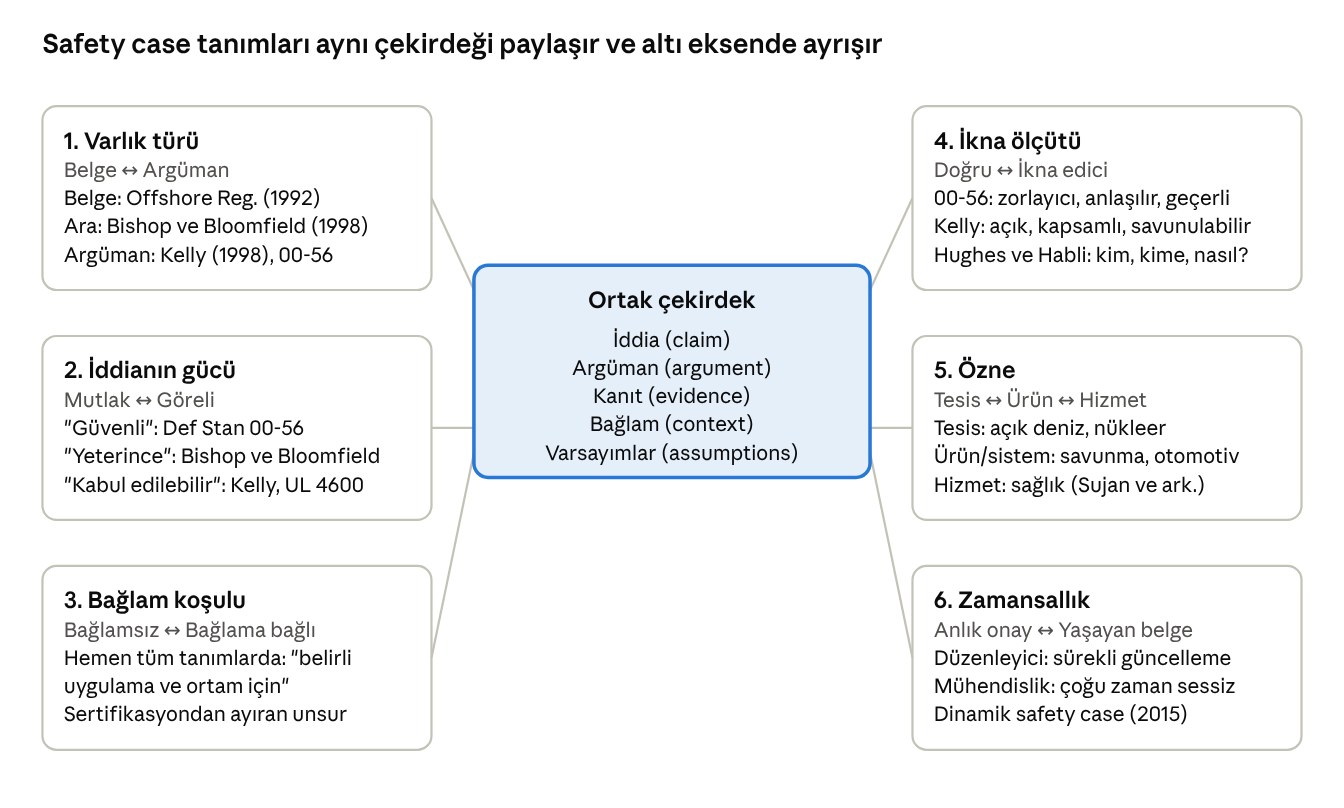
Figure 2. Conceptual schema of safety case definitions: the shared core and six axes of divergence
- Type of entity: document or argument? Early regulatory definitions describe the safety case as a document submitted to the regulator. Kelly (1998) and Def Stan 00-56 stress that the essence is the argument and that the document only carries it; Bishop and Bloomfield’s “documented body of evidence” sits in between. The distinction matters: a document-centred view carries the risk of the “paper safety” that Haddon-Cave criticised, while an argument-centred view brings the logical structure to the fore (Kelly, 2018).
- Strength of the claim: “safe” or “safe enough”? Def Stan 00-56 says “safe”; Bishop and Bloomfield say “adequately safe”; Kelly and the Health Foundation say “acceptably safe”; Haddon-Cave speaks of risks being managed. Because absolute safety cannot be defended, the literature has moved towards relative wording, which in turn requires risk acceptance criteria such as ALARP (as low as reasonably practicable) to be part of the safety case (HSE, 2006).
- Context condition: “for a given application and environment”. Almost every definition includes this condition, and it is what most clearly separates a safety case from product certification. A device that is safe in an intensive care unit may not be safe at home; a safety case is always the safety case of a context.
- Persuasion criterion: persuasive to whom, and how? Def Stan 00-56’s triad (compelling, comprehensible, valid) and Kelly’s triad (clear, comprehensive, defensible) acknowledge that the safety case has a rhetorical dimension: the argument must be not only correct but able to convince an independent reader.
- Subject: facility, system, product or service? In offshore and nuclear definitions the subject is a facility and its operation; in defence and automotive definitions it is a system or product; healthcare definitions extend it to a service or clinical process (Sujan et al., 2016). When the subject changes, so do the types of evidence: maintenance records for a facility, test reports for a product, incident reports and process indicators for a service.
- Temporality: one-off approval or living document? Regulatory definitions require updating throughout operation, whereas engineering definitions are often silent on this. This axis is the origin of the debate on dynamic safety cases discussed in Section 9 (Denney et al., 2015).
3.3. Working definition used in this chapter
Taking these axes into account, the chapter adopts the following working definition: a safety case is a justification that defends, through a structured argument based on auditable evidence and under explicitly stated assumptions and context, the claim that a given system or service is acceptably safe in a given application and operating environment, and that is updated for as long as the system lives. The definition places the argument at the core and the document as its carrier, makes a relative rather than an absolute safety claim, keeps the context condition and builds temporality into the definition.
4. Internal structure: claim, argument, evidence and context
To understand a safety case it must be taken apart. Its parts are not new; they go back to the philosopher Stephen Toulmin’s study of the structure of everyday arguments (Toulmin, 1958). The safety case literature translated this structure into engineering language and embodied it in two main notations: GSN (Kelly, 1998; Assurance Case Working Group [ACWG], 2021) and CAE (Bishop & Bloomfield, 1998; Bloomfield & Netkachova, 2014).
4.1. From Toulmin to the safety case: anatomy of an argument
For Toulmin, every argument has six elements: the claim being defended, the data or grounds on which it rests, the warrant explaining why the data support the claim, the backing that supports the warrant, a qualifier that limits the strength of the claim and a rebuttal stating when the claim would not hold. An everyday example: “This drug can be given to the patient” (claim), “because there is no allergy record and the dose calculation is correct” (data), “drugs with no recorded allergy and a correctly calculated dose can be given safely” (warrant), “the hospital protocol and the pharmacology literature say so” (backing), “probably” (qualifier), “unless the patient record is out of date” (rebuttal).
A safety case is a large-scale, hierarchical version of this structure. At the top sits a single top-level claim (“System X is acceptably safe in environment Y”). That claim is decomposed into sub-claims small enough to be defended; each sub-claim is either broken down further or linked directly to evidence. The result is a tree with the top claim at the root and evidence at the leaves. Toulmin’s warrant corresponds to the “strategy” or “argument” nodes of this tree, while his qualifier and rebuttal correspond to “assumption” and “context” elements (Figure 3).
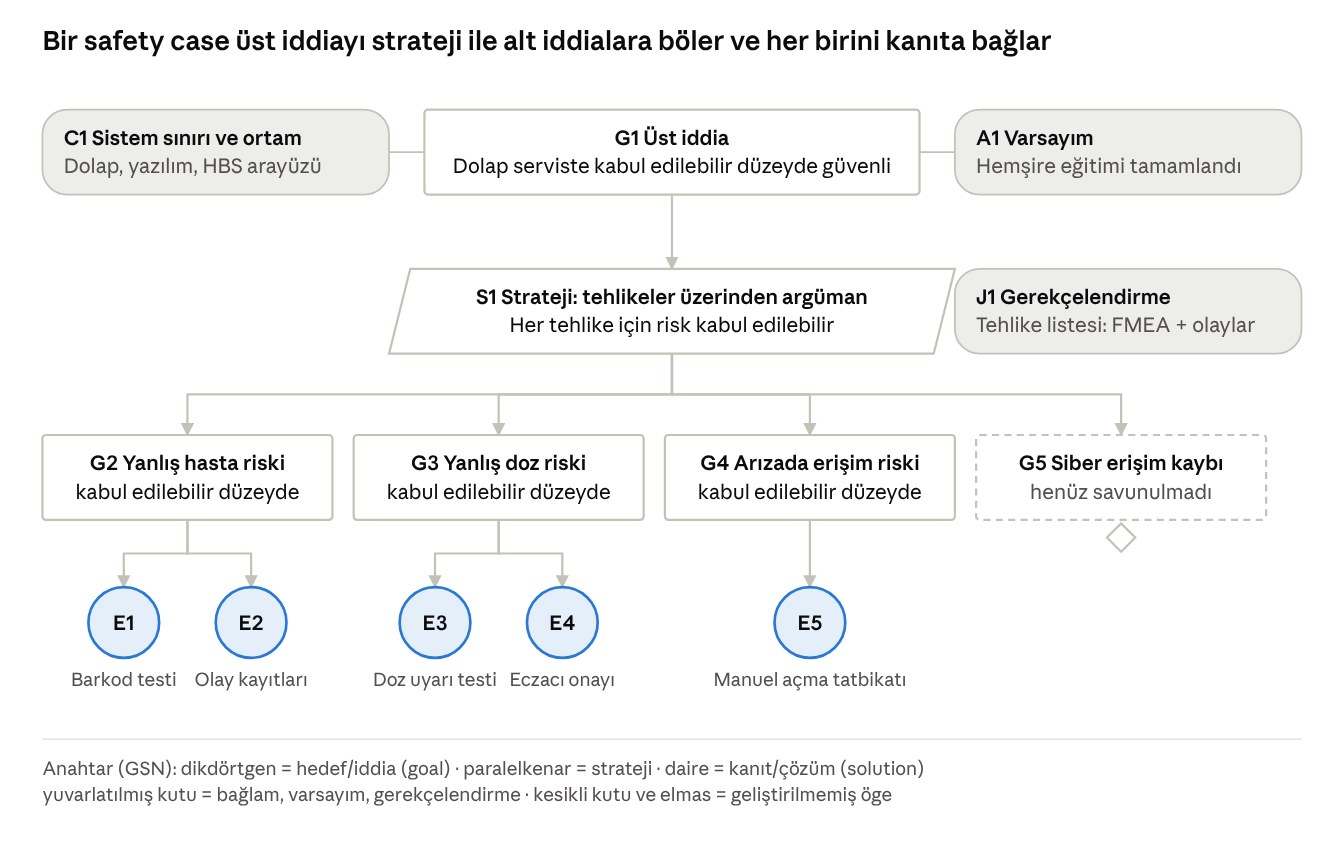
Figure 3. Anatomy of a safety case: the medication cabinet example from Section 4.3 in GSN form
In the figure, arrows indicate the “is supported by” relation: the top claim is decomposed through a strategy into sub-claims, sub-claims are linked to evidence, and context, assumption and justification elements are attached to the nodes they qualify.
4.2. Core components
Claim (goal). A clear proposition that can be true or false. A good claim is measurable and bounded: “the system is safe” is a poor claim; “the medication cabinet has reduced the hazard of giving a drug to the wrong patient to an acceptable level” is a good one. In GSN, claims are called goals and drawn as rectangles (ACWG, 2021).
Argument or strategy. The logical step explaining how a claim is broken into sub-claims. The most common strategies argue over hazards (“show that the risk of every identified hazard is acceptable”), over requirements (“show that every safety requirement is met”), over the life cycle (“show that safety is assured in design, production and operation”) and over components (Kelly, 1998). In GSN a strategy is drawn as a parallelogram; in CAE it is a separate “argument” element.
Evidence (solution). The leaves of the argument tree, linking the claim to the outside world. Evidence takes many forms: hazard analysis results (FMEA, HAZOP, STPA), test and verification reports, formal proofs, field and incident data, audit findings, expert judgement and process compliance records. Two properties matter: relevance (the evidence really supports that claim) and trustworthiness (the evidence itself is correct) (Hawkins & Kelly, 2010). In GSN, evidence is drawn as a circle labelled “solution”.
Context. Defines the conditions under which the claim holds: system boundaries, operating environment, user profile, applicable standards and definitions. The risk acceptance criterion that says what “acceptably safe” means is also a context element.
Assumption. A proposition accepted as true but not proven within the safety case, for example “nurses have completed basic training on the system” or “power cuts do not exceed 30 minutes”. Assumptions must be written down explicitly, because only then can we see which branch of the argument collapses when one of them fails.
Justification. A short note explaining why a particular strategy or criterion is appropriate, for example “the hazard list is considered sufficient because it is based on the institution’s incident records for the last five years and a HAZOP study”.
Undeveloped element. Marks claims that are not yet supported. The honesty of a safety case depends on not hiding its gaps; this marker is the institutional way of saying “this has not been defended yet”.
4.3. A simple example: a hospital medication cabinet
Imagine that a hospital installs automated dispensing cabinets on its wards. The leanest possible safety case skeleton could look like this:
- Top claim (G1): The automated dispensing cabinet is acceptably safe on the internal medicine wards of Hospital X. Context C1: system boundary (cabinet hardware, software, interface to the hospital information system and nursing workflow). Context C2: acceptance criterion (no residual risk rated “medium” or higher in the institution’s risk matrix). Assumption A1: user nurses have completed system training.
- Strategy (S1): Argue by showing that the risk of each identified hazard has been reduced to an acceptable level. Justification J1: the hazard list was derived from an FMEA study and three years of medication error reports.
- Sub-claim (G2): The risk of giving a drug to the wrong patient is acceptable. Evidence E1: success report of barcode patient verification testing. Evidence E2: incident records showing zero wrong-patient events during the pilot.
- Sub-claim (G3): The risk of administering the wrong dose is acceptable. Evidence E3: verification test of dose limit alerts. Evidence E4: audit record of the pharmacist approval workflow.
- Sub-claim (G4): The risk of delayed access to medication when the system fails is acceptable. Evidence E5: manual override procedure and drill records. Undeveloped (G5): the risk of loss of access due to a cyber security incident has not yet been defended.
Even in this minimal form the skeleton shows what a safety case does: it splits the claim, links each part to evidence, writes down its assumptions and does not hide what remains undefended. Section 7 enriches the same example layer by layer.
5. Distinguishing the safety case from neighbouring concepts
The safety case sits next to many concepts in the safety literature and is often confused with them, mainly because most of them are its input, its output or its carrier.
Safety case and assurance case. The assurance case is the generalised parent concept. The same claim-argument-evidence structure can be used for properties other than safety: security, dependability, privacy and even ethical compliance. ISO/IEC/IEEE 15026 defines this general structure; a safety case is a particular assurance case whose top claim concerns safety (ISO/IEC/IEEE, 2022; Rushby, 2015).
Safety case and safety argument. The safety argument is the logical backbone of the safety case, the chain of reasoning that links claims to evidence. The safety case is the whole that contains the argument plus the evidence itself, the context, the assumptions and management information such as version, owner and approval (Kelly, 1998). The argument is the skeleton; the safety case is the whole body. A GSN diagram is therefore a visual summary of the argument, not the whole safety case.
Safety case, hazard analysis and risk assessment. Hazard analysis and risk assessment are the main producers of evidence. Methods such as FMEA, HAZOP, fault tree analysis and STPA answer the question “which hazards exist, how likely and how severe are they?”. The safety case takes these answers and defends the question “taken together, is the system safe enough?”. A risk assessment alone is therefore not a safety case; the safety case is the superstructure that places the risk assessment within a hierarchy of claims and makes its gaps visible (Leveson, 2011). As Leveson argues, a safety case cannot replace a good hazard analysis, but it cannot be written without one either.
Safety case and safety management system (SMS). The relationship is two-way. In offshore and rail regimes the SMS is a mandatory part of the safety case, since the operator must show within it that it has an adequate management system to control the hazards (Cullen, 1990). Conversely, the SMS keeps the safety case alive: change management, incident investigation and periodic review keep it current. In short, the SMS answers “how do we manage?”, and the safety case answers “how do we show that we manage?”.
Safety case, safety report and certification. The term “safety report” comes from the European Union’s major industrial accident legislation (the Seveso Directives) and is very close in content to the safety case; the difference lies mostly in legal tradition (Maguire, 2006). Certification is a third party’s confirmation that a product conforms to a standard; it is standard- and product-centred, whereas the safety case is context- and argument-centred. The two are not mutually exclusive: ISO 26262 and UL 4600 base certification itself on a safety case, and Hawkins et al. (2013) argue that prescriptive certification and argument-based assurance complement each other. A safety plan describes in advance how the safety case will be produced, and a hazard log is the live record in which hazards and their status are tracked; both are supporting documents around the safety case.
| Concept | Core question | Relation to the safety case | Distinguishing difference |
|---|---|---|---|
| Assurance case | Is the top claim (any property) satisfied? | Parent concept; the safety case is its safety-focused type | The claim is not limited to safety |
| Safety argument | Why does the evidence support the claim? | Logical backbone of the safety case | Does not include the evidence itself or management information |
| Hazard analysis / risk assessment | What hazards exist and how large is the risk? | Main source of evidence (input) | Analytical product without an overall judgement |
| Safety management system | How do we manage safety? | Both a part of the safety case and the mechanism that keeps it alive | An organisational process, not an argument |
| Safety report (Seveso) | Does the facility control major accident risk? | Functional equivalent in the continental European tradition | Difference in legal framework and terminology |
| Certification | Does the product conform to the standard? | Can use a safety case as input | Standard- and product-centred, independent of context |
| Safety plan | How will the safety case be produced? | Preparatory document (precursor) | Describes the process, does not defend safety |
| Hazard log | What are the hazards and their status? | Live evidence source and tracking tool | A list; does not build an argument |
Table 2. The safety case compared with neighbouring concepts.
The practical consequence is that an organisation cannot claim to “have a safety case” merely because it holds a comprehensive risk assessment, a functioning SMS and valid certificates. A safety case is a distinct intellectual effort that unites all of these around a single defensible claim and makes the gaps between them visible.
6. Types of safety case: five typologies
There is no single answer to the question “how many kinds of safety case are there?”, because the literature classifies safety cases along different axes and the same safety case falls somewhere on each. Specifying a position on each of the five axes below is enough to describe a safety case, for example “a goal-based, operational-phase, service-focused, GSN-based, static safety case”.
By regulatory regime: prescriptive and goal-based. Under a prescriptive regime the regulator says in detail what must be done, and the “safety case” is largely a file documenting compliance. Under a goal-based regime the regulator sets only the goal (“risks shall be ALARP”) and leaves to the operator how to reach it and how to show that it has been reached. The safety case acquires its full meaning under the second regime (HSE, 2006; Kelly, 2018). In practice most safety cases are mixed: some branches are defended through compliance with standards and others through original risk arguments; Hawkins et al. (2013) show that the two approaches are complementary. A further distinction separates the regulatory safety case imposed by a regulator from the voluntary or internal safety case prepared for an organisation’s own decision making; most models proposed for healthcare are of the second type (Sujan et al., 2016).
By life-cycle phase: preliminary, interim and operational. The defence tradition defines three phases (MoD, 2007; Kelly, 1998). The preliminary safety case sets out hazards and argument strategy at the start of design; the interim safety case adds evidence as the design matures; the operational safety case includes operational evidence (incident data, maintenance and training records) once the system enters service. Some regimes add a decommissioning safety case, one of the most critical phases in the nuclear field. An important notion here is the safety case report: whereas the safety case is a continuously updated body of evidence and argument, the report is a snapshot at a given moment. The NHS clinical safety case report is used in this sense (NHS Digital, 2018a).
By subject: facility, product, software and service. The site or installation safety case comes from the offshore and nuclear tradition; the product or system safety case from defence, automotive and medical devices; the software safety case developed as a sub-branch with its own argument patterns (Hawkins et al., 2013; Weaver, 2003); and the service or operational safety case is the newest type, whose subject may be a clinical process, an ambulance service or the functioning of a hospital unit (Health Foundation, 2012; Sujan et al., 2017). Railway standards add a graded distinction between generic product, generic application and specific application safety cases (CENELEC, 2018), which is also the logic behind the manufacturer (DCB0129) and deploying organisation (DCB0160) split for health IT: the manufacturer defends the product and the hospital defends its use in its own environment.
By notation: text, GSN, CAE and SACM. The earliest safety cases were entirely narrative, with the argument hidden in prose. Kelly’s (1998) GSN turns the argument into a diagram, now maintained as a community standard (ACWG, 2021). CAE works with three simpler elements, for which Bloomfield and Netkachova (2014) proposed a library of building blocks. The Object Management Group’s Structured Assurance Case Metamodel (SACM) unites GSN and CAE in a common meta-language and allows exchange between tools (Object Management Group [OMG], 2020; Wei et al., 2019). Tabular safety cases (hazard-control-evidence tables) are also common in regulatory summaries. The choice of notation is not innocent: graphical notations make gaps visible and ease review, but they risk making causality look too tidy and creating an illusion of completeness (Greenwell et al., 2006).
By temporal character: static and dynamic. The classic safety case is static: completed and approved at a point in time and updated manually when something changes. The dynamic safety case proposes a model in which the argument is continuously fed by operational data, evidence is monitored automatically and the relevant branch is flagged when an assumption fails (Denney et al., 2015). Two intermediate types can be added: the modular safety case, which divides the argument for large systems into modules linked by contracts so that only the affected module needs to be re-argued after a change (Kelly, 2001; Fenn et al., 2007), and the confidence case or confidence argument, a second argument accompanying the safety case that separately defends how far we can trust the safety argument itself (Hawkins et al., 2011).
| Typology axis | Types | Distinguishing question |
|---|---|---|
| Regulatory regime | Prescriptive / goal-based; mandatory / internal | Who sets the goal and who chooses the path? |
| Life-cycle phase | Preliminary / interim / operational / decommissioning; safety case report | Which phase is the system in, and how mature is the evidence? |
| Subject | Facility / product-system / software / service; generic / specific | What exactly is being defended as safe? |
| Notation | Narrative / tabular / GSN / CAE / SACM | How is the argument made visible? |
| Temporal character | Static / modular / dynamic; confidence case | How does the argument respond to change? |
Table 3. Summary of safety case typologies.
7. From the simplest to the most sophisticated: five maturity layers
This section treats the safety case as a ladder. Each step builds on the previous one, answers a question that the previous one could not, and brings a new cost in complexity. The medication cabinet example is revisited at each step (Figure 4). “Layer” carries no value judgement: for a small, low-risk system Layer 2 may be sufficient or even ideal, which is exactly what Haddon-Cave’s principle of proportionality says.

Figure 4. The five maturity layers of the safety case (six steps including Layer 0, the compliance checklist)
Layer 0: compliance checklist. At the bottom there is no safety case yet, only a compliance checklist. The organisation lists the relevant standards and regulations, writes “compliant” next to each and attaches documents: “the device is CE marked, the manufacturer holds ISO 13485 certification, installation follows the manufacturer’s instructions”. Its strengths are simplicity and auditability; its weakness is the lesson of Piper Alpha: compliance does not guarantee that the hazards of this organisation in this environment are covered. The checklist answers “what did we do?”, not “why is it enough?”.
Layer 1: narrative safety case. The first real safety cases were narrative documents that introduce the system, list hazards, describe controls and declare the system safe in a concluding section; most early post-Cullen offshore safety cases were of this kind (Cullen, 1990; Maguire, 2006). For the medication cabinet this means a 20-30 page report summarising the FMEA results, describing controls such as barcode verification and pharmacist approval and ending with “with these measures the system is considered safe”. The progress over Layer 0 is large, since organisation-specific hazards and context now appear, but the argument stays hidden in prose. To see which evidence supports which claim, which hazard has no evidence and which assumption was made silently, one must read the whole document and reconstruct it mentally. The unread safety cases of hundreds of pages criticised by Haddon-Cave are the pathological form of this layer.
Layer 2: structured argument. The third step lifts the argument out of prose into an explicit structure. This is Kelly’s (1998) key contribution: the essence of the safety case is the argument, and the argument must be made visible. The claim tree drawn in GSN or CAE is the skeleton of Section 4.3. Three things are gained: gaps become visible (no evidence under the cyber security branch is obvious at a glance); the relevance of evidence becomes open to question (does the barcode test report really support the claim that the wrong-patient risk is acceptable, or only that the barcode reader works?); and review becomes easier, because each branch can be examined separately. Greenwell et al. (2006) compiled a taxonomy of common logical fallacies in safety arguments, such as irrelevant evidence, circular reasoning and appeal to authority. Layer 2 is the minimum level meant today by “good practice”.
Layer 3: patterns, modules and contracts. When structured arguments scale up, two problems appear: building every argument from scratch is wasteful, and trees for large systems become unmanageable. Argument patterns turn recurring forms of argument into reusable templates, such as hazard-directed or ALARP patterns (Kelly & McDermid, 1997). The modular safety case splits the argument into components and defines their dependencies through safety case contracts (Kelly, 2001; Fenn et al., 2007). In the medication cabinet example, the manufacturer’s generic argument module and the hospital’s application module for its own workflow are joined by a contract: the manufacturer guarantees that the device keeps working offline during network outages of less than 30 seconds, and the hospital argues how often it experiences longer outages and how it manages them. When a software update arrives, only the manufacturer’s module needs to be re-argued. This layer also explains why DCB0129 and DCB0160 are two separate standards.
Layer 4: confidence arguments, defeaters and eliminative induction. The fifth step is the most philosophical and asks: how far can we trust the argument itself? Evidence at every leaf of a GSN tree does not make the argument true; the evidence may be weak, the strategy incomplete or an assumption false. Hawkins et al. (2011) propose separating the safety argument (“the system is safe”) from the confidence argument (“this argument can be trusted to this extent, for these reasons”), linked through assurance claim points. Goodenough, Weinstock and Klein (2012) propose eliminative induction: confidence arises not from the quantity of supporting evidence but from systematically searching for and eliminating the reasons that could defeat the claim (defeaters). For the claim that barcode verification prevents wrong-patient administration, defeaters are listed: can a nurse take the drug without scanning the wristband, can two patients’ wristbands be swapped, does the system allow manual override when the reader fails? For each defeater either evidence or an accepted residual risk is recorded. Rushby (2015) takes this further with the criterion of indefeasibility: a good argument is one in which no known defeater remains unanswered. Bloomfield and Rushby (2020) bring this body of work together as “Assurance 2.0”, combining the deductive skeleton of the argument with its dialectical testing against counter-claims, and Denney, Pai and Habli (2011) discussed whether confidence can be quantified. Searching for defeaters takes time and expertise, but it is the strongest methodological answer to Haddon-Cave’s criticism of safety cases written to reach the desired answer; it is an institutionalised antidote to confirmation bias.
Layer 5: dynamic, model-based safety cases and learning systems. At the top step the safety case stops being a document and becomes a living model. Three developments define this layer. The first is the dynamic safety case (Denney et al., 2015): the leaves of the argument are linked to operational data, so that the “zero wrong-patient events” evidence is fed automatically from the incident reporting system and the branch is flagged for re-evaluation when an event is reported. The second is model-based assurance: metamodels such as SACM turn the safety case into a machine-processable data structure, automating evidence traceability, consistency checks and change impact analysis (Wei et al., 2019; Maksimov et al., 2018). The third is the safety case for learning components: because machine learning models do not fit the classic requirements-design-verification chain, guidance such as AMLAS defines argument patterns for data management, model learning, model verification and deployment (Hawkins et al., 2021; Picardi et al., 2020). If a machine learning model predicting falls is added to the cabinet example, the safety case must also defend the representativeness of the training data, the performance limits of the model, distribution shift and human oversight. At this layer the safety case works like a continuously updated digital twin of the organisation’s safety knowledge.
| Layer | Name | Question answered | Main tool | Key source |
|---|---|---|---|---|
| 0 | Compliance checklist | Did we follow the rules? | Checklist, certificates | Prescriptive regime |
| 1 | Narrative safety case | Why is this system safe in this environment? | Prose report | Cullen (1990) |
| 2 | Structured argument | Which evidence supports which claim, and where are the gaps? | GSN, CAE | Kelly (1998); Bishop & Bloomfield (1998) |
| 3 | Patterns and modules | How do we reuse and partition the argument? | Argument patterns, contracts | Kelly & McDermid (1997); Kelly (2001) |
| 4 | Confidence argument and defeaters | How far can we trust the argument itself? | Confidence argument, eliminative induction | Hawkins et al. (2011); Goodenough et al. (2012); Rushby (2015) |
| 5 | Dynamic and learning systems | How does the argument live as the system and environment change? | Dynamic safety case, SACM, AMLAS | Denney et al. (2015); Hawkins et al. (2021) |
Table 4. The five maturity layers of the safety case.
8. The literature: bibliometric overview and themes
The Web of Science (WoS) corpus behind this chapter contains 140 records with “safety case” in the title or topic field (127 research articles and 13 reviews, 1982-2026). Record-by-record screening showed that 64 of them concerned homonymous phrases rather than the concept: “safety case study”, “patient safety case report”, “safety case” in the pharmacovigilance sense of an adverse event report, and traffic safety case studies. After this screening, 76 studies treating the safety case as an assurance concept remained. Such a high level of homonym noise (46%) is itself a warning for researchers: searches should add related terms such as “assurance case”, “safety argument” and “GSN” and exclude “case study” and “case report”.
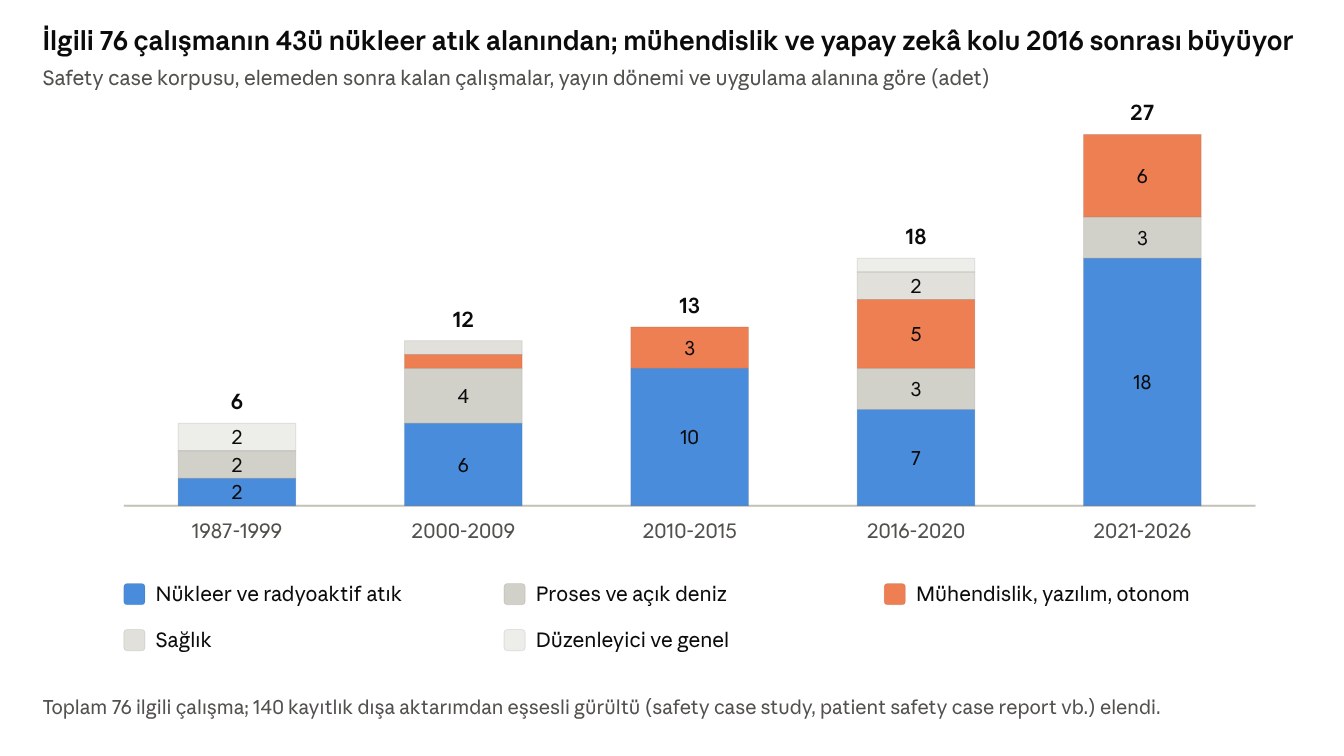
Figure 5. The WoS corpus: distribution of the 76 studies remaining after relevance screening of 140 records, by period and application area
The distribution reveals three findings. First, more than half of the literature (43 studies) comes from nuclear safety and especially the geological disposal of radioactive waste, where the safety case is a term standardised by the NEA and IAEA and focuses on how safety can be defended under uncertainty over tens of thousands of years (NEA, 2013; Mohanty & Sagar, 2002; Diaz-Maurin & Ewing, 2019). The six-paper 2026 series by Switzerland’s Nagra (Smith, 2026; Wüst et al., 2026; Diomidis et al., 2026; Martin et al., 2026; Brown et al., 2026; Javanmard, 2026) is the most recent and comprehensive example of this tradition. Second, the engineering, software and autonomous systems strand has grown markedly since 2016: 11 of its 15 studies date from 2016 or later and include new themes such as safety cases for machine learning components (Socha et al., 2022; Borg et al., 2023; Coolen & Nicholson, 2026), safety case generation with large language models (Sivakumar et al., 2024) and confidence measurement (Wang et al., 2018, 2019). Third, the healthcare strand is still very thin: only three studies, two of them from the same York-Warwick research group (Sujan et al., 2016; Habli et al., 2018). This scarcity signals an opportunity for health management researchers.
The most cited studies confirm these findings: Wang (2002) compares the offshore safety case approach with formal safety assessment for ships (83 citations); Sujan et al. (2016) discuss the transferability of the safety case to healthcare (56 citations); Clothier et al. (2015) propose a bow-tie-based safety case structure for unmanned aircraft (54 citations); Kelly and McDermid (2001) develop a systematic approach to safety case maintenance (38 citations); and Sivakumar et al. (2024) test automatic safety case generation with GPT-4, gaining 32 citations in two years as the fastest-rising study in the field.
Thematically, the corpus can be read in six clusters:
- Regulatory regime and transfer: strengths and weaknesses of the safety case as a form of regulation, comparison with prescriptive regimes and transfer to other countries (Kuo, 1996, 1997; Conlin et al., 2004; Gunningham, 2007; Jain et al., 2017; Pérez, 2020; Wifa & Hunter, 2022; Hao et al., 2026). Gunningham’s recommendation of the safety case as a “meta-regulation” tool only for large, complex and high-risk organisations and Hao et al.’s demonstration of functional drift in the Chinese context mark the two ends of this cluster.
- Safety cases for nuclear waste disposal: uncertainty management, transparency and traceability (Mohanty & Sagar, 2002), natural analogues (Reijonen et al., 2015), features-events-processes scenarios (Kang et al., 2025), the relation between performance assessment and the safety case (Galson & Bailey, 2012; Diaz-Maurin & Ewing, 2019) and public communication (Heiermann & Olszok, 2024; Ebeling et al., 2025).
- Argument structure, maintenance and tools: safety case maintenance (Kelly & McDermid, 2001), GSN-based evaluation tools (Luo et al., 2017), reusable argument fragments generated from contracts (Sljivo et al., 2017), bow-tie structuring (Clothier et al., 2015) and safety cases for modular avionics (Shen & Bai, 2014).
- Confidence measurement: modelling confidence in railway safety cases (Wang et al., 2018) and propagating confidence through the argument tree with Dempster-Shafer theory (Wang et al., 2019), the quantitative wing of Layer 4.
- Machine learning and AI: a complete safety case for the learning component of a pedestrian emergency braking system in the SMIRK project (Socha et al., 2022; Borg et al., 2023), challenges of safety cases for neural networks in automated driving (Coolen & Nicholson, 2026), GPT-4-generated safety cases (Sivakumar et al., 2024) and a hybrid digital twin structured according to a safety case (Mujawo & Alimi, 2026).
- Health and the social dimension: the safety case in healthcare (Sujan et al., 2016), assurance practice in health IT (Habli et al., 2018) and a sociolinguistic view of safety case argumentation (Hughes & Habli, 2026), which asks “who is trying to persuade whom, in what language” and offers new theoretical ground for the persuasion axis of Section 3.2.
These clusters show that the conceptual framework of the chapter matches the literature: the regulatory regime axis appears in the first cluster, the notation and temporality axes in the third and fifth, and the upper maturity layers in the fourth and fifth.
9. Where is the concept going today?
In the forty years since Piper Alpha, the core of the safety case has not changed: there is still a claim, an argument and evidence. What has changed is the subject of the claim (from a steel platform to learning software), the nature of the evidence (from test reports to live data streams) and the lifespan of the argument (from the moment of approval to continuous assurance). Four trends stand out.
Dynamic and lifelong assurance. Kelly and McDermid (2001) noted a quarter of a century ago that the real challenge of a safety case is not writing it but maintaining it as the system changes. The dynamic safety case (Denney et al., 2015) aims to solve this with technology, and Mujawo and Alimi’s (2026) digital twin structured according to a safety case template is an industrial application of the idea. For healthcare the implication is clear: incident reporting systems, clinical indicators and patient safety dashboards, if designed properly, can become live evidence sources for a safety case.
Assurance for AI and machine learning. Machine learning breaks the classic assurance chain in two places: behaviour is derived from data rather than requirements, and the limits of behaviour cannot be fully specified. AMLAS (Hawkins et al., 2021) answers with separate argument patterns for each phase of the learning life cycle. The SMIRK project (Socha et al., 2022; Borg et al., 2023) shows that even a “complete” safety case requires a very narrow operational design domain, and Coolen and Nicholson (2026) summarise the open challenges: representativeness of training data, distribution shift, explainability and the limits of real-world testing. In healthcare, Habli et al. (2020) discussed accountability and assurance for AI-supported clinical systems and Festor et al. (2021) linked assurance requirements to levels of autonomy. The other face of this period is AI as a tool for producing safety cases: Sivakumar et al. (2024) showed that GPT-4 can understand GSN and draft safety cases, but that its arguments cannot be used without expert review. This revives Haddon-Cave’s “home-grown” principle: the risks of outsourcing a safety case to a consultant also apply to outsourcing it to a language model.
Safety cases in healthcare. Healthcare is the field the safety case reached last and where it met the most resistance. Sujan et al.’s (2016) cross-sector review gives three reasons why direct transfer is problematic: healthcare is less a “system” than a continuously adapting process; without a regulatory mandate the motivation for a safety case is unclear; and in organisations already burdened with paperwork the risk of paper safety is high. They nevertheless argue that the safety case can be valuable for major changes, such as a new information system or service model. Habli et al.’s (2018) analysis of 20 clinical safety case reports in England confirms this: risk management processes were systematic, but the bridge between clinical and engineering perspectives was weak, the argument was often implicit and the relevance of evidence was debatable. The NHS DCB0129 and DCB0160 standards act as a laboratory as the first national framework mandating safety cases for health IT. In Türkiye, no comparable assurance framework yet exists for health information systems, medical device integration or clinical decision support software; the safety case could complement the standard-centred approach of existing quality accreditation systems with a context-centred argument.
Standards and regulatory frameworks. The safety case is standardised at three levels. At the general level, ISO/IEC/IEEE 15026-2 defines the structure and minimum content of the assurance case and OMG’s SACM enables exchange between tools (OMG, 2020). At the sector level, ISO 26262 (automotive), EN 50129 (railway signalling), Def Stan 00-56 (defence), UL 4600 (autonomous products) and DCB0129/0160 (health IT) define the safety case as a mandatory or expected output. In nuclear waste, NEA and IAEA guidance has made it an international common language (NEA, 2013). At the level of regulatory regimes, the UK, Australian and Norwegian safety case regimes continue to be compared with the more prescriptive US process safety management approach (Jain et al., 2017), while the Cuban (Pérez, 2020) and Chinese (Hao et al., 2026) cases show that transfer to other institutional contexts is not easy. Taken together, the safety case is evolving from a document into a lifelong assurance process, from an engineering product into a socio-technical act of persuasion, and from a sectoral tradition into a cross-sector way of thinking.
10. Criticisms and limitations
The safety case has strong critics as well as strong advocates, and most criticisms target misapplication rather than the concept itself.
Confirmation bias and “the desired answer”. The most fundamental criticism comes from Leveson (2011): because a safety case starts from the claim that the system is safe, it leads its authors to look for supporting evidence and ignore disconfirming evidence. The right question, for Leveson, is not “why is the system safe?” but “how could the system be hazardous?”. Haddon-Cave’s (2009) Nimrod findings are read as empirical support for this criticism. The literature’s answer is the defeater search and eliminative induction of Layer 4 (Goodenough et al., 2012; Rushby, 2015), although how widely these have spread in practice is debatable.
Paper safety and documentation burden. Haddon-Cave targets the bureaucratic degeneration of the safety case into hundreds of pages of unread, outsourced shelf-ware. Conlin et al. (2004) found the same problem in offshore safety cases, which piled up system descriptions and risk assessments without building a coherent argument for why continued safe operation would be achieved. Proportionality and structured notations are partial answers.
Subjectivity of evaluation. Who decides whether a safety case is persuasive enough, and by what criterion? Luo et al. (2017) showed that assessors’ judgements can be inconsistent and proposed a systematic evaluation process; Wang et al. (2018, 2019) attempted to quantify confidence. Rushby (2015) and Bloomfield and Rushby (2020) warn that reducing confidence to a single number can conceal the dialectical character of the argument. Greenwell et al.’s (2006) fallacy taxonomy at least provides a shared language of errors.
Context dependence and transfer. The safety case regime was born in the UK’s goal-based regulatory tradition and may not serve the same function in other legal and institutional contexts. Gunningham (2007) recommends it only for large and complex organisations, Hao et al. (2026) document functional drift in China and Sujan et al. (2016) discuss the conditions for transfer to healthcare. This criticism is particularly important for countries with a strong prescriptive tradition, such as Türkiye.
Neglect of the social and rhetorical dimension. Hughes and Habli (2026) argue that the literature focuses on the content of arguments and neglects the question of who addresses whom, in what language. The same argument may persuade a regulator but not a clinician; the safety case is therefore also an act of social communication.
Limitations of this chapter. The bibliometric part rests only on WoS records containing “safety case”. Studies published under “assurance case” or “safety argument”, conference papers (an important share of this literature appears at SAFECOMP and the Safety-Critical Systems Symposium) and grey literature (standards, regulatory guidance, technical reports) fall outside the corpus. The corpus therefore reflects the journal literature, while the conceptual framework also draws on foundational texts outside it.
11. Conclusion: a roadmap for the reader
The safety case is a way of thinking that turns the sentence “our system is safe” from a belief into a claim, the claim into an argument, and the argument into evidence. Five sentences are worth remembering:
- A safety case is an argument, not a document; the document is only its carrier.
- The claim is always relative (“acceptably safe”) and always the claim of a context (“this application, this environment”).
- Compliance with rules can be evidence, but it cannot replace the argument.
- A good safety case looks for its own defeaters; the best safety case is one in which no known defeater is left unanswered.
- A safety case lives with the system; a safety case that is not updated is, in Haddon-Cave’s words, paper safety.
For a reader in health management, the starting point is the skeleton in Section 4.3 and Layer 2 in Section 7. Choose a change in your organisation (a new information system module, a new medication administration process, a new telehealth service); write the top claim with its context; build a strategy over hazards; and for each hazard mark clearly the evidence you have and the evidence you do not have. This simple exercise will reveal gaps in the organisation’s safety knowledge faster than most quality audits. For further reading, Kelly (1998), Sujan et al. (2016), Habli et al. (2018) and Hawkins et al. (2021) are suitable introductions to the conceptual foundations, transfer to healthcare, health IT practice and machine learning assurance, respectively.
How to cite
This article is the English version of the technical report: Kurutkan, M. N. (2026). Güvenlik gerekçesi (safety case): Giriş 101 (Technical Report No. 36). Düzce University. https://doi.org/10.13140/RG.2.2.35862.92489
References
Assurance Case Working Group. (2021). Goal Structuring Notation community standard (Version 3, SCSC-141C). Safety-Critical Systems Club.
Bishop, P., & Bloomfield, R. (1998). A methodology for safety case development. In F. Redmill & T. Anderson (Eds.), Industrial perspectives of safety-critical systems: Proceedings of the Sixth Safety-critical Systems Symposium (pp. 194-203). Springer. https://doi.org/10.1007/978-1-4471-1534-2_14
Bloomfield, R., & Bishop, P. (2010). Safety and assurance cases: Past, present and possible future. An Adelard perspective. In C. Dale & T. Anderson (Eds.), Making systems safer: Proceedings of the Eighteenth Safety-Critical Systems Symposium (pp. 51-67). Springer. https://doi.org/10.1007/978-1-84996-086-1_4
Bloomfield, R., & Netkachova, K. (2014). Building blocks for assurance cases. In 2014 IEEE International Symposium on Software Reliability Engineering Workshops (pp. 186-191). IEEE. https://doi.org/10.1109/ISSREW.2014.72
Bloomfield, R., & Rushby, J. (2020). Assurance 2.0: A manifesto. arXiv. https://doi.org/10.48550/arXiv.2004.10474
Borg, M., Henriksson, J., Socha, K., Lennartsson, O., Lönegren, E. S., Bui, T., Tomaszewski, P., Sathyamoorthy, S. R., Brink, S., & Moghadam, M. H. (2023). Ergo, SMIRK is safe: A safety case for a machine learning component in a pedestrian automatic emergency brake system. Software Quality Journal, 31(2), 335-403. https://doi.org/10.1007/s11219-022-09613-1
Brown, A., Wüst, R. A. J., Walke, R., Newson, R., Bruffell, L., Bykov, V., Hunkeler, P. A., Landgraf, A., Fischer, U. H., Becker, J. K., & Schnellmann, M. (2026). The safety case for a deep geological repository in Switzerland: Assessment and modelling of the biosphere. Frontiers in Nuclear Engineering, 5, Article 1840800. https://doi.org/10.3389/fnuen.2026.1840800
CENELEC. (2018). Railway applications: Communication, signalling and processing systems. Safety related electronic systems for signalling (EN 50129:2018). European Committee for Electrotechnical Standardization.
Clothier, R. A., Williams, B. P., & Fulton, N. L. (2015). Structuring the safety case for unmanned aircraft system operations in non-segregated airspace. Safety Science, 79, 213-228. https://doi.org/10.1016/j.ssci.2015.06.007
Conlin, H., Brabazon, P., & Lee, K. (2004). Exploring the role and content of the safety case. Process Safety and Environmental Protection, 82(B4), 283-290. https://doi.org/10.1205/095758204323162300
Coolen, E., & Nicholson, M. (2026). Providing a safety case for artificial neural network elements in automated driving systems: A review of challenges. Journal of Traffic and Transportation Engineering (English Edition), 13(3), 861-879. https://doi.org/10.1016/j.jtte.2025.07.003
Cullen, W. D. (1990). The public inquiry into the Piper Alpha disaster (Cm 1310). HMSO.
Cullen, W. D. (2001). The Ladbroke Grove Rail Inquiry: Part 1 report. HSE Books.
Denney, E., Pai, G., & Habli, I. (2011). Towards measurement of confidence in safety cases. In 2011 International Symposium on Empirical Software Engineering and Measurement (pp. 380-383). IEEE. https://doi.org/10.1109/ESEM.2011.53
Denney, E., Pai, G., & Habli, I. (2015). Dynamic safety cases for through-life safety assurance. In 2015 IEEE/ACM 37th IEEE International Conference on Software Engineering (Vol. 2, pp. 587-590). IEEE. https://doi.org/10.1109/ICSE.2015.199
Diaz-Maurin, F., & Ewing, R. C. (2019). Probabilistic performance assessment vs. the safety case approach. MRS Advances, 4(17-18), 987-992. https://doi.org/10.1557/adv.2018.681
Diomidis, N., Guillemot, T., Martin, L., Papafotiou, A., & Leupin, O. X. (2026). The safety case for a deep geological repository in Switzerland: Engineered barriers for high-level waste disposal. Frontiers in Nuclear Engineering, 5, Article 1842834. https://doi.org/10.3389/fnuen.2026.1842834
Ebeling, M., Heiermann, M., & Röhlig, K. J. (2025). Opportunities for the further development of the safety case for deep geological repositories by transdisciplinary research: FEP catalogs and scenario development. Frontiers in Nuclear Engineering, 3, Article 1416508. https://doi.org/10.3389/fnuen.2024.1416508
Fenn, J., Hawkins, R., Williams, P., & Kelly, T. (2007). Safety case composition using contracts: Refinements based on feedback from an industrial case study. In F. Redmill & T. Anderson (Eds.), The safety of systems: Proceedings of the Fifteenth Safety-critical Systems Symposium (pp. 133-146). Springer.
Festor, P., Habli, I., Jia, Y., Gordon, A., Faisal, A. A., & Komorowski, M. (2021). Levels of autonomy and safety assurance for AI-based clinical decision systems. In I. Habli, M. Sujan, S. Gerasimou, E. Schoitsch, & F. Bitsch (Eds.), Computer safety, reliability, and security: SAFECOMP 2021 workshops (Lecture Notes in Computer Science, Vol. 12853, pp. 291-296). Springer. https://doi.org/10.1007/978-3-030-83906-2_24
Galson, D. A., & Bailey, L. E. F. (2012). Performance assessment and the safety case: Lessons from the European Commission PAMINA project. Mineralogical Magazine, 76(8), 3483-3489. https://doi.org/10.1180/minmag.2012.076.8.62
Goodenough, J. B., Weinstock, C. B., & Klein, A. Z. (2012). Toward a theory of assurance case confidence (CMU/SEI-2012-TR-002). Software Engineering Institute, Carnegie Mellon University.
Greenwell, W. S., Knight, J. C., Holloway, C. M., & Pease, J. J. (2006). A taxonomy of fallacies in system safety arguments. In Proceedings of the 24th International System Safety Conference. System Safety Society.
Gunningham, N. (2007). Designing OSH standards: Process, safety case and best practice. Policy and Practice in Health and Safety, 5(2), 3-24. https://doi.org/10.1080/14774003.2007.11667691
Habli, I., Lawton, T., & Porter, Z. (2020). Artificial intelligence in health care: Accountability and safety. Bulletin of the World Health Organization, 98(4), 251-256. https://doi.org/10.2471/BLT.19.237487
Habli, I., White, S., Sujan, M., Harrison, S., & Ugarte, M. (2018). What is the safety case for health IT? A study of assurance practices in England. Safety Science, 110, 324-335. https://doi.org/10.1016/j.ssci.2018.09.001
Haddon-Cave, C. (2009). The Nimrod Review: An independent review into the broader issues surrounding the loss of the RAF Nimrod MR2 aircraft XV230 in Afghanistan in 2006 (HC 1025). The Stationery Office.
Hao, C., Fan, Y., Xu, L., Yang, X., Ju, X., Xu, H., & Pei, J. (2026). Addressing the challenges of operational mechanisms within safety case regime: A case study of China. Journal of Loss Prevention in the Process Industries, 101, Article 105936. https://doi.org/10.1016/j.jlp.2026.105936
Hawkins, R., Habli, I., Kelly, T., & McDermid, J. (2013). Assurance cases and prescriptive software safety certification: A comparative study. Safety Science, 59, 55-71. https://doi.org/10.1016/j.ssci.2013.04.007
Hawkins, R., & Kelly, T. (2010). A structured approach to selecting and justifying software safety evidence. In Proceedings of the 5th IET International Conference on System Safety. IET.
Hawkins, R., Kelly, T., Knight, J., & Graydon, P. (2011). A new approach to creating clear safety arguments. In C. Dale & T. Anderson (Eds.), Advances in systems safety: Proceedings of the Nineteenth Safety-Critical Systems Symposium (pp. 3-23). Springer. https://doi.org/10.1007/978-0-85729-133-2_1
Hawkins, R., Paterson, C., Picardi, C., Jia, Y., Calinescu, R., & Habli, I. (2021). Guidance on the assurance of machine learning in autonomous systems (AMLAS). Assuring Autonomy International Programme, University of York. https://doi.org/10.48550/arXiv.2102.01564
Health and Safety Executive. (2006). A guide to the Offshore Installations (Safety Case) Regulations 2005 (L30, 3rd ed.). HSE Books.
Health Foundation. (2012). Using safety cases in industry and healthcare. The Health Foundation.
Heiermann, M., & Olszok, V. (2024). Transdisciplinary research on the safety case for nuclear waste repositories with a special focus on uncertainties and indicators. Frontiers in Nuclear Engineering, 3, Article 1414964. https://doi.org/10.3389/fnuen.2024.1414964
Hughes, N., & Habli, I. (2026). Safety case argumentation: A sociolinguistic perspective. Safety Science, 204, Article 107368. https://doi.org/10.1016/j.ssci.2026.107368
International Organization for Standardization. (2018). Road vehicles: Functional safety. Part 1: Vocabulary (ISO 26262-1:2018).
ISO/IEC/IEEE. (2022). Systems and software engineering: Systems and software assurance. Part 2: Assurance case (ISO/IEC/IEEE 15026-2:2022).
Jain, P., Reese, A. M., Chaudhari, D., Mentzer, R. A., & Mannan, M. S. (2017). Regulatory approaches: Safety case vs US approach: Is there a best solution today? Journal of Loss Prevention in the Process Industries, 46, 154-162. https://doi.org/10.1016/j.jlp.2017.02.001
Javanmard, H. (2026). The safety case for a deep geological repository in Switzerland: Development of safety scenarios. Frontiers in Nuclear Engineering, 5, Article 1843718. https://doi.org/10.3389/fnuen.2026.1843718
Kang, M., Son, K., Yang, J., Lee, H., Jeong, H., Choi, K., Kim, H., Heo, G., & Chang, K. (2025). Development of integrated FEPs for safety case scenario development. Journal of Nuclear Science and Technology, 62(2), 209-213. https://doi.org/10.1080/00223131.2024.2414778
Kelly, T. P. (1998). Arguing safety: A systematic approach to managing safety cases [Doctoral dissertation, University of York].
Kelly, T. P. (2001). Concepts and principles of compositional safety case construction (COMSA/2001/1/1). Department of Computer Science, University of York.
Kelly, T. (2018). Safety cases. In N. Möller, S. O. Hansson, J.-E. Holmberg, & C. Rollenhagen (Eds.), Handbook of safety principles. Wiley. https://doi.org/10.1002/9781119443070.ch16
Kelly, T., & McDermid, J. (2001). A systematic approach to safety case maintenance. Reliability Engineering & System Safety, 71(3), 271-284. https://doi.org/10.1016/S0951-8320(00)00079-X
Kelly, T. P., & McDermid, J. A. (1997). Safety case construction and reuse using patterns. In P. Daniel (Ed.), Safe Comp 97: The 16th International Conference on Computer Safety, Reliability and Security (pp. 55-69). Springer. https://doi.org/10.1007/978-1-4471-0997-6_5
Kuo, C. (1996). Defining the safety case concept. The Naval Architect, 59.
Kuo, C. (1997). Greater safety: Improve rules or use the safety case? The Naval Architect, 8-9.
Leveson, N. G. (2011). The use of safety cases in certification and regulation. Journal of System Safety, 47(6), 1-5.
Luo, Y., van den Brand, M., Li, Z., & Saberi, A. K. (2017). A systematic approach and tool support for GSN-based safety case assessment. Journal of Systems Architecture, 76, 1-16. https://doi.org/10.1016/j.sysarc.2017.04.001
Maguire, R. (2006). Safety cases and safety reports: Meaning, motivation and management. Ashgate.
Maksimov, M., Fung, N. L. S., Kokaly, S., & Chechik, M. (2018). Two decades of assurance case tools: A survey. In B. Gallina, A. Skavhaug, E. Schoitsch, & F. Bitsch (Eds.), Computer safety, reliability, and security: SAFECOMP 2018 workshops (Lecture Notes in Computer Science, Vol. 11094, pp. 49-59). Springer. https://doi.org/10.1007/978-3-319-99229-7_6
Martin, L., Kosakowski, G., Guillemot, T., & Papafotiou, A. (2026). The safety case for a deep geological repository in Switzerland: Engineered barriers for low- and intermediate-level waste disposal. Frontiers in Nuclear Engineering, 5, Article 1843726. https://doi.org/10.3389/fnuen.2026.1843726
Ministry of Defence. (2007). Defence Standard 00-56: Safety management requirements for defence systems (Issue 4). UK Ministry of Defence.
Mohanty, S., & Sagar, B. (2002). Importance of transparency and traceability in building a safety case for high-level nuclear waste repositories. Risk Analysis, 22(1), 7-15. https://doi.org/10.1111/0272-4332.t01-1-00005
Mujawo, H., & Alimi, O. A. (2026). A safety-case-driven hybrid digital twin for centrifugal compressor health monitoring. Machines, 14(7), Article 712. https://doi.org/10.3390/machines14070712
NHS Digital. (2018a). DCB0129: Clinical risk management: Its application in the manufacture of health IT systems (Version 4.2). NHS Digital.
NHS Digital. (2018b). DCB0160: Clinical risk management: Its application in the deployment and use of health IT systems (Version 3.2). NHS Digital.
Nuclear Energy Agency. (2013). The nature and purpose of the post-closure safety cases for geological repositories (NEA/RWM/R(2013)1). OECD.
Object Management Group. (2020). Structured Assurance Case Metamodel (SACM) (Version 2.1). OMG.
Office for Nuclear Regulation. (2014). Safety assessment principles for nuclear facilities (2014 ed., Rev. 1). ONR.
Offshore Installations (Safety Case) Regulations 1992, SI 1992/2885 (UK).
Pérez, F. I. (2020). Safety case process in Cuba: Transition from theory to practice. Process Safety and Environmental Protection, 137, 169-176. https://doi.org/10.1016/j.psep.2020.02.004
Picardi, C., Paterson, C., Hawkins, R., Calinescu, R., & Habli, I. (2020). Assurance argument patterns and processes for machine learning in safety-related systems. In Proceedings of the Workshop on Artificial Intelligence Safety (SafeAI 2020) (CEUR Workshop Proceedings, Vol. 2560, pp. 23-30). CEUR-WS.
Railtrack. (2000). Engineering safety management (Yellow Book) (Issue 3). Railtrack PLC.
Reijonen, H. M., Alexander, W. R., Marcos, N., & Lehtinen, A. (2015). Complementary considerations in the safety case for the deep repository at Olkiluoto, Finland: Support from natural analogues. Swiss Journal of Geosciences, 108(1), 111-120. https://doi.org/10.1007/s00015-015-0181-4
Robens, A. (1972). Safety and health at work: Report of the Committee 1970-72 (Cmnd 5034). HMSO.
Rushby, J. (2015). The interpretation and evaluation of assurance cases (Technical Report SRI-CSL-15-01). SRI International.
Shen, X., & Bai, Y. (2014). Architectural considerations in integrated modular avionics (IMA) system safety case construction. IEEE Aerospace and Electronic Systems Magazine, 29(10), 26-33. https://doi.org/10.1109/MAES.2014.130085
Sivakumar, M., Belle, A. B., Shan, J., & Shahandashti, K. K. (2024). Prompting GPT-4 to support automatic safety case generation. Expert Systems with Applications, 255, Article 124653. https://doi.org/10.1016/j.eswa.2024.124653
Sljivo, I., Gallina, B., Carlson, J., Hansson, H., & Puri, S. (2017). A method to generate reusable safety case argument-fragments from compositional safety analysis. Journal of Systems and Software, 131, 570-590. https://doi.org/10.1016/j.jss.2016.07.034
Smith, P. (2026). The safety case for a deep geological repository in Switzerland: Concepts for waste disposal and methodology for safety assessment. Frontiers in Nuclear Engineering, 5, Article 1840901. https://doi.org/10.3389/fnuen.2026.1840901
Socha, K., Borg, M., & Henriksson, J. (2022). SMIRK: A machine learning-based pedestrian automatic emergency braking system with a complete safety case. Software Impacts, 13, Article 100352. https://doi.org/10.1016/j.simpa.2022.100352
Sujan, M. A., Habli, I., Kelly, T. P., Pozzi, S., & Johnson, C. W. (2016). Should healthcare providers do safety cases? Lessons from a cross-industry review of safety case practices. Safety Science, 84, 181-189. https://doi.org/10.1016/j.ssci.2015.12.021
Sujan, M. A., Habli, I., Kelly, T. P., Gühnemann, A., Pozzi, S., & Johnson, C. W. (2017). How can health care organisations make and justify decisions about risk reduction? Lessons from a cross-industry review and a health care stakeholder consensus development process. Reliability Engineering & System Safety, 161, 1-11. https://doi.org/10.1016/j.ress.2017.01.001
Toulmin, S. E. (1958). The uses of argument. Cambridge University Press.
Underwriters Laboratories. (2020). UL 4600: Standard for safety for the evaluation of autonomous products (1st ed.). UL.
Wang, J. (2002). Offshore safety case approach and formal safety assessment of ships. Journal of Safety Research, 33(1), 81-115. https://doi.org/10.1016/S0022-4375(02)00005-1
Wang, R., Guiochet, J., Motet, G., & Schön, W. (2018). Modelling confidence in railway safety case. Safety Science, 110, 286-299. https://doi.org/10.1016/j.ssci.2017.11.012
Wang, R., Guiochet, J., Motet, G., & Schön, W. (2019). Safety case confidence propagation based on Dempster-Shafer theory. International Journal of Approximate Reasoning, 107, 46-64. https://doi.org/10.1016/j.ijar.2019.02.002
Weaver, R. A. (2003). The safety of software: Constructing and assuring arguments [Doctoral dissertation, University of York].
Wei, R., Kelly, T. P., Dai, X., Zhao, S., & Hawkins, R. (2019). Model based system assurance using the structured assurance case metamodel. Journal of Systems and Software, 154, 211-233. https://doi.org/10.1016/j.jss.2019.05.013
Wifa, E., & Hunter, T. S. (2022). Mitigating occupational health and safety risks in the proposed Australian offshore wind energy industry: Lessons from the safety case regime. Journal of Energy & Natural Resources Law, 40(1), 83-104. https://doi.org/10.1080/02646811.2021.1879547
Wüst, R. A. J., Schnellmann, M., Landgraf, A., Giger, S., Roy, N., Traber, D., Deplazes, G., Schneeberger, R., Becker, J. K., Looser, N., Fischer, U. H., Zampetti, V., & Vietor, T. (2026). The safety case for a deep geological repository in Switzerland: Site and geological barrier characteristics. Frontiers in Nuclear Engineering, 5, Article 1849685. https://doi.org/10.3389/fnuen.2026.1849685
Cite this page (APA 7)
Kurutkan, M. N. (2026, November 11). The Safety Case: An Introduction (101). The Health Topics. https://healthtopic.org/topics/the-safety-case-an-introduction-101/