
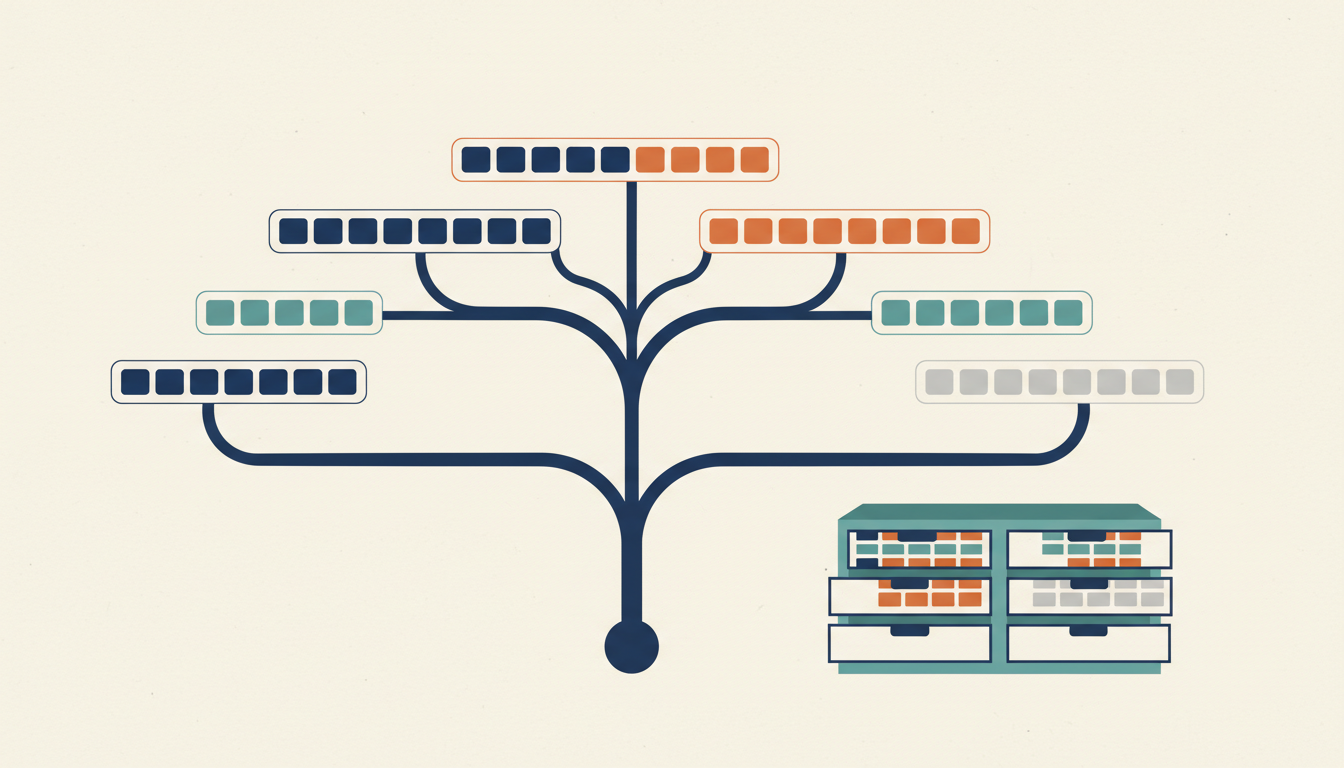
Every study in oncology management quietly answers three questions: what is the outcome, what is the lever, and what else could explain the result? A field-level map of how researchers answer those questions is useful twice over. It gives new studies a ready variable pool, and it shows managers which links between their decisions and patient outcomes are well established and which are still assumptions. This chapter builds that map from a cleaned bibliometric corpus on the business, operations and health services management side of oncology.
Corpus and method
A Web of Science title search returned 856 records (articles in English, 2020 to 2026, SCI-Expanded and SSCI). Rule-based screening kept 190 publications forming the operations and management core and 122 borderline records on drug and technology economic evaluations; after deduplication, 312 unique publications formed the analytic base. Topics that matched the search only incidentally, such as radiotherapy dose schedules or medical physics, were excluded. Concepts were extracted from titles, abstracts and keywords through a reproducible term-scanning process, and each variable was classified on two axes: its methodological role and its Donabedian class (structure, process or outcome).
Forty-five variables in six roles
The analysis produced 45 conceptual variables: 14 dependent, 13 independent, 5 mediating, 5 moderating, 5 confounding and 3 control variables.
- Dependent variables (outcomes) range from clinical endpoints to operational and economic outputs: access to treatment, survival, progression, mortality, waiting time, timely treatment, no-shows, guideline adherence, patient safety, toxicity, satisfaction, quality of life, professional quality of life, cost, QALY, ICER, out-of-pocket payment and financial toxicity. Access, cost and clinical outcome are the most frequently observed.
- Independent variables (predictors and exposures) are structural and process levers: multidisciplinary team use, quality assurance programmes, digital system adoption, reimbursement model, academic centre or facility type, workflow redesign, telemedicine, treatment technology, insurance, income, rurality, travel distance, capacity and workforce.
- Mediators carry the effect of interventions to outcomes. In this literature most effects are framed as indirect, flowing through these mechanisms.
- Moderators condition the strength or direction of a relationship: socioeconomic status, country context, rural-urban setting, the pandemic period and case volume.
- Confounders are related to both predictor and outcome and bias estimates if not adjusted for: cancer stage, tumour type and comorbidity burden are the most commonly controlled.
- Control and contextual variables such as age, sex and calendar time are not the focus of interest but are needed for valid models.
Role flexibility
A key finding is that many variables refuse to stay in one role. Access is an outcome in one study and a predictor of survival in another. Socioeconomic status is both a moderator that conditions effects and a confounder that must be adjusted for. Time to treatment is an operational outcome in its own right and a mediator linking structural conditions to survival. The inventory therefore records alternative roles alongside each variable’s primary role. A companion analysis goes further, adding roles such as covariate, exposure, intervention, contextual variable, balancing measure, economic model input, derived economic output, and sensitivity or threshold variable. It also warns that no abstract in the clean dataset reported an explicit mediation analysis, so automatically labelling a plausible mechanism as a “mediator” would be wrong.
Illustrations from the literature
- Institutional context and access. In early-stage HPV-related oropharyngeal cancer, care at an academic centre was the strongest predictor of receiving surgery (adjusted odds ratio 6.17) (Hidalgo et al., 2025).
- Social determinants. In bladder cancer, the odds of receiving neoadjuvant chemotherapy were 0.47 for uninsured, 0.66 for Medicaid and 0.70 for rural patients (Venkat et al., 2022). Raw access rates should never be read without accounting for patient mix and social determinants.
- Quality programme as intervention. In the Michigan Radiation Oncology Quality Consortium, guideline-concordant hypofractionation rose from 47% to 97% and adherence to target coverage and heart dose limits from 46% to 86% (Jagsi et al., 2022).
- Balancing measures. Process improvement in paediatric oncology clinics reduced chemotherapy waiting time by 7% to 15% without harming patient safety, which served as the balancing measure (Elsaid et al., 2020).
- Waiting as exposure. In cervical cancer, delaying radiotherapy by 120 to 179 days was associated with about 3.3 times the odds of disease progression (Dereje et al., 2021): waiting is a clinical risk indicator, not just an operational KPI.
- Service design and no-shows. A same-day appointment initiative cut the no-show rate from 15% to 7% (Chen et al., 2024).
- Policy as effect modifier. In a pembrolizumab evaluation using propensity score matching on 450 patients, the ICER fell from about USD 146,409 to USD 56,128 per QALY when a drug donation programme was included (Wan et al., 2025).
- Formal moderation. Occupational profile moderated the link between alexithymia and secondary traumatic stress, with radiation and clinical oncologists at higher risk than medical physicists and radiation therapists (Franco et al., 2021).
Effect matrix and eight causal axes
An effect matrix crossing 12 independent and 11 dependent variables contains 40 meaningful cells, marked as positive, reducing, conditional or mediated. Most interventions affect several outcomes at once: digital information system adoption, for instance, shortens waiting, raises efficiency and reduces safety events, but has a conditional effect on cost. The dominant causal stories group into eight axes:
- MDT axis: tumour board use improves outcomes through decision quality and guideline-concordant treatment allocation, with stage and tumour type as confounders and centre volume as moderator.
- Operations axis: scheduling, workflow design and capacity shorten waiting through resource efficiency, improving satisfaction and, via timely treatment, clinical outcomes; the pandemic weakened this link.
- Quality-safety axis: QA programmes, peer review and digital systems raise guideline adherence and reduce adverse events.
- Access axis: travel distance, reimbursement and socioeconomic status affect survival and treatment abandonment through access to services and drugs, with country and rural-urban context as strong moderators.
- Financial toxicity axis: pricing and reimbursement raise the risk of abandoning treatment through out-of-pocket spending and financial toxicity.
- Digitalisation axis: information system adoption affects waiting, cost and safety through efficiency, with cost effects depending on the balance between upfront investment and long-term savings.
- Workforce axis: training and competency programmes improve outcomes through team decision quality and guideline adherence.
- Economic evaluation axis: drug and technology choices determine cost-effectiveness through toxicity and efficacy, highly sensitive to the payment threshold and country.
A Donabedian nomological network
The eight axes fit naturally into Donabedian’s model. Structural variables feed processes, processes feed outcomes, and a contextual layer of moderators (socioeconomic status, country, rurality, pandemic, volume) and confounders (age, comorbidity, stage, tumour type, case mix) surrounds the whole flow. The practical implication: any intervention intended to improve an outcome first works on a structural or process variable and carries its effect to the outcome through intermediate mechanisms. Measuring those mechanisms is more informative than measuring the final outcome alone.
Gaps and research agenda
- Mediators are rarely measured; most studies link a predictor directly to a final outcome without modelling the mechanism in between.
- Moderators are often described but rarely modelled as conditioning effects, especially in the access and financial toxicity axes.
- Digital and workforce dimensions are central in theory but under-represented in publications.
Mediation models that measure intermediate processes, interaction analyses that treat socioeconomic and system context as moderators, and studies of digital transformation and workforce competence would contribute most to the field’s maturation.
Managerial conclusion
Oncology hospital performance cannot be managed through a single KPI. Speed, access, clinical outcome, safety, patient experience and cost are interconnected. Workflow, appointment systems, the MDT, quality feedback and capacity are levers the manager can change; age, stage, comorbidity, insurance and geography are mostly for risk adjustment and equity analysis.
Source chapter: Kurutkan, M. N. (2026). Variable taxonomy and relationship-effect analysis in oncology operations and management research. Oncology Hospital Management Training Series, supplementary chapter (original in Turkish).
References
Baron, R. M., & Kenny, D. A. (1986). The moderator-mediator variable distinction in social psychological research: Conceptual, strategic, and statistical considerations. Journal of Personality and Social Psychology, 51(6), 1173–1182. https://doi.org/10.1037/0022-3514.51.6.1173
Chen, A. M., Garcia, A. D., Alexandrescu, M., Truong, A., & Senthil, M. (2024). Effect of a Same-Day-Appointment Initiative on Access-Related Benchmarks in Radiation Oncology. Practical Radiation Oncology, 14(1), 12-19. https://doi.org/10.1016/j.prro.2023.08.010
Dereje, N., Addissie, A., Worku, A., Gebremariam, A., Kantelhardt, E. J., Assefa, M., & Jemal, A. (2021). Association between waiting time for radiotherapy initiation and disease progression among women with cervical cancer in Addis Ababa, Ethiopia. International Journal of Cancer, 149(6), 1284-1289. https://doi.org/10.1002/ijc.33689
Donabedian, A. (1988). The quality of care: How can it be assessed? JAMA, 260(12), 1743–1748. https://doi.org/10.1001/jama.1988.03410120089033
Elsaid, M., Morgan, J., Colorado, N., Woolsey, J., Canterberry, N., Rice, P., & Russo, C. (2020). Chemotherapy wait times in a network of pediatric oncology clinics. Journal of Pediatric Hematology/Oncology, 42(6), e475–e478. https://doi.org/10.1097/MPH.0000000000001466
Franco, P., Di Tella, M., Tesio, V., Gasnier, A., Petit, S., Spalek, M., Bibault, J. E., Dubois, L., Mullaney, L., Redalen, K. R., Chargari, C., Perryck, S., Bittner, M. I., Bertholet, J., & Castelli, L. (2021). Alexithymia and professional quality of life in radiation oncology: The moderator effect of the professional profile. Radiotherapy and Oncology, 158, 48–54. https://doi.org/10.1016/j.radonc.2021.01.033
Hidalgo, C. M., Hernandez-Herrera, G. A., Day, C. N., Olawuni, F., Abdel-Halim, C. N., Van Abel, K. M., Routman, D. M., & Yin, L. X. (2025). Access to surgery and high-quality radiotherapy for human papillomavirus related oropharynx cancer. Oral Oncology, 171. https://doi.org/10.1016/j.oraloncology.2025.107768
Jagsi, R., Schipper, M., Mietzel, M., Pandya, R., Moran, J. M., Matuszak, M., Vicini, F., Jolly, S., Paximadis, P., Mancini, B., Griffith, K., Hayman, J., & Pierce, L. (2022). The Michigan Radiation Oncology Quality Consortium: A Novel Initiative to Improve the Quality of Radiation Oncology Care. International Journal of Radiation Oncology Biology Physics, 113(2), 257–265. https://doi.org/10.1016/j.ijrobp.2022.01.048
Venkat, S., Lewicki, P. J., Khan, A. I., Gaffney, C., Borregales, L., & Scherr, D. S. (2022). Sociodemographic Disparities in Access to Chemotherapy for Bladder Cancer. Clinical Genitourinary Cancer, 20(2), E140-E150. https://doi.org/10.1016/j.clgc.2021.11.017
Wan, N., Yang, C., Wang, B., Guo, Y., He, Z. J., Lv, Y. J., Lu, L. Q., Yang, N., Xiao, W. B., Chen, Y. B., Yuan, J., Yang, D. D., Liu, T., Fang, W. F., Chen, Z. J., & Liang, W. T. (2025). Cost-effectiveness analysis of pembrolizumab versus chemotherapy in advanced non-small cell lung cancer in China based on real-world studies. Journal of Cancer Research and Clinical Oncology, 151(12). https://doi.org/10.1007/s00432-025-06242-6
Key concepts in this article
Quality-adjusted life year (QALY) Waiting time Mediation analysis Propensity score Confounding Peer review Digital transformation Patient experience Adverse eventConcepts link to the Glossary. Explore the knowledge graph →
Cite this page (APA 7)
Kurutkan, M. N. (2026, November 11). Variable Taxonomy in Oncology Operations and Management Research: Roles, Relationships and Effects. The Health Topics. https://healthtopic.org/topics/variable-taxonomy-oncology-operations-management-research/