

Abstract
Workplace ostracism is the experience of being ignored or excluded by others at work. Unlike violence or harassment, it consists of what does not happen: greetings, information, invitations and participation that are withheld. This introductory chapter explains the concept for readers who have never met it, and maps its evidence base in health care. It traces the history of the idea from the ostrakon of ancient Athens through the social psychology of the need to belong and Williams’s temporal need-threat model to organisational science, where the Workplace Ostracism Scale, Robinson and colleagues’ integrated model and a meta-analysis consolidated the field. It compares target-centred and source-centred definitions, distinguishes ostracism from incivility, bullying, mobbing, abusive supervision, social undermining, loneliness and social stigma, and classifies its types by source, channel, intent, position of experience and identity. The evidence map is based on a Web of Science topic search that returned 111 records, of which 47 remained after relevance screening (38 core and 9 peripheral studies). The core literature is recent (half of it published from 2024 onwards), concentrated in China, Pakistan, Türkiye and Egypt, focused on nurses and dominated by cross-sectional surveys. Ostracism is linked to stress, burnout, loneliness, turnover intention, counterproductive and deviant behaviour and silence about patient safety, while perceived organisational support, resilience and psychological capital buffer some of these effects. The chapter closes with a methodological critique, the Turkish evidence, four pathways from ostracism to patient safety, evidence-informed implications for managers and a research agenda.
Keywords: workplace ostracism, social exclusion, nursing, patient safety, health workforce, health management
Purpose of the Chapter and Reading Guide
This chapter introduces a problem that is becoming increasingly visible in health care organisations but is rarely named: workplace ostracism. It is designed as an “Introduction 101” text. The aim is to take a reader who has never heard of the concept from a simple intuition, step by step, to its history, definitions, differences from neighbouring concepts, types, theoretical explanations and evidence base in health care.
The evidence base of the chapter rests on a topic (TS) search in the Web of Science Core Collection. The search combined expressions that describe workplace ostracism (for example “workplace ostracism”, “workplace exclusion”, “supervisor ostracism”, “organizational ostracism”, and “ostraci*” in proximity to work, employee, coworker or supervisor) with health care expressions (hospital*, nurs*, physician*, healthcare worker* and similar). The search returned 111 records. Their titles, abstracts and keywords were examined one by one and 64 records were excluded. Of the excluded records, 42 were hotel, restaurant and tourism studies that entered the search because the wildcard “hospital*” also captures “hospitality”. The remaining 47 records form the clean corpus of the chapter: in 38 studies workplace ostracism among health care workers is the main variable or the main phenomenon (core set), and in 9 studies ostracism appears as a finding, a theme or a fear (peripheral set).
After reading the chapter, the reader should be able to:
- define workplace ostracism and distinguish it from neighbouring concepts such as incivility, bullying, mobbing, abusive supervision and loneliness;
- summarise the historical journey of the concept from ancient Athens to social psychology, from there to organisational science and on to health management;
- classify types of ostracism by source, channel, intent and position of experience;
- recognise the main theoretical explanations, such as the need-threat model, conservation of resources theory and social exchange theory;
- read the evidence in health care under the headings of antecedents, mechanisms, outcomes and boundary conditions;
- see the methodological limitations of the literature and draw implications for patient safety and management practice.
1. Introduction: Becoming Invisible
Consider a ward nurse. Nobody shouts at her; nobody openly humiliates her. Yet at shift handover nobody makes eye contact, conversations stop when she enters the break room, her questions in the team’s messaging group go unanswered and nobody tells her when the ward meeting will be held. Nothing has “happened”; on the contrary, things that should happen do not happen. This is exactly what workplace ostracism is: an employee being quietly left out of socially expected interactions.
The example in this chapter is fictional but consistent with the findings in the literature. A single case study conducted in the surgical clinic of a Swedish hospital, for example, showed that exclusion operated at many levels of the professional hierarchy, was triggered by social prejudice and could turn into “expulsion” decisions over time (Matsson, 2024). A study of 569 health care workers in Finland emphasised that ostracism was directly associated with job satisfaction, stress and perceived health, and that by reducing interaction it could jeopardise the flow of information and therefore patient care (Manninen et al., 2024).
Health care is a particularly sensitive context for this phenomenon. Care depends on dense chains of interaction such as handover, consultation, warnings within the team and mutual monitoring. When an employee is “treated as non-existent” at any link of this chain, it is not only that person’s well-being that suffers but also the circulation of information within the team. An early study in Cyprus showed that ostracism increased nurses’ silence towards patient safety (Gkorezis et al., 2016). For health management, therefore, workplace ostracism is not a matter of “human resources courtesy” but a direct quality and safety problem.
Another feature of ostracism is its invisibility. Unlike violence and harassment, ostracism is not an act but an omission, which makes it hard to report, prove and manage. Organisational research has shown that being ignored is no less harmful than receiving negative attention such as harassment, and may be more harmful for some outcomes (O’Reilly et al., 2015). Violence-focused reporting systems (such as Türkiye’s White Code system) are designed to capture visible attacks; silent exclusion often stays below their radar. This is why the concept needs to be addressed in its own right.
2. History of the Concept
2.1. Ancient roots: from “ostrakon” to “ostracism”
The word “ostracism” derives from the ancient Greek ostrakon, a broken piece of pottery. In the Athenian democracy of the fifth century BCE, citizens voted by writing on these sherds the name of a person they thought might harm the city; the person who received enough votes was sent away from the city for ten years. The striking feature of the practice is that the sanction rested not on evidence of a crime but on a shared decision of the community “not to want” someone. The present organisational meaning of the concept preserves this core: ostracism is less a formal sanction for breaking a rule than the group pushing an individual outside its own space.
2.2. Ostracism in social psychology: the need to belong and “social pain”
The scientific foundation of the concept was laid in social psychology in the 1990s. Baumeister and Leary (1995) argued that humans have a fundamental need to belong, a drive to form lasting and positive relationships with others. When this need is threatened, emotional, cognitive and behavioural reactions follow.
The work of Kipling D. Williams developed this foundation specifically for ostracism. Williams defined ostracism as the experience of being “ignored and excluded” and proposed that this experience threatens four fundamental needs: belonging, self-esteem, control and meaningful existence (Williams, 2007). Experiments using a virtual ball-tossing game in the laboratory (Cyberball) showed that even a few minutes of exclusion by strangers produced marked negative affect, and the concept of cyberostracism showed that exclusion on the internet can have the same effects (Williams et al., 2000). Brain imaging studies reported that social exclusion activates brain regions that overlap with those involved in physical pain, giving the metaphor of “social pain” a neuroscientific basis (Eisenberger et al., 2003). Williams later integrated this body of work into the temporal need-threat model, which explains how reactions to ostracism evolve over time (Williams, 2009). The model is discussed in detail in Section 6.
2.3. Transition to organisational science: scale, model and meta-analysis
The concept moved into the workplace in the mid-2000s. Hitlan et al. (2006) examined employees being left out by coworkers who spoke a language they did not understand and showed the effect of language-based exclusion on work-related attitudes. Hitlan and Noel (2009) examined the relationship between workplace exclusion and counterproductive work behaviour together with personality traits.
The most important threshold in the field was the Workplace Ostracism Scale (WOS) developed by Ferris et al. (2008). This ten-item, one-dimensional scale measures ostracism through the target’s perception and is today the most frequently used instrument in almost every sector, including health care. Robinson et al. (2013) proposed an integrated model that redefines ostracism in terms of the source’s behaviour and theorises it as an “omission” that can be purposeful or non-purposeful. Scott et al. (2013) examined the antecedents of exclusion within a social exchange framework, and O’Reilly et al. (2015) showed that ostracism is no less harmful than harassment. The meta-analysis by Howard et al. (2020) quantitatively synthesised the accumulated evidence on the antecedents and outcomes of ostracism and showed that the field had matured.
2.4. Entry into the health care literature: from 2011 to 2026
Figure 1 shows the distribution of publications in the clean corpus by year. The distribution suggests that the concept entered health care in three phases.

Figure 1. Distribution of the clean corpus by year (n=47). The 2026 value covers part of the year; early-access records dated 2027 were hospitality studies and were excluded.
First phase (2011-2015): ostracism as a “side finding”. In the earliest records ostracism is not the main variable but appears as a finding within another problem. In a survey of 427 LGBT physicians in the United States, 22% of participants reported having been socially ostracised (Eliason et al., 2011). Australian health professionals cited fear of professional exclusion as one of the factors that kept them from acting for environmental sustainability (Dunphy, 2014). In a children’s hospital, 64% of physicians and advanced practice clinicians rated “fear of being ostracised by colleagues” as an important reason for working while sick (Szymczak et al., 2015). This first phase is valuable because it shows that in health care ostracism operates not only as an outcome but also as an expectation and a fear that shapes behaviour.
Second phase (2016-2022): transfer of organisational behaviour models to nursing. Two pioneering studies were published in 2016: one on the effect of ostracism on silence towards patient safety in Cyprus (Gkorezis et al., 2016), and one in Türkiye, with 1,113 nurses from 13 university hospitals, on the weakening role of ostracism in the relationship between value congruence and commitment to change (Erkutlu & Chafra, 2016). This period was followed by mediation and moderation models conducted mainly in China and Pakistan (e.g., Qi et al., 2020; Sarfraz et al., 2019; Sarwar et al., 2020; Shafique et al., 2021).
Third phase (2023-2026): spread, diversification and the first syntheses. The number of publications has risen markedly in recent years; half of the core studies (19 of 38) were published in 2024 or later. New questions have emerged in this period, such as cyber ostracism (Öztürk et al., 2026), observed ostracism (Liu et al., 2026) and the ostracism cost of patient advocacy (Shang et al., 2026). Studies from Türkiye have multiplied, and the first scoping review on workplace ostracism in nursing has been published (Hu et al., 2026).
3. Key Terms and Definitions
3.1. Glossary of terms
The first step in learning a field is learning its language. Table 1 gives short definitions of the terms used frequently in this chapter.
Table 1. Key terms used in the chapter
| Term | Short definition |
|---|---|
| Workplace ostracism | An employee being ignored by others at work or left out of socially expected interactions. |
| Organisational ostracism | Exclusion produced through structures, processes and organisational policies rather than by individuals. |
| Cyber ostracism (cyberostracism) | Being left unanswered or kept out in digital communication channels (e-mail, messaging groups). |
| Observed ostracism | The experience of witnessing someone else being ostracised. |
| Language exclusion (linguistic ostracism) | Being left out of an interaction because others speak a language the target does not understand. |
| Relational indifference | A lack of interest in relating to a person, without explicit rejection. |
| Need to belong | The fundamental human drive to form lasting and positive relationships with others. |
| Temporal need-threat model | The model proposing that reactions to ostracism develop through reflexive, reflective and resignation stages. |
| Conservation of resources (COR) theory | The theory proposing that the loss of resources, or the threat of loss, creates stress. |
| Perceived organisational support (POS) | An employee’s belief that the organisation values their contribution and cares about their well-being. |
| Counterproductive work behaviour (CWB) | Voluntary behaviour that harms the organisation or its members. |
| Organisation-based self-esteem (OBSE) | An individual’s perception of their own worth as a member of the organisation. |
| Silence towards patient safety | Not voicing concerns, errors and risks that bear on patient safety. |
| Psychological safety | A shared belief that it is safe to take interpersonal risks in the team, such as asking questions or reporting errors. |
3.2. Comparing definitions
There is no single definition of workplace ostracism in the literature, but definitions cluster around two major traditions (Figure 2).
The target-centred (perception) tradition defines ostracism through the victim’s experience. For Williams, ostracism is being ignored and excluded by others, whether as an individual or as a group (Williams, 2007). Ferris and colleagues adapted this definition to the workplace and defined ostracism as “the extent to which an individual perceives that he or she is ignored or excluded by others” at work (Ferris et al., 2008). The strength of this definition is that it can be measured; its weakness is that it captures the target’s interpretation rather than the source’s actual behaviour.
The source-centred (behaviour) tradition defines ostracism through the behaviour of the person who ostracises. Robinson et al. (2013) define ostracism as an individual or group omitting to take actions that would engage another organisational member when it is socially appropriate to do so. The critical elements of this definition are “social appropriateness” and “omission”: a surgeon not talking to a student trainee during an operation may not count as ostracism, but the same team never inviting that student to lunch day after day is a systematic withholding of socially expected inclusion. This definition also accepts that ostracism can be purposeful or non-purposeful.
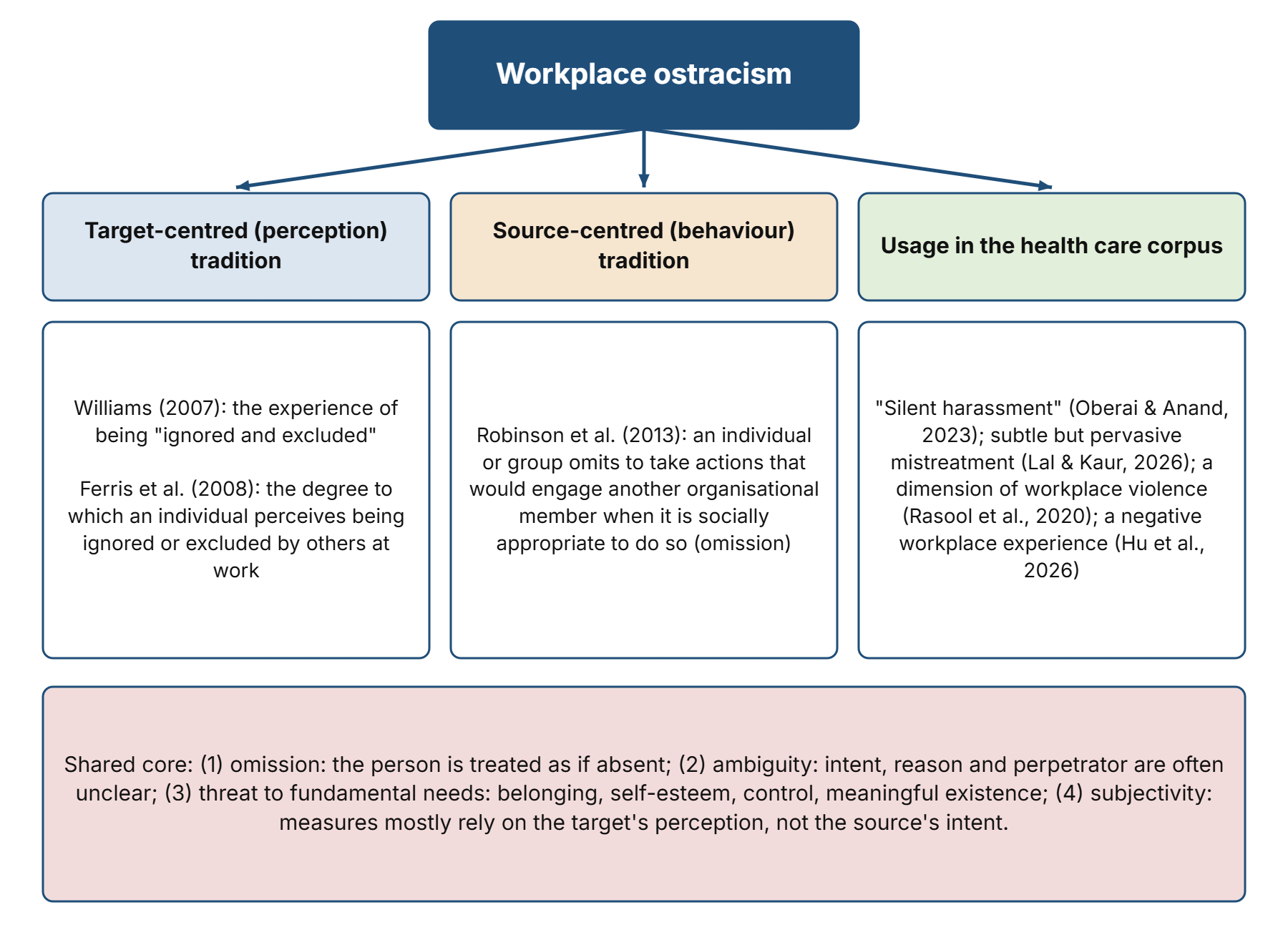
Figure 2. Conceptual scheme of definitions of workplace ostracism: the target-centred tradition, the source-centred tradition and usage in the health care corpus.
Usage in the health care corpus is more descriptive and value-laden. A qualitative study with physicians in India characterised ostracism as “silent harassment” (Oberai & Anand, 2023). A multi-sector study described it as a subtle but pervasive form of workplace mistreatment (Lal & Kaur, 2026). A study in Pakistan measured ostracism as one dimension of workplace violence, together with harassment, mobbing and stalking (Rasool et al., 2020). The scoping review framed the concept broadly as a negative workplace experience (Hu et al., 2026).
The common core of these definitions can be summarised in four elements: (1) omission: nothing is done, and the person is treated as if absent; (2) ambiguity: the target often cannot know why they are excluded, whether it is purposeful and who started it; (3) threat to fundamental needs: the needs for belonging, self-esteem, control and meaningful existence are harmed; (4) subjectivity: most measures rely on the target’s perception. The working definition adopted in this chapter is as follows: Workplace ostracism is a health care worker being left out, by coworkers, supervisors or the organisation, of socially expected interaction, information and opportunities to participate, in a way that involves no open aggression, and the worker’s perception of this.
4. Distinguishing Ostracism from Neighbouring Concepts
Workplace ostracism belongs to a broad family called workplace mistreatment. Members of this family resemble each other and are often measured together in health care studies. A study of 230 nurses in Türkiye, for example, showed that abusive supervision affected turnover intention through incivility, bullying and ostracism (Özkan, 2022). Similarly, a study of grey-collar health care workers at a university hospital in Ankara examined the moderating role of incivility in the relationship between ostracism and loneliness (Çagatay, 2026). Knowing the differences between the concepts therefore matters for both measurement and the design of interventions. Table 2 summarises the main distinctions.
Table 2. Distinguishing workplace ostracism from neighbouring concepts
| Concept | Core behaviour | Act or omission | Intent and persistence | Difference from ostracism |
|---|---|---|---|---|
| Workplace ostracism | Ignoring; withholding information, invitations and participation | Omission | Purposeful or non-purposeful; one-off or persistent | Reference concept (Robinson et al., 2013) |
| Workplace incivility | Low-intensity rudeness and disrespect | Mainly act | Ambiguous intent; low intensity | There is a rude act; in ostracism the relationship is withdrawn (Andersson & Pearson, 1999) |
| Workplace bullying | Repeated negative behaviour: humiliation, workload pressure, social isolation | Act and omission | Systematic, long-term, power imbalance | May contain ostracism as a component; requires persistence and power imbalance criteria (Einarsen et al., 2009) |
| Mobbing (psychological terror) | Systematic hostile communication directed at one person | Mainly act | Purposeful, long-term, mostly group-based | A purposeful process aimed at removing the target; ostracism may be one of its tools (Leymann, 1990) |
| Abusive supervision | A supervisor’s sustained verbal and non-verbal hostile behaviour | Mainly act | Sustained; source is the supervisor only | Source is limited; also studied as an antecedent of ostracism (Özkan, 2022; Tepper, 2000) |
| Social undermining | Gradually weakening relationships, success and reputation | Act and omission | Purposeful | Intent is required; in ostracism it is not (Duffy et al., 2002) |
| Loneliness | Subjective feeling of a gap between desired and actual relationships | An emotional state, not a behaviour | Not applicable | An outcome or mediator of ostracism (Geng et al., 2026; Manninen et al., 2024) |
| Social stigma | Society devaluing and keeping a group at a distance | Act and omission | Societal level | Source lies outside the workplace (Goniewicz et al., 2024) |
The most important lesson of the table is that ostracism is based on omission. Incivility, bullying, mobbing, abusive supervision and social undermining mostly involve doing something (commission): a rude remark, humiliation, shouting, slander. In ostracism nothing is done: no greeting, no information, no invitation. This difference has two practical consequences. First, ostracism is the form of mistreatment hardest to prove in formal complaint mechanisms. Second, the ostracised person carries an extra burden in the gap between “nobody did anything to me” and “nobody does anything with me”, doubting their own perception.
Two concepts deserve particular emphasis. Loneliness may be an outcome or a mediator of ostracism but is not ostracism itself: ostracism is a relational pattern, loneliness a subjective emotional state. In the corpus, loneliness has been tested as a mediator between ostracism and stress, health and burnout (Geng et al., 2026; Manninen et al., 2024). Social stigma is the exclusion of health care workers by society outside the workplace. During COVID-19 in Poland, 14.1% of health care workers reported social exclusion, which was associated with higher post-traumatic stress symptoms (Goniewicz et al., 2024). Because this study only partly overlaps with workplace ostracism, it was kept in the peripheral set of the corpus.
5. Types of Workplace Ostracism
Treating ostracism as a single, uniform phenomenon is misleading. Read together, the studies in the corpus and the foundational literature show that ostracism can be classified by at least five criteria (Table 3).
Table 3. Types of workplace ostracism
| Criterion | Type | Description and example from the corpus |
|---|---|---|
| Source | Coworker ostracism | Being ignored by peers and left out of information and social activities (Nasir et al., 2024) |
| Source | Supervisor ostracism | Exclusion by the nurse in charge, clinical head or manager; intertwined with workload, shifts and training opportunities (Ali & Johl, 2020; Nasir et al., 2024) |
| Source | Organisational ostracism | Exclusion produced by structures, processes and organisational politics (Kopuz et al., 2026; Matsson, 2024) |
| Channel | Face-to-face ostracism | Being ignored at shift handover, breaks, meetings and ward rounds |
| Channel | Cyber ostracism | Being left unanswered in internal correspondence and messaging groups (Öztürk et al., 2026) |
| Intent | Purposeful ostracism | Exclusion used to protect a group norm, to punish or as a tool of organisational politics (Matsson, 2024; Robinson et al., 2013) |
| Intent | Non-purposeful ostracism | Heavy workload, inattention, shift and language differences; relational indifference (Kristensen & Kristensen, 2022) |
| Position of experience | Directly experienced ostracism | The person themselves is ostracised; the large majority of studies in the corpus (Manninen et al., 2024) |
| Position of experience | Observed ostracism | Witnessing a colleague being ostracised (Liu et al., 2026) |
| Position of experience | Anticipated ostracism (fear of ostracism) | Fear of ostracism shaping behaviour: working while sick, staying silent (Dunphy, 2014; Szymczak et al., 2015) |
| Identity | Identity-based ostracism | LGBT physicians, male nurses, older workers, student trainees (Eliason et al., 2011; Kristensen & Kristensen, 2022; Lim et al., 2026; Picakciefe et al., 2021) |
By source, ostracism may come from a coworker, a supervisor or the organisation itself. Supervisor ostracism is particularly important in health care organisations, because the nurse in charge or the clinical head also allocates workload, shifts and training opportunities. A three-wave study in health care units in Pakistan modelled supervisor and coworker ostracism separately and showed that both led to emotional, psychological and behavioural reactions through employees’ efficacy and relational needs (Nasir et al., 2024). Narcissistic nurse supervisors and ostracism have also been reported to increase counterproductive behaviour among junior nurses (Ali & Johl, 2020). Organisational ostracism describes exclusion produced by structures rather than by individuals. In the case of the Swedish surgical clinic, structural mistreatment was shown to reproduce mistreatment directed at targets, and exclusion became a tool of organisational politics (Matsson, 2024). Studies from Türkiye have also adopted the term “organisational ostracism” (Çagatay, 2026; Kopuz et al., 2026).
By channel, ostracism may be face-to-face or digital. The concept of cyber ostracism was first introduced in experimental social psychology (Williams et al., 2000). It is gaining importance in health care organisations as e-mail lists, internal correspondence systems and instant messaging groups spread. A study of 303 health care organisation employees in Türkiye showed that cyber ostracism increased workplace loneliness, that abusive management mediated this relationship and that the effect was stronger in the private sector than in the public sector (Öztürk et al., 2026).
By position of experience, ostracism may be experienced directly or observed. A study of 346 nurses in China found that witnessing the ostracism of others (observed ostracism) increased helping behaviour through moral courage among nurses with high resilience (Liu et al., 2026). This finding is a reminder that ostracism is a team phenomenon that affects not only the target but the rest of the team. Another position is anticipated ostracism, that is, the fear of being ostracised. Continuing to work while sick (Szymczak et al., 2015) or avoiding speaking up for environmental sustainability (Dunphy, 2014) are examples of this fear turning into behaviour.
By identity, ostracism may concentrate around a particular social identity. LGBT physicians (Eliason et al., 2011), male nurses and nursing students (Lim et al., 2026) and health care workers over 55 (Picakciefe et al., 2021) are examples of this type in the corpus. A systematic review that synthesised 70 studies on male nurses identified “institutional and workplace exclusion” as one of three main themes (Lim et al., 2026). A qualitative study of nursing students on clinical placement in Denmark showed that temporary team members felt unimportant and worthless in the face of the permanent staff’s relational indifference, and were gradually pushed into a “relationless” position (Kristensen & Kristensen, 2022). This finding suggests that students, trainees, contract and temporary workers are structurally more exposed to ostracism; indeed, employment status was among the determinants of ostracism in Iran (Ebrahimi et al., 2020).
6. Theoretical Frameworks
Several theoretical frameworks explain why ostracism hurts and why people react to it differently. Examining the abstracts of the 47 studies in the corpus reveals a striking finding: half of the 38 core studies (19 studies) do not name a theory in their abstract. This does not mean that the full texts contain no theory, but it can be read as a sign that the field is advancing on thin theoretical ground. Among the theories that are named, the most frequent are conservation of resources theory (6 studies) and social exchange theory (5 studies). Table 4 summarises the main frameworks.
Table 4. Main theoretical frameworks explaining workplace ostracism
| Theory | Core proposition | Application to ostracism | Example from the corpus |
|---|---|---|---|
| Temporal need-threat model (Williams, 2009) | Ostracism threatens four fundamental needs; reactions develop in three stages | Explains repair or retaliation behaviour and long-term alienation | Mediation by needs (Nasir et al., 2024) |
| Conservation of resources theory (Hobfoll, 1989) | Loss of resources, or the threat of loss, creates stress; resources buffer loss | Ostracism is a loss of social resources; it leads to negative behaviour through depletion | Aliza et al., 2022; Geng et al., 2026; Sarwar et al., 2020 |
| Social exchange theory (Blau, 1964) | Relationships rest on a norm of reciprocity | Ostracism breaks reciprocity; the employee withdraws trust and contribution | Kopuz et al., 2026; Sabir et al., 2024; Zhou & Zhang, 2022 |
| Affective events theory (Weiss & Cropanzano, 1996) | Workplace events turn into attitudes and behaviour through emotions | Ostracism is a negative affective event | Kopuz et al., 2026; Qi et al., 2020 |
| Cognitive appraisal theory | The same stressor can be appraised as a threat or a challenge | Explains different reactions to ostracism | Qi et al., 2025 |
| Social identity and identification | Group membership is part of self-definition | Ostracism weakens organisational and relational identification | Gkorezis et al., 2016; Shafique et al., 2021; Zhou & Zhang, 2022 |
| Victim precipitation theory | Some individual characteristics increase the likelihood of exposure | Explains individual antecedents of ostracism; carries a risk of victim blaming | Al-Atwi et al., 2021 |
| Psychology of working theory | Decent work depends on work volition and working conditions | Ostracism weakens work volition and the perception of decent work | Mohsin et al., 2026 |
6.1. The temporal need-threat model
This model, the only theory specific to ostracism, proposes that reactions develop in three stages (Figure 3) (Williams, 2009). In the reflexive stage, pain and need threat are experienced at the moment of ostracism, regardless of context. In the reflective stage, the individual appraises the situation and turns either to repairing the relationship (conforming, ingratiating, helping) or to regaining control (retaliating, aggression). If ostracism persists, the individual moves into the resignation stage: alienation, depression, helplessness and a sense of worthlessness become dominant.

Figure 3. The temporal need-threat model adapted to the health care context.
The model is a powerful tool for making sense of findings in the corpus that look contradictory. Ostracism was found to increase deviant and counterproductive behaviour among some nurses (Attia et al., 2025; Shafique et al., 2021), while these effects were weaker among nurses with high ingratiation skills (Shafique et al., 2021). In other words, the same experience of ostracism can lead, in the reflective stage, to either a “repair” or a “retaliation” path. The finding from Türkiye that ostracism leads to loneliness through depressed mood can be read as the organisational counterpart of the resignation stage (Çagatay, 2026).
6.2. Conservation of resources theory
According to conservation of resources (COR) theory, developed by Hobfoll (1989), people try to protect and increase the resources they value (energy, social support, status, self-esteem), and the loss of resources, or the threat of loss, creates stress. Ostracism is a resource loss that directly erodes social support and belonging. In the corpus this is the most frequently used framework: it explains why ostracism leads to service sabotage through stress (Sarwar et al., 2020), to negligent behaviour through emotional exhaustion (Aliza et al., 2022) and to burnout through loneliness (Geng et al., 2026). The theory also explains boundary conditions: resources such as perceived organisational support (Sarfraz et al., 2019; Sarwar et al., 2020), career adaptability (Geng et al., 2026) and psychological capital (Nasir et al., 2024) act as “reserve stores” that buffer the effect of loss.
6.3. Social exchange theory
According to social exchange theory, systematised by Blau (1964), relationships are built on a norm of reciprocity. The ostracised employee perceives that the “social wage” paid by the organisation or the team has been cut and withdraws their own contribution. A study of 403 health professionals in four large public hospitals in Türkiye showed that organisational ostracism increased turnover intention by first reducing organisational trust and then happiness at work, and that the direct effect became non-significant once the mediators were added (full mediation) (Kopuz et al., 2026). In Pakistan, ostracism was found to lead to counterproductive behaviour through relational psychological contract breach, whereas transactional contract breach was not a significant mediator (Sabir et al., 2024); this suggests that ostracism breaks a relational exchange rather than a transactional one involving pay or promotion. A study showing that ethical nurse leaders reduce ostracism through relational identification used the same theory on the antecedent side (Zhou & Zhang, 2022).
6.4. Other frameworks
Affective events theory (Weiss & Cropanzano, 1996) proposes that workplace events turn into attitudes and behaviour through emotional reactions; it has been used in a model in which ostracism leads to unethical behaviour through emotional exhaustion (Qi et al., 2020). Cognitive appraisal theory proposes that the same stressor can be perceived as a threat or a challenge depending on the individual’s appraisal; it has been used to explain the “double-edged” effect of ostracism on in-role performance (Qi et al., 2025). Victim precipitation theory argues that some individual characteristics increase the likelihood of being ostracised; paranoid tendencies were shown to predict ostracism more strongly when team cognitive diversity was high (Al-Atwi et al., 2021). It should be noted that this theory carries a risk of “blaming the victim” and must be used with care. Finally, psychology of working theory has been used to explain how ostracism erodes nurses’ perception of decent work by weakening their work volition (Mohsin et al., 2026).
7. Evidence Map in Health Care
7.1. Profile of the corpus
Table 5 summarises the main characteristics of the clean corpus. Three patterns stand out. The first is geographical concentration: about 70% of the core studies (27 of 38) come from China, Pakistan, Türkiye and Egypt. The scoping review also drew attention to a similar concentration (Hu et al., 2026). The second is population concentration: most studies were conducted with nurses, while physicians, midwives, pharmacists, technicians and administrative staff have been studied relatively little. The third is design concentration: the large majority of studies are one-off cross-sectional surveys.
Table 5. Profile of the clean corpus
| Characteristic | Distribution |
|---|---|
| Record flow | 111 raw records; 47 included (38 core, 9 peripheral); 64 excluded (42 hospitality and tourism, 22 other out-of-scope reasons) |
| Publication year | 2011-2026; first core studies in 2016; half of the core studies (19/38) published in 2024-2026 |
| Country (core set) | China 10; Pakistan 8; Türkiye 5; Egypt 4; one study each from Cyprus, Iran, Malaysia, Belgium, Denmark, India, Sweden, Finland, Jordan and Saudi Arabia; 1 multi-country scoping review. For two studies in Pakistan and one in Malaysia, the country was inferred from the author address because it was not stated in the abstract. |
| Population (core set) | Nurses only 26 (one of them the scoping review); mixed health care staff 9; physicians only 1; surgical clinic staff 1; nursing students 1 |
| Design (47 records) | Cross-sectional 31; time-lagged or multi-wave 7; multilevel 2; qualitative 4; mixed methods 1; review 2 |
| Role of ostracism in the model (core set) | Independent variable 24; outcome variable 5; mediator 3; moderator 1; both independent and outcome 1; qualitative phenomenon 3; review 1 |
| Theory named in the abstract (47 records) | Conservation of resources theory 6; social exchange 5; affective events 2; others once each; no theory named in the abstract in 19 core studies |
| Most frequent outcome families | Negative work behaviour (CWB, deviance, unethical behaviour) 8; turnover intention 4; stress, exhaustion, loneliness and health; silence and quality of care |
Figure 4 summarises the findings of the corpus as a nomological network, that is, the set of relationships between a concept and its antecedents, mechanisms, outcomes and boundary conditions. The subsections below open up each link of this network.
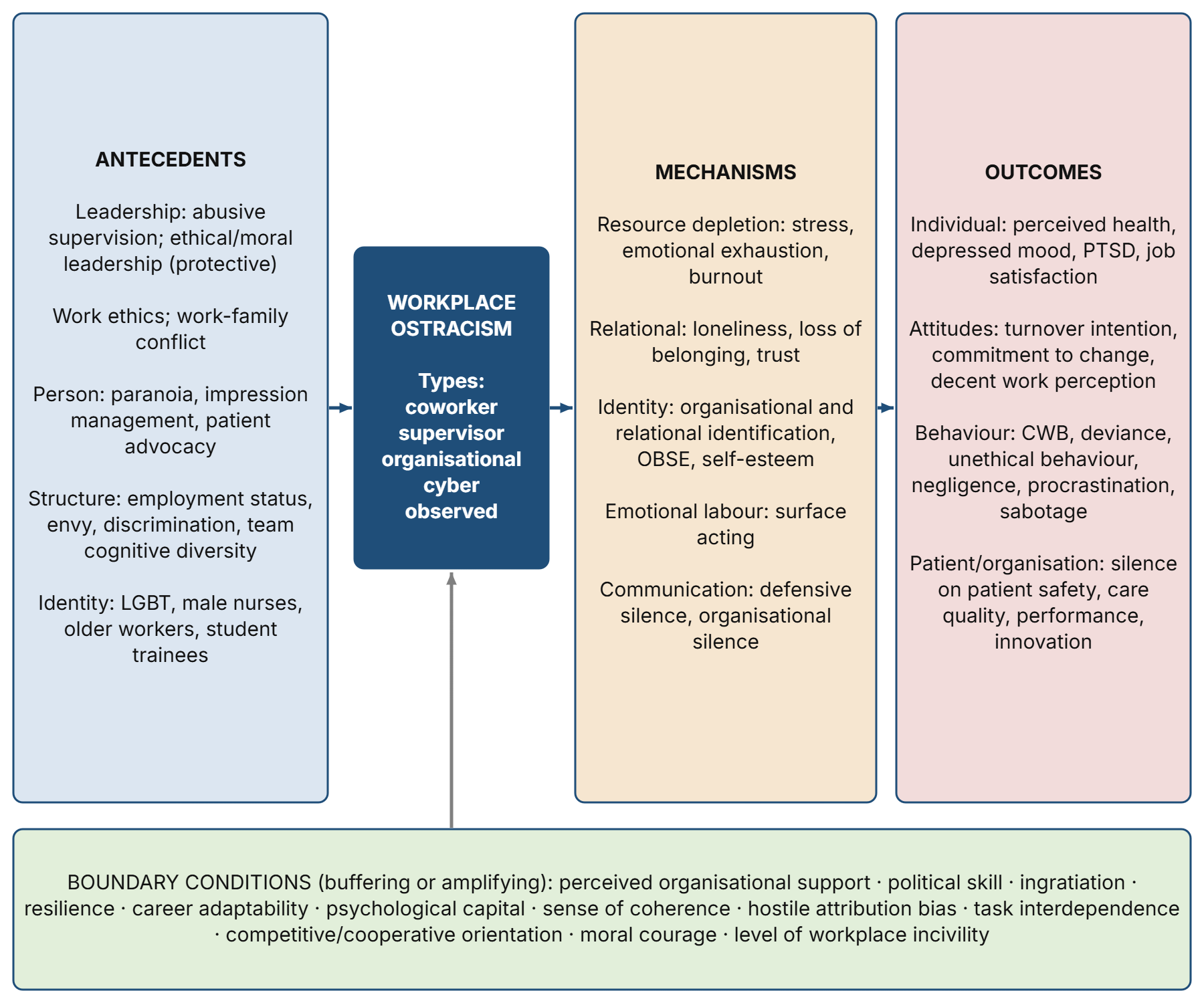
Figure 4. Nomological network of workplace ostracism in health care (synthesised from the findings of the clean corpus).
7.2. Antecedents: what gives rise to ostracism?
Studies that treat ostracism as an outcome variable are a minority, but their findings are instructive.
- Leadership. Abusive supervision increases ostracism (Özkan, 2022), whereas ethical leadership reduces it through relational identification (Zhou & Zhang, 2022). In Egypt, moral leadership was reported to reduce ostracism and counterproductive behaviour (Awad & El Sayed, 2023). In Jordan, however, no relationship was found between ethical leadership and ostracism (Mrayyan & Algunmeeyn, 2025). This inconsistency shows that the effect of leadership is sensitive to context and measurement.
- Organisational climate and ethics. Ostracism decreased as nurses’ perceived level of work ethics increased, and ostracism mediated the relationship between work ethics and counterproductive behaviour (Elliethey et al., 2024). In Japan, an exclusionary workplace climate was a significant predictor of the risk of work-related accidents and injuries and of serious psychological distress (Tei-Tominaga & Nakanishi, 2018).
- The work-family interface. A study of 527 medical staff in China found a strong association between work-family conflict and ostracism (r=0.613), mediated by sense of coherence (Li et al., 2026).
- Individual behaviour and characteristics. Nurse supervisors who practised impression management were shown to become depleted over time and to engage in deviant behaviour, which in turn led to their exclusion (Fitriastuti & Vanderstraeten, 2022). Paranoid tendencies also predicted ostracism (Al-Atwi et al., 2021).
- The cost of moral action. A study of 350 nurses in China found that patient advocacy behaviours were positively associated with ostracism, with the strongest associations among entry-level nurses (r=0.602) and emergency department nurses (Shang et al., 2026). This finding is striking for health management: a nurse who raises her voice on behalf of a patient may meet the silent sanction of the team.
- Structural determinants. In Iran, employment status, the university of graduation, a history of receiving incentives, physical health problems and perceptions of coworker envy and supervisor discrimination were associated with ostracism (Ebrahimi et al., 2020).
7.3. Mechanisms: how does ostracism work?
The mediating variables in the corpus can be grouped into five families of mechanisms.
- Resource depletion. Stress (Sarfraz et al., 2019; Sarwar et al., 2020), emotional exhaustion (Aliza et al., 2022; Attia et al., 2025; Qi et al., 2020) and burnout (Geng et al., 2026; Shafique et al., 2021) are the most frequently tested mediators. Among operating room nurses, bullying and exclusion by colleagues were among the traumatic events that independently increased the risk of burnout (Wang et al., 2022).
- Relational mechanisms. Loneliness (Geng et al., 2026; Manninen et al., 2024), organisational trust (Kopuz et al., 2026) and depressed mood (Çagatay, 2026) carry the social and emotional burden of ostracism.
- Identity and self. Organisational identification (Gkorezis et al., 2016; Shafique et al., 2021), organisation-based self-esteem (Shafique et al., 2021) and self-esteem (Manninen et al., 2024) show how ostracism erodes the question “do I belong here?”.
- Emotional labour. Ostracised nurses were found to turn to surface acting, which damaged the nurse-patient relationship and increased turnover intention (Gou et al., 2022). This sequential mediation is an important finding that shows how ostracism “spills over” from within the team into the relationship with patients.
- Communication and silence. Ostracism increases silence towards patient safety (Gkorezis et al., 2016), defensive silence (Attia et al., 2025) and organisational silence (El-Sayed et al., 2025). In Egypt, organisational silence partially mediated the relationship between ostracism and both active and passive procrastination (El-Sayed et al., 2025).
7.4. Outcomes: what does ostracism lead to?
Outcomes can be classified at four levels.
Individual health and well-being. Ostracism is directly associated with stress, perceived health and job satisfaction (Manninen et al., 2024), and is also linked with loneliness, depressed mood (Çagatay, 2026) and burnout (Geng et al., 2026).
Attitudes. Ostracism predicts turnover intention (Gou et al., 2022; Kopuz et al., 2026; Özkan, 2022), weaker affective commitment to change (Erkutlu & Chafra, 2016) and an eroded perception of decent work (Mohsin et al., 2026).
Behaviour. The largest outcome family in the corpus is negative work behaviour: counterproductive work behaviour (Ali & Johl, 2020; Awad & El Sayed, 2023; Elliethey et al., 2024; Mrayyan & Algunmeeyn, 2025; Sabir et al., 2024), deviant behaviour (Attia et al., 2025; Shafique et al., 2021), unethical behaviour (Qi et al., 2020), negligence (Aliza et al., 2022), service sabotage (Sarwar et al., 2020) and procrastination (El-Sayed et al., 2025). These findings show that the “retaliation” path described in Section 6.1 operates strongly in health care organisations.
Patient and organisational level. Ostracism has been associated with silence towards patient safety (Gkorezis et al., 2016), lower quality of nursing care and less innovative work behaviour (Ali et al., 2025), lower service performance (Al-Atwi et al., 2021) and lower in-role and innovative performance (Feng et al., 2019). In a study in Pakistan covering physicians, nurses and paramedics, ostracism, together with the other dimensions of workplace violence, reduced sustainable work performance (Rasool et al., 2020). Almost all patient-level outcomes, however, rely on employees’ self-reports; the corpus contains no study that links ostracism to actual patient outcomes (incident reports, falls, medication errors, patient experience).
7.5. Boundary conditions: who is less affected?
The moderating variables in the corpus offer direct clues for the design of interventions. Perceived organisational support buffers the effects of ostracism on stress (Sarfraz et al., 2019) and service sabotage (Sarwar et al., 2020), but it had no significant moderating effect on the relationship between patient advocacy and ostracism (Shang et al., 2026). Political skill (Ali & Johl, 2020), ingratiation (Shafique et al., 2021), psychological resilience (Liu et al., 2026; Oberai & Anand, 2023), career adaptability (Geng et al., 2026) and psychological capital (Nasir et al., 2024) act as protective resources. By contrast, hostile attribution bias strengthens the effects of ostracism on emotional exhaustion and unethical behaviour (Qi et al., 2020). When task interdependence is high, the effect of ostracism on negligent behaviour through emotional exhaustion is weaker (Aliza et al., 2022); this suggests that it is harder to sustain exclusion in teams whose members must depend on one another. A finding from Türkiye showed a non-linear pattern: low and moderate levels of incivility strengthened the relationship between depressed mood and loneliness, whereas this effect weakened at high levels of incivility (Çagatay, 2026).
7.6. Unexpected findings: is ostracism always harmful?
Some findings in the corpus show that treating ostracism as a one-directional “harm” variable is an oversimplification. A study using three waves of data from 669 nurses in China found a double-edged effect of ostracism on in-role performance: nurses with a high competitive orientation turned to emotion regulation after ostracism and their performance increased, whereas nurses with a high cooperative orientation experienced emotional dissonance (Qi et al., 2025). The finding that observed ostracism increased helping behaviour among witnesses (Liu et al., 2026), and the accounts of physicians in the Indian qualitative study who “bounced back” from ostracism thanks to resilience (Oberai & Anand, 2023), complete this picture. These findings do not make ostracism positive; they do show that “one size fits all” interventions that ignore individual and contextual differences will have limited effect.
8. Measuring Workplace Ostracism
In health care, ostracism is measured mainly with self-report scales. Table 6 summarises the measurement approaches found in the corpus.
Table 6. Measurement approaches in the health care corpus
| Approach | Description | Example from the corpus |
|---|---|---|
| Workplace Ostracism Scale (WOS) | 10 items, one dimension, target’s perception, frequency rating (Ferris et al., 2008); studies that state in their abstract that they used this scale | Ali et al., 2025; Awad & El Sayed, 2023; Geng et al., 2026; Li et al., 2026 |
| Adapted or modified scale | Original items modified for the context | Ebrahimi et al., 2020 |
| Separate measurement by source | Supervisor and coworker ostracism measured separately | Nasir et al., 2024 |
| Organisational ostracism | Ostracism expressed at the level of the organisation | Çagatay, 2026; Kopuz et al., 2026 |
| Cyber ostracism | Measuring ostracism in digital channels | Öztürk et al., 2026 |
| Observed ostracism | The experience of an employee in the position of witness | Liu et al., 2026 |
| As a dimension of workplace violence | Measured together with harassment, mobbing and stalking | Rasool et al., 2020 |
| Single item or prevalence question | Experience of ostracism reported as yes/no or as a percentage | Eliason et al., 2011; Goniewicz et al., 2024; Picakciefe et al., 2021 |
| Climate measurement | An exclusionary workplace climate assessed within social capital measures | Tei-Tominaga & Nakanishi, 2018 |
| Qualitative methods | Phenomenography, constructivist grounded theory, single case study | Kristensen & Kristensen, 2022; Matsson, 2024; Oberai & Anand, 2023 |
Two methodological warnings follow from this table. First, prevalence reporting is not comparable. In one study in Egypt nurses’ ostracism score was reported as “moderate” (mean 55.49%) (Awad & El Sayed, 2023), while another study in the same country reported that 75.75% of nurses perceived a low level of ostracism (Elliethey et al., 2024), and in Saudi Arabia the level of ostracism was “high” for 50.38% of nurses (Ali et al., 2025). It is unclear how much of these differences is real and how much stems from cut-off and scoring choices. The lack of shared, validated cut-off scores for health care workers is an important gap in the field.
Second, the adaptation of instruments is heterogeneous. Some studies used a “modified” version of the Ferris scale (Ebrahimi et al., 2020), and some measured “social exclusion” with short question sets developed by the researchers (Goniewicz et al., 2024). Single-item or single-question prevalence measures (Eliason et al., 2011; Picakciefe et al., 2021) are useful for showing that the phenomenon exists but are inadequate for relational analysis. Validity and reliability studies in health care settings are still limited for new types such as cyber ostracism and observed ostracism.
9. Methodological and Theoretical Critique
The task of an “Introduction 101” text is not only to report findings but also to teach the reader how to weigh them. Evaluated as a whole, the corpus shows the following limitations.
- Dominance of cross-sectional designs and causal claims. Of the 47 studies in the corpus, 31 use a single-time-point cross-sectional design. The “mediation” models tested in these designs do not establish temporal order; when mediators and outcomes are measured at the same time from the same person, reverse causality and common method variance are serious threats. Some authors explicitly acknowledge this limitation (Sabir et al., 2024). Time-lagged and multi-wave designs (7 studies) and multilevel designs (2 studies) provide stronger evidence in this respect (e.g., Aliza et al., 2022; Mohsin et al., 2026; Qi et al., 2020; Qi et al., 2025; Zhou & Zhang, 2022).
- Reverse-direction relationships. Ostracism has been modelled as an independent variable in some studies, as a mediator in others and as an outcome in still others. Work-family conflict, for example, is treated as an antecedent of ostracism (Li et al., 2026), but with cross-sectional data both directions are clearly defensible. The scoping review also found that ostracism is used simultaneously as an independent, mediating and outcome variable in the nursing literature (Hu et al., 2026).
- Model specification problems. In one study, moral leadership was defined as a “mediator” between ostracism and counterproductive behaviour and was reported to reduce ostracism by 79.3% (Awad & El Sayed, 2023). Positioning the perception of leadership as an outcome of ostracism is theoretically debatable, and the results should be interpreted with caution in this light. Similarly, where very small regression coefficients (e.g., β=0.035) are reported as “significant” (Elliethey et al., 2024), the distinction between statistical significance and practical importance must be kept in mind.
- Lack of theoretical depth. As noted above, half of the core studies do not name a theory in their abstract. The need-threat model, the only theory specific to ostracism, has hardly been tested in the corpus; only one study measured fundamental needs (efficacy and relational needs) directly as mediators (Nasir et al., 2024).
- Geographical and professional concentration. Most of the evidence comes from a few countries and mainly from nurses. How cultural dimensions such as hierarchy, power distance and collectivism shape the experience of ostracism has not been tested comparatively.
- Absence of intervention studies. The corpus contains no experimental or quasi-experimental intervention study aimed at reducing ostracism. The scoping review also stressed the need for longitudinal, intervention, mixed methods and cross-cultural studies (Hu et al., 2026).
- A note on the search strategy. The corpus of this chapter also has a limitation: because the wildcard “hospital*” captured the hospitality sector, about 38% of the raw records were hospitality studies. Future searches should exclude terms such as “hospitality”, “hotel*” and “tourism” with the NOT operator, or use “hospital” without the wildcard. In addition, only the Web of Science Core Collection was searched; Scopus, CINAHL and national databases (e.g., TR Dizin) may provide further evidence.
10. Evidence from Türkiye
Türkiye is among the countries with the most studies in the corpus after China and Pakistan, and its number of publications has risen markedly in the last two years. Table 7 summarises the studies conducted in Türkiye.
Table 7. Studies of workplace ostracism among health care workers in Türkiye
| Study | Sample | Model | Main finding |
|---|---|---|---|
| Erkutlu & Chafra (2016) | 13 university hospitals; 1,113 nurses and nurse managers | Value congruence → affective commitment to change; psychological contract breach and ostracism as moderators | When ostracism and contract breach are high, the effect of value congruence on commitment weakens |
| Picakciefe et al. (2021) | One training and research hospital; 40 employees over 55 | Descriptive | 20% of participants reported feeling excluded at work |
| Özkan (2022) | 230 nurses | Abusive supervision → incivility, bullying, ostracism → turnover intention | Partial mediating role of ostracism confirmed |
| Çagatay (2026) | One university hospital in Ankara; 397 grey-collar health care workers | Organisational ostracism → depressed mood → loneliness; incivility as moderator | Significant mediation; the moderating effect of incivility is non-linear |
| Öztürk et al. (2026) | 303 health care organisation employees from the public and private sectors | Cyber ostracism → abusive management → workplace loneliness; multigroup analysis | Significant mediation; the effect of cyber ostracism is stronger in the private sector |
| Kopuz et al. (2026) | Four large public hospitals; 403 health professionals | Organisational ostracism → organisational trust → happiness at work → turnover intention | Full serial mediation |
Read together, these studies allow three observations about the Turkish context. First, studies in Türkiye have not limited ostracism to nurses but have extended it to broader samples such as grey-collar workers (Çagatay, 2026), all health professionals (Kopuz et al., 2026) and a comparison of the public and private sectors (Öztürk et al., 2026). Second, leadership and management style (abusive supervision, abusive supervision climate) stand out in Turkish studies as both an antecedent and a mediator of ostracism (Özkan, 2022; Öztürk et al., 2026). Third, turnover intention is a central outcome variable (Kopuz et al., 2026; Özkan, 2022), which links directly to debates on retaining the health workforce and the migration of health care workers. Longitudinal and multilevel studies focusing on physicians, midwives and primary care staff in Türkiye do not yet exist.
11. The Link with Patient Safety
The most critical dimension of ostracism for health management is patient safety. The link can be traced through four pathways.
First pathway: silence. A core component of patient safety culture is that employees can voice errors, risks and concerns without fear of punishment. In the literature this is called psychological safety (Edmondson, 1999). Ostracism creates a team climate that is the exact opposite of psychological safety. The findings that ostracism increases silence towards patient safety (Gkorezis et al., 2016), defensive silence (Attia et al., 2025) and organisational silence (El-Sayed et al., 2025) support this pathway.
Second pathway: interrupted information flow. Ostracism reduces interaction, and less interaction increases the risk of information loss at handover, in consultations and in warnings within the team (Manninen et al., 2024). An ostracised employee avoiding asking for information, or information not being passed to them, is a latent safety gap.
Third pathway: unsafe behaviour. The associations of ostracism with negligence (Aliza et al., 2022), procrastination (El-Sayed et al., 2025), unethical behaviour (Qi et al., 2020) and service sabotage (Sarwar et al., 2020) concern behaviours that can directly affect the quality of care. Clinicians who keep working while sick for fear of ostracism put patients and colleagues at risk of infection (Szymczak et al., 2015).
Fourth pathway: suppression of advocacy. The finding that patient advocacy can be punished with ostracism (Shang et al., 2026) is perhaps the most worrying finding for safety culture. In a team where those who speak up are ostracised, staying silent at the next risk becomes individually “rational”. This suggests that patient safety systems should take patterns of ostracism within teams into account when they evaluate incident reporting rates.
12. Implications for Managers
The findings of the corpus can be translated into the following practical recommendations for health care managers. Because the corpus contains no intervention studies, these recommendations should be read as evidence-informed rather than evidence-based.
- Name it. Defining ostracism explicitly as a form of mistreatment in organisational policies and setting up anonymous reporting channels is recommended (Attia et al., 2025). A problem that is not named cannot be measured or managed.
- Measure it. Adding validated ostracism items to staff safety and workplace climate surveys allows the problem to be monitored unit by unit. Because cut-off scores are inconsistent, priority should be given to tracking trends (the change in the same unit over time).
- Target leadership. The effects of ethical leadership and abusive supervision on ostracism (Özkan, 2022; Zhou & Zhang, 2022) mean that leadership development programmes for nurses in charge and clinical heads should cover recognising and addressing ostracism.
- Make organisational support visible. The buffering effect of perceived organisational support (Sarfraz et al., 2019; Sarwar et al., 2020) shows the value of managers deliberately increasing supportive behaviour (feedback, recognition, a fair distribution of workload).
- Protect temporary and new staff. Students, trainees and contract staff are more exposed to relational indifference (Ebrahimi et al., 2020; Kristensen & Kristensen, 2022). Structured orientation, peer mentoring and introductions within the team should target this group.
- Protect advocates. The ostracism cost of patient advocacy (Shang et al., 2026) calls for managerial safeguards so that employees who voice safety concerns are not left alone in the team.
- Avoid the individualisation trap. Resilience and career adaptability training may be useful (Geng et al., 2026; Liu et al., 2026), but addressing ostracism only by “strengthening the victim” places the burden on the individual. The real targets are the team norms and structures that produce exclusion (Matsson, 2024).
13. Projection to the Present and a Future Research Agenda
The workplace ostracism literature in health care is growing quickly, but this growth consists mainly of similar cross-sectional models being repeated in different countries. For the field to mature, the research agenda summarised in Table 8 is proposed.
Table 8. Research agenda for workplace ostracism in health care
| Gap | Recommendation | Example research question |
|---|---|---|
| Dominance of cross-sectional designs | Longitudinal, diary and experience sampling designs | How does ostracism experienced during a shift affect speaking up about patient safety in the same and the next shift? |
| Absence of intervention studies | Quasi-experimental and cluster-randomised team interventions | Does a team-based psychological safety programme reduce ostracism at unit level? |
| Dependence on self-report | Multi-source data; objective staff and patient indicators | Is the unit-level ostracism climate associated with incident reporting rates, handover errors and staff turnover? |
| Concentration on nurses | Samples of physicians, midwives, pharmacists, primary care and administrative staff | How does the ostracism of resident physicians affect burnout and specialty choices? |
| Thin theoretical ground | Direct tests of the four needs in the need-threat model | Threat to which need predicts retaliation, and which predicts withdrawal? |
| Cultural context untested | Cross-cultural and multi-country comparisons | Is the effect of supervisor ostracism stronger in organisations with high power distance? |
| Digital ostracism | Validation studies of cyber ostracism scales in health care | How does being left unanswered in clinical messaging groups affect team coordination? |
| Measurement problems | Cut-off scores and measurement invariance across professional groups | Is the Workplace Ostracism Scale measurement invariant across nurses and physicians? |
| Scarcity of Turkish evidence | National, multi-centre and longitudinal studies | Does ostracism predict health care workers’ intention to emigrate from Türkiye? |
Three trends are particularly noteworthy. The first is digitalisation: as hospital information systems, internal correspondence platforms and instant messaging groups become part of care coordination, cyber ostracism is becoming a structural risk in health care (Öztürk et al., 2026). The second is the workforce crisis: given the consistent association of ostracism with turnover intention (Gou et al., 2022; Kopuz et al., 2026; Özkan, 2022), debates on health workers’ turnover and migration make ostracism a component of workforce policy. The third is diversity and inclusion: growing diversity along identity dimensions such as generation, gender, sexual orientation, age and migration will make identity-based ostracism more visible (Eliason et al., 2011; Lim et al., 2026).
14. Summary and Key Messages
- Workplace ostracism is an employee being left out of socially expected interactions without open aggression; its distinguishing feature is omission rather than action.
- The concept travelled from ancient Athens to social psychology (the need to belong, the need-threat model), then to organisational science (the Ferris scale, the Robinson model) and, from 2016 onwards, to health management.
- In health care, ostracism can come from coworkers, supervisors, the organisation and digital channels, and it can be experienced directly, observed or anticipated as a fear.
- The evidence links ostracism to stress, burnout, loneliness, turnover intention, counterproductive behaviour and silence towards patient safety.
- Resources such as perceived organisational support, resilience and psychological capital can buffer these effects, but the findings are sensitive to individual differences and context.
- The literature must be interpreted with caution because of cross-sectional designs, geographical and professional concentration, thin theoretical ground and the absence of intervention studies.
- For health care managers, ostracism is not an interpersonal compatibility problem but a patient safety and workforce sustainability problem.
15. Discussion Questions
- Which types of ostracism have you witnessed in a health care organisation where you work or have done a placement? Classify them using the criteria in Table 3.
- Why does the omission-based nature of ostracism make it invisible in organisational complaint and reporting systems? What kind of reporting mechanism would you design to overcome this problem?
- What does it mean for patient safety culture when a nurse who advocates for patients is ostracised by the team? How would you intervene as a manager?
- How would you interpret the finding that ostracism can increase performance in some employees? Does this finding mean that ostracism is acceptable?
- If you were to design a longitudinal study of workplace ostracism in Türkiye, which professional group, which variables and which measurement points would you choose?
References
Al-Atwi, A. A., Cai, Y. H., & Amankwah-Amoah, J. (2021). Workplace ostracism, paranoid employees and service performance: A multilevel investigation. Journal of Managerial Psychology, 36(2), 121–137. https://doi.org/10.1108/JMP-01-2020-0008
Ali, A. Z., Alkubati, S. A., Pasay-an, E., Alreshidi, M., Alrashidi, N., Alabonassir, O., Alshahrani, N., Elrefaey, S. R., & Hamed, L. A. (2025). Investigating the level and predictors of nursing care quality and its correlation with workplace ostracism and innovative work behavior: Approach for workplace and practical enhancement. BMC Nursing, 24(1), Article 541. https://doi.org/10.1186/s12912-025-03200-y
Ali, K., & Johl, S. K. (2020). Impact of nurse supervisor on social exclusion and counterproductive behaviour of employees. Cogent Business & Management, 7(1), Article 1811044. https://doi.org/10.1080/23311975.2020.1811044
Aliza, K., Shaheen, S., Malik, M. J., Zulfiqar, S., Batool, S. A., Ahmad-ur-Rehman, M., & Javed, A. (2022). Linking ostracism with employee negligence behavior: A moderated mediation model. The Service Industries Journal, 42(11-12), 872–896. https://doi.org/10.1080/02642069.2021.1933456
Andersson, L. M., & Pearson, C. M. (1999). Tit for tat? The spiraling effect of incivility in the workplace. Academy of Management Review, 24(3), 452–471. https://doi.org/10.5465/amr.1999.2202131
Attia, N. M., Saleh, M. S. M., El-Sayed, S. H., El-slamoni, M. A. A., Elnabawy, M. G. A. A., Ata, A. A., Hendy, A., Bassuni, E. M., & Mohamed, H. M. (2025). From exclusion to deviance: Understanding the impact of workplace ostracism on nurses’ deviant behaviors through emotional exhaustion and defensive silence. BMC Nursing, 24(1), Article 786. https://doi.org/10.1186/s12912-025-03427-9
Awad, N. H. A., & El Sayed, B. K. M. (2023). Post COVID-19 workplace ostracism and counterproductive behaviors: Moral leadership. Nursing Ethics, 30(7-8), 990–1002. https://doi.org/10.1177/09697330231169935
Baumeister, R. F., & Leary, M. R. (1995). The need to belong: Desire for interpersonal attachments as a fundamental human motivation. Psychological Bulletin, 117(3), 497–529. https://doi.org/10.1037/0033-2909.117.3.497
Blau, P. M. (1964). Exchange and power in social life. Wiley.
Çagatay, H. T. (2026). Organizational ostracism and loneliness: Depressed mood at work as mediator and workplace incivility as moderator. Work: A Journal of Prevention, Assessment & Rehabilitation, 84(4), 1035–1048. https://doi.org/10.1177/10519815261426292
Duffy, M. K., Ganster, D. C., & Pagon, M. (2002). Social undermining in the workplace. Academy of Management Journal, 45(2), 331–351. https://doi.org/10.2307/3069350
Dunphy, J. L. (2014). Healthcare professionals’ perspectives on environmental sustainability. Nursing Ethics, 21(4), 414–425. https://doi.org/10.1177/0969733013502802
Ebrahimi, H., Namdar, H., Soheili, A., & Gharaei, L. H. H. (2020). Workplace ostracism in nurses and its determining factors. Research and Theory for Nursing Practice, 34(3), 237–252. https://doi.org/10.1891/RTNP-D-19-00124
Edmondson, A. (1999). Psychological safety and learning behavior in work teams. Administrative Science Quarterly, 44(2), 350–383. https://doi.org/10.2307/2666999
Einarsen, S., Hoel, H., & Notelaers, G. (2009). Measuring exposure to bullying and harassment at work: Validity, factor structure and psychometric properties of the Negative Acts Questionnaire-Revised. Work & Stress, 23(1), 24–44. https://doi.org/10.1080/02678370902815673
Eisenberger, N. I., Lieberman, M. D., & Williams, K. D. (2003). Does rejection hurt? An fMRI study of social exclusion. Science, 302(5643), 290–292. https://doi.org/10.1126/science.1089134
El-Sayed, A. A. I., Ali, M. S. S., Razek, N. M. F. A., Abdelaliem, S. M. F., & Asal, M. G. R. (2025). The effect of organizational silence on the relationship between workplace ostracism and nurses’ procrastination behavior: A structural equation modeling. International Nursing Review, 72(2), Article e13050. https://doi.org/10.1111/inr.13050
Eliason, M. J., Dibble, S. L., & Robertson, P. A. (2011). Lesbian, gay, bisexual, and transgender (LGBT) physicians’ experiences in the workplace. Journal of Homosexuality, 58(10), 1355–1371. https://doi.org/10.1080/00918369.2011.614902
Elliethey, N. S., Abou Hashish, E. A., & Elbassal, N. A. M. (2024). Work ethics and its relationship with workplace ostracism and counterproductive work behaviours among nurses: A structural equation model. BMC Nursing, 23(1), Article 126. https://doi.org/10.1186/s12912-024-01785-4
Erkutlu, H., & Chafra, J. (2016). Value congruence and commitment to change in healthcare organizations. Journal of Advances in Management Research, 13(3), 316–333. https://doi.org/10.1108/JAMR-11-2015-0078
Feng, L. W., Li, J. P., Feng, T. W., & Jiang, W. B. (2019). Workplace ostracism and job performance: Meaning at work and family support as moderators. Social Behavior and Personality, 47(11), Article e8244. https://doi.org/10.2224/sbp.8244
Ferris, D. L., Brown, D. J., Berry, J. W., & Lian, H. (2008). The development and validation of the Workplace Ostracism Scale. Journal of Applied Psychology, 93(6), 1348–1366. https://doi.org/10.1037/a0012743
Fitriastuti, T., & Vanderstraeten, A. (2022). Being out of the loop: Workplace deviance as a mediator of the impact of impression management on workplace exclusion. Sustainability, 14(2), Article 1004. https://doi.org/10.3390/su14021004
Geng, Y., Sun, Y. N., Li, X., Wu, Y. Q., Liu, X. D., & Fu, H. Y. (2026). Navigating workplace ostracism: The potential protective power of career adaptability against job burnout. BMC Nursing, 25(1), Article 439. https://doi.org/10.1186/s12912-026-04595-y
Gkorezis, P., Panagiotou, M., & Theodorou, M. (2016). Workplace ostracism and employee silence in nursing: The mediating role of organizational identification. Journal of Advanced Nursing, 72(10), 2381–2388. https://doi.org/10.1111/jan.12992
Goniewicz, M., Wloszczak-Szubzda, A., Al-Wathinani, A. M., & Goniewicz, K. (2024). The silent burden: Investigating post-traumatic stress disorder and social isolation among healthcare workers during COVID-19. Healthcare, 12(23), Article 2360. https://doi.org/10.3390/healthcare12232360
Gou, L., Ma, S. Z., Wang, G. F., Wen, X. X., & Zhang, Y. X. (2022). Relationship between workplace ostracism and turnover intention among nurses: The sequential mediating effects of emotional labor and nurse-patient relationship. Psychology, Health & Medicine, 27(7), 1596–1601. https://doi.org/10.1080/13548506.2021.1905859
Hitlan, R. T., Kelly, K. M., Schepman, S., Schneider, K. T., & Zárate, M. A. (2006). Language exclusion and the consequences of perceived ostracism in the workplace. Group Dynamics: Theory, Research, and Practice, 10(1), 56–70. https://doi.org/10.1037/1089-2699.10.1.56
Hitlan, R. T., & Noel, J. (2009). The influence of workplace exclusion and personality on counterproductive work behaviours: An interpersonal perspective. European Journal of Work and Organizational Psychology, 18(4), 477–502. https://doi.org/10.1080/13594320903025028
Hobfoll, S. E. (1989). Conservation of resources: A new attempt at conceptualizing stress. American Psychologist, 44(3), 513–524. https://doi.org/10.1037/0003-066X.44.3.513
Howard, M. C., Cogswell, J. E., & Smith, M. B. (2020). The antecedents and outcomes of workplace ostracism: A meta-analysis. Journal of Applied Psychology, 105(6), 577–596. https://doi.org/10.1037/apl0000453
Hu, S. Y., Lin, B. F., & Lin, F. L. (2026). Workplace ostracism in nursing: A scoping review. Frontiers in Public Health, 14, Article 1884011. https://doi.org/10.3389/fpubh.2026.1884011
Kopuz, K., Ozisli, O., Ekmen, E., & Kocak, O. (2026). The role of trust and happiness in the relationship between organizational ostracism and turnover intentions among healthcare professionals: A serial mediation model. BMC Health Services Research, 26(1), Article 217. https://doi.org/10.1186/s12913-026-14039-7
Kristensen, A. K., & Kristensen, M. L. (2022). The uncontrollability of relational indifference in blended workgroups. International Journal of Organizational Analysis, 30(6), 1844–1855. https://doi.org/10.1108/IJOA-12-2020-2547
Lal, B., & Kaur, R. (2026). Understanding workplace ostracism: A dual-theory perspective on emotional exhaustion, turnover intentions and perceived organizational support. Evidence-Based HRM: A Global Forum for Empirical Scholarship. Advance online publication. https://doi.org/10.1108/EBHRM-05-2025-0231
Leymann, H. (1990). Mobbing and psychological terror at workplaces. Violence and Victims, 5(2), 119–126. https://doi.org/10.1891/0886-6708.5.2.119
Li, N., Zhang, H. F., Zhao, H., Zhang, C. M., Zhang, H. N., Ma, F. H., Tang, X. J., Wang, C. C., & Huang, J. (2026). A mediating effect of sense of coherence on the association between work-family conflict and workplace ostracism among medical staff. Frontiers in Psychiatry, 16, Article 1584004. https://doi.org/10.3389/fpsyt.2025.1584004
Lim, E., Zhang, M. X., Higham, K., & Donnelly, F. (2026). Factors affecting the mental health and wellbeing of men in nursing: A systematic review and narrative synthesis. International Journal of Nursing Practice, 32(3), Article e70153. https://doi.org/10.1111/ijn.70153
Liu, Z. A., Chen, J. L., Li, G. Q., Ma, L., & Zhao, J. Q. (2026). The impact of observed workplace ostracism on nurses’ helping behaviour: The role of moral courage and employee resilience. Journal of Advanced Nursing, 82(4), 3159–3171. https://doi.org/10.1111/jan.70069
Manninen, S. M., Koponen, S., Sinervo, T., & Laulainen, S. (2024). Workplace ostracism in healthcare: Association with job satisfaction, stress, and perceived health. Journal of Advanced Nursing, 80(5), 1813–1825. https://doi.org/10.1111/jan.15934
Matsson, A. (2024). How to organize silence at work: An organizational politics perspective on pragmatic mistreatment at work. Employee Responsibilities and Rights Journal, 36(4), 455–483. https://doi.org/10.1007/s10672-023-09454-5
Mohsin, M., Rehman, C. A., Nasir, N., & Abid, M. A. (2026). The cost of being marginalized: How workplace ostracism shapes decent work perception. Journal of Managerial Psychology, 41(5), 775–788. https://doi.org/10.1108/JMP-12-2024-0945
Mrayyan, M. T., & Algunmeeyn, A. (2025). Nursing leaders’ ethical leadership, workplace ostracism, and nurses’ counterproductive work behaviors: A cross-sectional study. Nursing Forum, 2025(1), Article 9911734. https://doi.org/10.1155/nuf/9911734
Nasir, S., Nasir, N., Khan, S., Khan, W., & Akyürek, S. S. (2024). Exclusion or insult at the workplace: Responses to ostracism through employee’s efficacy and relational needs with psychological capital. Journal of Organizational Change Management, 37(3), 659–682. https://doi.org/10.1108/JOCM-07-2023-0282
Oberai, H., & Anand, I. M. (2023). Managing workplace ostracism through resilience in healthcare sector: A qualitative study. Pacific Business Review International, 15(9), 128–141.
O’Reilly, J., Robinson, S. L., Berdahl, J. L., & Banki, S. (2015). Is negative attention better than no attention? The comparative effects of ostracism and harassment at work. Organization Science, 26(3), 774–793. https://doi.org/10.1287/orsc.2014.0900
Özkan, A. H. (2022). Abusive supervision climate and turnover intention: Is it my coworkers or my supervisor ostracizing me? Journal of Nursing Management, 30(6), 1462–1469. https://doi.org/10.1111/jonm.13398
Öztürk, F., Çoban, S. D., & Turan, A. I. (2026). The mediating role of abusive management in the effect of cyber ostracism on workplace loneliness. Nobel Medicus, 22(1), 12–22.
Picakciefe, M., Akkaya, V., & Erbas, E. (2021). The problems of the working conditions, environment and health of the older health care workers in Turkey. Advances in Gerontology, 11(2), 199–207. https://doi.org/10.1134/S2079057021020119
Qi, L., Cai, D., Liu, B., & Feng, T. W. (2020). Effect of workplace ostracism on emotional exhaustion and unethical behaviour among Chinese nurses: A time-lagged three-wave survey. Journal of Advanced Nursing, 76(8), 2094–2103. https://doi.org/10.1111/jan.14405
Qi, L., Xu, Y. P., & Liu, B. (2025). The double-edged sword effect of workplace ostracism on employees’ in-role job performance: The moderating roles of cooperative and competitive orientation. Personnel Review, 54(9), 2406–2426. https://doi.org/10.1108/PR-04-2024-0337
Rasool, S. F., Wang, M. S., Zhang, Y. P., & Samma, M. (2020). Sustainable work performance: The roles of workplace violence and occupational stress. International Journal of Environmental Research and Public Health, 17(3), Article 912. https://doi.org/10.3390/ijerph17030912
Robinson, S. L., O’Reilly, J., & Wang, W. (2013). Invisible at work: An integrated model of workplace ostracism. Journal of Management, 39(1), 203–231. https://doi.org/10.1177/0149206312466141
Sabir, M. R., Majid, M. B., Aslam, M. Z., Rehman, A., & Rehman, S. (2024). Does workplace ostracism lead to counterproductive work behavior in healthcare employees: The role of transactional and relational psychological contract breach. Cogent Business & Management, 11(1), Article 2325337. https://doi.org/10.1080/23311975.2024.2325337
Sarfraz, M., Qun, W., Sarwar, A., Abdullah, M. I., Imran, M. K., & Shafique, I. (2019). Mitigating effect of perceived organizational support on stress in the presence of workplace ostracism in the Pakistani nursing sector. Psychology Research and Behavior Management, 12, 839–849. https://doi.org/10.2147/PRBM.S210794
Sarwar, A., Abdullah, M. I., Hafeez, H., & Chughtai, M. A. (2020). How does workplace ostracism lead to service sabotage behavior in nurses: A conservation of resources perspective. Frontiers in Psychology, 11, Article 850. https://doi.org/10.3389/fpsyg.2020.00850
Scott, K. L., Restubog, S. L. D., & Zagenczyk, T. J. (2013). A social exchange-based model of the antecedents of workplace exclusion. Journal of Applied Psychology, 98(1), 37–48. https://doi.org/10.1037/a0030135
Shafique, I., Qammar, A., Kalyar, M. N., Ahmad, B., & Mushtaq, A. (2021). Workplace ostracism and deviant behaviour among nurses: A parallel mediation model. Journal of Asia Business Studies, 15(1), 50–71. https://doi.org/10.1108/JABS-03-2020-0096
Shang, L., Wang, N., Qin, L. P., Song, L., Yan, S. Y., & Zhang, J. (2026). The hidden cost of patient advocacy: Moral courage mediating clinical advocacy behaviors and workplace ostracism among Chinese nurses. Frontiers in Psychology, 17, Article 1835394. https://doi.org/10.3389/fpsyg.2026.1835394
Szymczak, J. E., Smathers, S., Hoegg, C., Klieger, S., Coffin, S. E., & Sammons, J. S. (2015). Reasons why physicians and advanced practice clinicians work while sick: A mixed-methods analysis. JAMA Pediatrics, 169(9), 815–821. https://doi.org/10.1001/jamapediatrics.2015.0684
Tei-Tominaga, M., & Nakanishi, M. (2018). The influence of supportive and ethical work environments on work-related accidents, injuries, and serious psychological distress among hospital nurses. International Journal of Environmental Research and Public Health, 15(2), Article 240. https://doi.org/10.3390/ijerph15020240
Tepper, B. J. (2000). Consequences of abusive supervision. Academy of Management Journal, 43(2), 178–190. https://doi.org/10.2307/1556375
Wang, J., Mao, F. X., Wu, L. L., Yang, X. M., Zhang, X., Sun, Y. Y., Huang, Y. Q., Lu, Y. E., Luan, X. R., & Cao, F. L. (2022). Work-related potential traumatic events and job burnout among operating room nurses: Independent effect, cumulative risk, and latent class approaches. Journal of Advanced Nursing, 78(7), 2042–2054. https://doi.org/10.1111/jan.15114
Weiss, H. M., & Cropanzano, R. (1996). Affective events theory: A theoretical discussion of the structure, causes and consequences of affective experiences at work. Research in Organizational Behavior, 18, 1–74.
Williams, K. D. (2007). Ostracism. Annual Review of Psychology, 58, 425–452. https://doi.org/10.1146/annurev.psych.58.110405.085641
Williams, K. D. (2009). Ostracism: A temporal need-threat model. Advances in Experimental Social Psychology, 41, 275–314. https://doi.org/10.1016/S0065-2601(08)00406-1
Williams, K. D., Cheung, C. K. T., & Choi, W. (2000). Cyberostracism: Effects of being ignored over the Internet. Journal of Personality and Social Psychology, 79(5), 748–762. https://doi.org/10.1037/0022-3514.79.5.748
Zhou, J. Y., & Zhang, K. F. (2022). Effect of ethical nurse leaders on subordinates during pandemics. Nursing Ethics, 29(2), 304–316. https://doi.org/10.1177/09697330211030673
Key concepts in this article
Turnover intention Loneliness Burnout Psychological safety Scoping review Health workforce Job satisfaction Patient safety culture Meta-analysis Stigma Measurement invariance Social capital Grounded theory Medication errorConcepts link to the Glossary. Explore the knowledge graph →
Cite this page (APA 7)
Kurutkan, M. N. (2026, November 11). Workplace Ostracism: An Introduction (101). The Health Topics. https://healthtopic.org/topics/workplace-ostracism-an-introduction-101/