
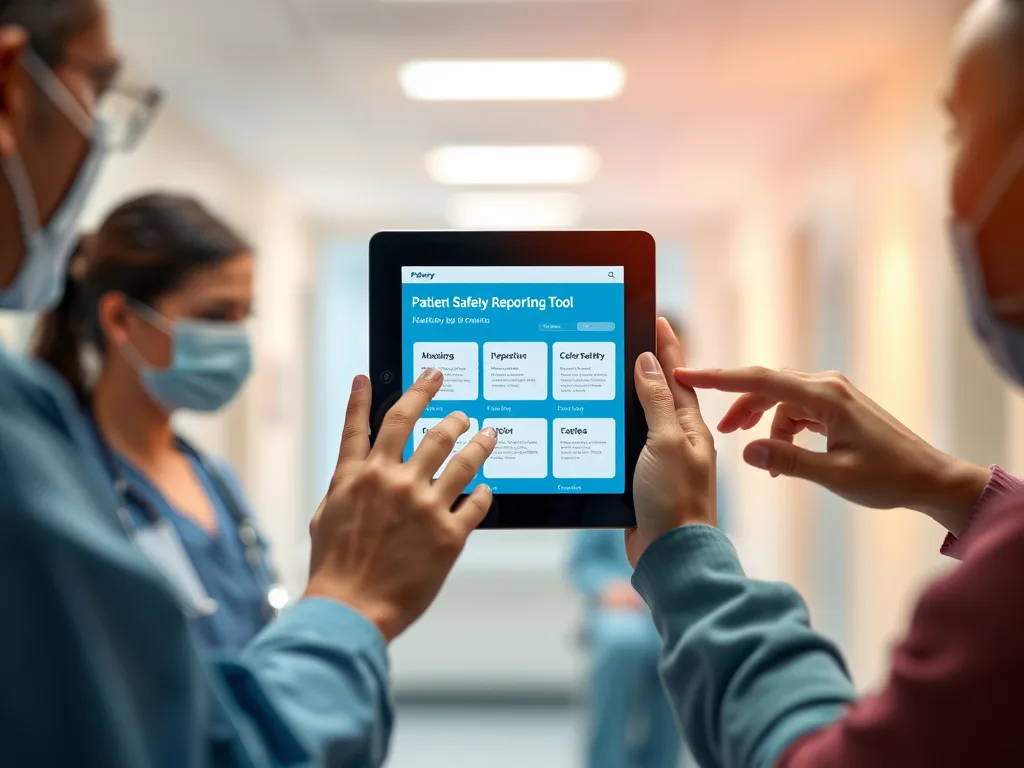
This article presents significant advancements in enhancing patient safety within healthcare by introducing and rigorously testing a novel Patient Reported Safety Concern Tool. Recognizing that patients are frequently the first to identify safety issues but often face limitations with traditional reporting systems, this study addresses the critical need for effective and accessible mechanisms for patients to report their safety concerns.
The research aimed to undertake the preliminary development and cognitive testing of this multisetting tool, designed to capture a broad spectrum of patient safety issues across various healthcare environments. The goal is to improve the quality of care and foster continuous safety improvements.
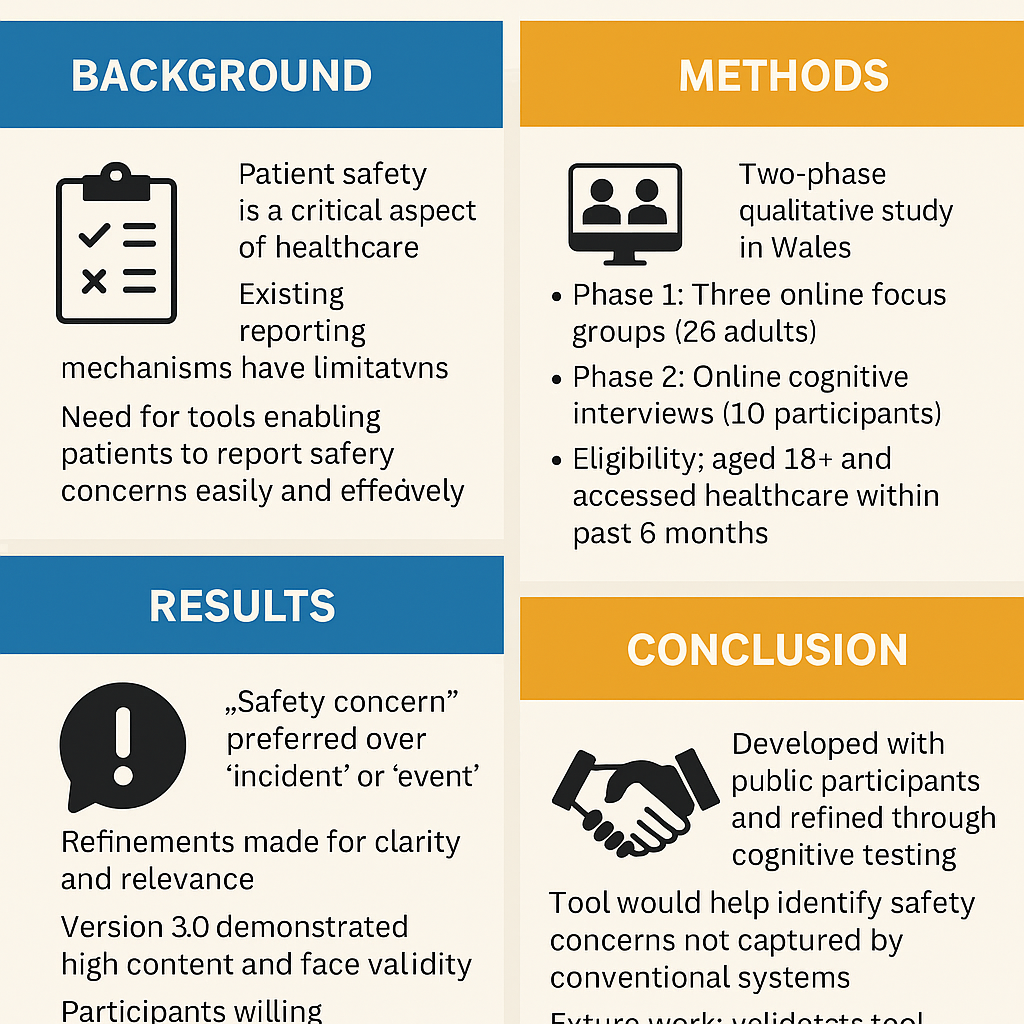
Conducted in Wales between January and September 2023, the study employed a two-phase qualitative methodology.
- Phase 1 involved three online focus groups with 26 adults (aged 25–54) to refine the tool’s content and produce version 2.0.
- Phase 2 consisted of ten online cognitive interviews with additional participants (aged 25–84) to assess face validity and further refine the tool, leading to the final version 3.0.
Key findings from the study highlight several important aspects:
- Participants preferred the term ‘safety concern’ over ‘incident’ or ‘event’, finding it more relatable and inclusive of both physical and emotional harm.
- The tool underwent crucial refinements based on feedback, including extending the recall period for concerns from 6 to 12 months to align with typical NHS follow-up intervals.
- Adjustments were made to ensure item clarity and comprehensibility, such as rewording prompts for detailed descriptions and adding ‘ambulance services’ as a setting option.
- The final version 3.0 demonstrated high content and face validity, with participants expressing a strong willingness to use the tool if routinely distributed.
- The study revealed that the public conceptualizes “patient safety” broadly, encompassing physical, emotional, interpersonal, and systemic elements, viewing safety as the presence of care, respect, and clear communication, not merely the absence of harm.
- The anonymous nature of the tool was identified as a potential factor in mitigating barriers to reporting, such as fear of repercussions or power imbalances.
In conclusion, this co-developed and cognitively tested Patient Reported Safety Concern Tool holds significant promise for identifying safety concerns not captured through conventional systems. The authors emphasize that future work will focus on validating the tool in wider populations, understanding barriers to its completion, and integrating it into existing patient safety learning systems to drive actionable safety improvements.
Reference: Sha’aban, A., Torrens-Burton A., Williams, D., Carson-Stevens, A., Edwards, A., Joseph, L., & Joseph-Williams, N. (2025). Coproducing data-driven organizational safety with patients: development and cognitive testing of a multisetting patient-reported safety concern tool. International Journal for Quality in Health Care, 37(3), mzaf056. https://doi.org/10.1093/intqhc/mzaf056
Key concepts in this article
ValidityConcepts link to the Glossary. Explore the knowledge graph →
Cite this page (APA 7)
Kurutkan, M. N. (2025, August 4). Patient-Reported Safety Concerns: Tool Development and Testing. The Health Topics. https://healthtopic.org/topics/patient-reported-safety-concerns-tool-development-and-testing/