
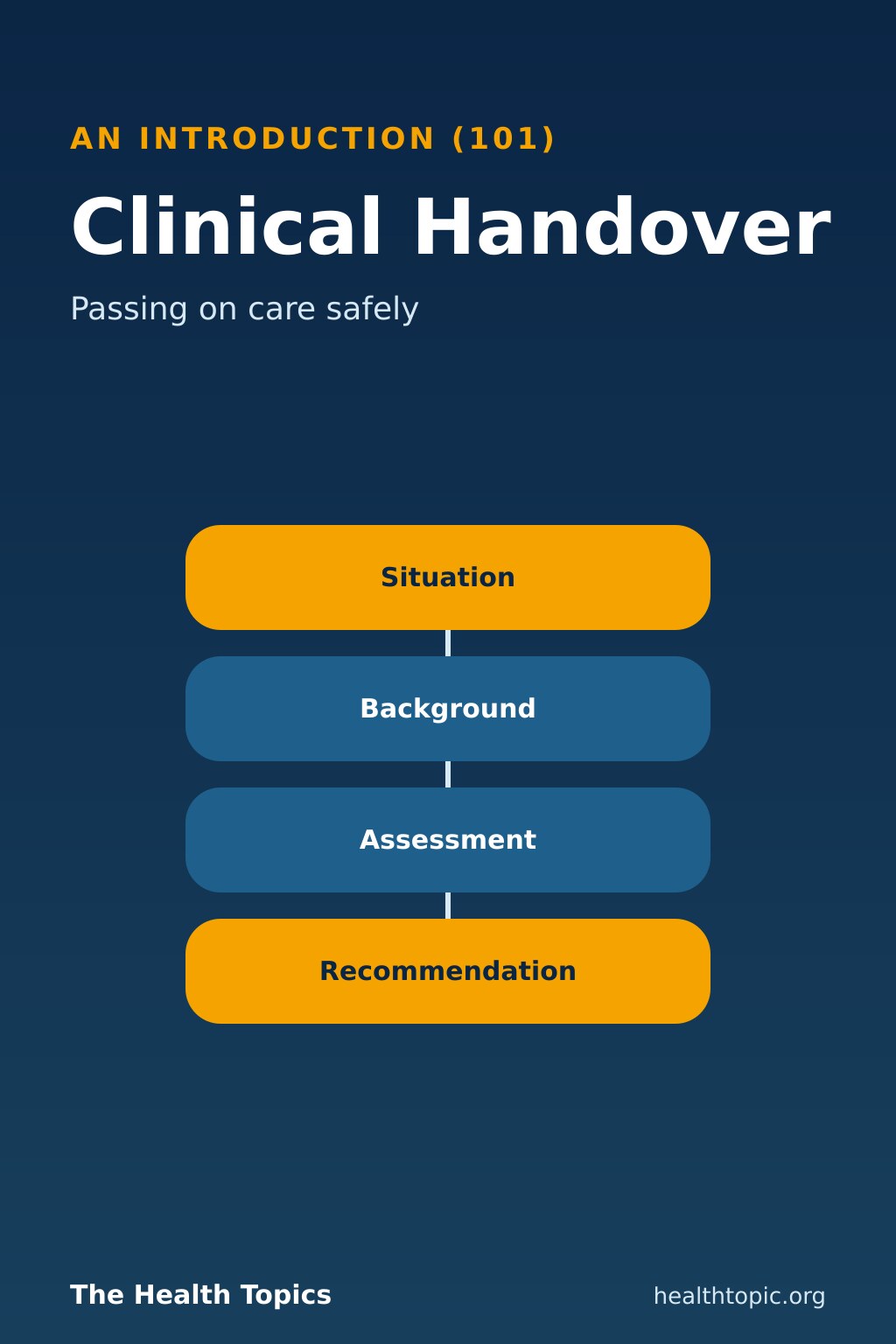
In brief: Clinical handover is the moment when responsibility and accountability for a patient’s care pass from one health professional or team to another (Thomas et al., 2013), together with the information needed to continue that care (Jeffcott et al., 2009). What it means in practice is shown by one audiotape study of internal medicine sign-outs in a teaching hospital: the median time per patient was 35 seconds, the patient’s current condition was mentioned in only half of the oral sign-outs, and 59% of sign-outs drew no question from the receiver (Horwitz, Moin, et al., 2009). Structured tools such as SBAR, ISBAR and I-PASS aim to close these gaps.
Clinical handover: an introduction (101)
This guide introduces clinical handover (also called handoff, sign-out or shift report) for students and practitioners of nursing, medicine and health management. It is built on 1331 records (1221 articles and 110 reviews) from the Web of Science Core Collection, published from 1993 to 2027, and every empirical statement is traced to one of them. It covers definitions, types and tools, failures, interventions (including null and mixed results), barriers, patient involvement, measurement, bibliometrics, Türkiye, debates, gaps and a roadmap for managers.
Try it yourself: Spot the missing elements in short fictional handover transcripts, build a structured I-PASS or ISBAR handover for a fictional patient, and run a ten-question handover quality check for a ward.
Open the interactive module: Handover Lab
Learning objectives
By the end of this guide you should be able to:
- Define clinical handover and distinguish it from sign-out, shift report, bedside handover and care transition.
- Describe the main types of handover and structured tools such as SBAR, ISBAR, I-PASS, checklists and electronic handover.
- Explain how information is lost at handover and how failures relate to errors and adverse events.
- Evaluate intervention evidence, separating positive, null and mixed findings and process effects from patient outcomes.
- Apply a roadmap and indicators to improve handover in a ward or department.
Key concepts
- Clinical handover. The transfer of responsibility and accountability for a patient’s care between healthcare providers (Thomas et al., 2013); it comprises the transfer of information, of responsibility or accountability, and the system in which it happens (Jeffcott et al., 2009).
- Handoff. An episode in which control of, or responsibility for, a patient passes from one health professional to another, with an exchange of important patient information (Cohen & Hilligoss, 2010).
- Sign-out. The transfer of patient information and responsibility from one physician to a cross-coverage physician (Vidyarthi et al., 2006).
- Bedside handover. Nursing handover at the patient’s bedside, reflecting a patient-centred approach (Chaboyer et al., 2010).
- Structured handover tool. A protocol, guideline, form or mnemonic created to make handovers safer (Yung et al., 2023).
- I-PASS. A mnemonic for illness severity, patient summary, action list, situation awareness and contingency plans, and synthesis by receiver (Heilman et al., 2016).
- Handover quality. More than the correct and complete transmission of information: assessments, including predictions of anticipated problems, are critical to it (Manser et al., 2013).
Contents
- Method, introduction and history
- Definitions, neighbouring concepts, types and tools
- What goes wrong; interventions and their effects
- Barriers, patient involvement and measurement
- Bibliometric profile; Türkiye
- Debates, research gaps and implications
- Summary, questions, reading, glossary, FAQ and references
How this guide was produced
Database and date. Web of Science Core Collection, Advanced Search, 18 November 2026; no language or year limits; articles and reviews.
Query (verbatim). TI=(handover* OR "hand-over*" OR handoff* OR "hand-off*" OR "hand off*" OR "sign-out*" OR signout* OR "shift report*" OR "bedside report*" OR "change-of-shift" OR ISBAR OR SBAR OR "I-PASS") AND TI=(clinical OR patient* OR nurs* OR physician* OR resident* OR hospital* OR ward* OR shift* OR "emergency department*" OR intensive OR perioperative OR surgical OR communicat* OR safety OR structured OR standardi*) AND DT=("Article" OR "Review")
Search development. The first block requires a handover term or tool in the title; the second places the record in clinical care, a professional group, a setting, communication or safety. A single search was sufficient.
Criteria. Included: records that substantively address handover between health professionals or care settings. Excluded: “handover” or “handoff” in another sense (for example, a building, project or software, or SBAR without handover content); protocols without results; handover mentioned only in passing; editorials without substance.
Flow. See Figure 1: 1682 identified, 3 duplicates and 1 retracted publication removed, 1678 screened, 347 excluded (312 using “handover” or “handoff” in another sense; 22 mentioning handover only in passing; 13 protocols without results), 1331 included (1221 articles and 110 reviews, published 1993 to 2027).
Screening and extraction. AI-assisted screeners applied the criteria to titles and abstracts; the lead reviewer resolved 9 unsure records. Evidence was then extracted from the abstracts of a subset of 291 included records into a structured template; numbers from this subset are not corpus-wide counts.
Lessons from screening. Handover terms are noisy: almost one screened record in five used them in another sense (mostly non-clinical, plus some SBAR uses without handover content).
Limitations. Single database; title search, which misses records that study handover without naming it in the title; abstract-level reading without quality appraisal or full-text checks; AI-assisted screening and extraction; English-language bias of Web of Science. Bibliometric theme counts are keyword matches and overlap. Countries are counted from affiliation addresses, which are not study settings.
Introduction: why handover matters
Every shift change, transfer and discharge requires one group of clinicians to pass a patient to another. Handover has been called the most frequent and vulnerable clinical process, and one that is key to patient safety (Martínez et al., 2025). Done well, handover should reduce lapses in continuity, errors and harm; in practice it is often done poorly, with critical detail omitted and irrelevant detail included (Burgess et al., 2020).
The scale of the problem is visible in several kinds of data. In a random sample of malpractice claims from 2001 to 2011 in a national claims database, communication failures were found in 49% of claims, and 40% of these communication failures involved a failed handoff (Humphrey et al., 2022). In 23,736 adult medical patients at a public, university-affiliated hospital, unadjusted hospital mortality was higher for patients discharged within 7 days after a change of resident team than for controls (2.68% versus 2.08%) (Denson et al., 2015). These are associations, not proof that handover caused the harm.
Handover is also more than an information exchange: nurse-to-nurse handover accomplishes informational, social and educational functions (Kerr, 2002), and a review identified seven framings of what a handoff does, each pointing to different interventions (Patterson & Wears, 2010).
History and development
The corpus begins in 1993, and its early records come mainly from nursing: an ethnography of oral shift reports (Ekman & Segesten, 1995) and a study of patients’ perceptions of bedside handover, which it described as the chief arena for intershift handover in nursing (Cahill, 1998). Patient safety brought handover into wider view: since the Institute of Medicine published To Err is Human in 1999, handovers and their link with safety communication have raised concern among the public, regulators and practitioners (Yung et al., 2023).
Changes in working hours made handover more frequent. Resident duty-hour restrictions increased sign-outs and discontinuity (Vidyarthi et al., 2006), and in Europe the Working Time Directive introduced shift patterns for junior doctors (Ferran et al., 2008). Regulation followed. The Joint Commission made a standardised approach to hand-off communications a National Patient Safety Goal, and a hand-off clinic workshop to build standardised protocols was developed in 2005 (Arora & Johnson, 2006). In 2010, duty-hour rules of the Accreditation Council for Graduate Medical Education required faculty to monitor residents’ handoff competence (Wohlauer et al., 2012).
Structured tools multiplied. HAND ME AN ISOBAR was piloted at the Royal Hobart Hospital from 2005 to 2008 (Yee et al., 2009), and iSoBAR was developed in the Western Australian Country Health Service under the National Clinical Handover Initiative (Porteous et al., 2009). The I-PASS curriculum was developed and disseminated in paediatric residency programmes from June 2010 to February 2014 (Starmer et al., 2014), extended to nurses in 2011 to 2012 (Starmer et al., 2017), adapted for orthopaedics in 2019 (Lightsey et al., 2023) and implemented across 32 hospitals (Starmer et al., 2023). Figure 2 shows ten milestones.
Definitions
Definitions agree on a core and differ in emphasis (Table 1). The core is a transfer of information and of responsibility or accountability for some or all of a patient’s care. The differences lie in what else is stressed: the system, the interaction, the place and mode, or what happens to unfinished work. In emergency care, several competing definitions have been said to produce great heterogeneity (Tortosa-Alted, Reverté-Villarroya, et al., 2021).
| Source | Year | Discipline | Definition (paraphrased) | Emphasised dimension |
|---|---|---|---|---|
| Solet et al. (2005) | 2005 | Medical education | The transfer of rights, duties and obligations from one person or team to another | Responsibility |
| Wayne et al. (2008) | 2008 | Surgical education | A contemporaneous, interactive process of passing patient-specific information between caregivers to ensure continuity and safety (Joint Commission definition, as quoted) | Interaction and continuity |
| Jeffcott et al. (2009) | 2009 | Quality and safety | Three elements: transfer of information, transfer of responsibility and/or accountability, and the system in which the handover occurs | System |
| Cohen and Hilligoss (2010) | 2010 | Quality and safety | An episode in which control of, or responsibility for, a patient passes from one professional to another, with an exchange of important information | Control |
| Griffin (2010) | 2010 | Perinatal nursing | The time when responsibility and accountability pass from one nurse to another, at the station, by tape, phone or writing, or at the bedside | Place and mode |
| Siemsen et al. (2012) | 2012 | Public health | Situations in which professional responsibility for some or all aspects of diagnosis, treatment or care is transferred, temporarily or permanently | Scope and duration |
| Cohen et al. (2012) | 2012 | Critical care | A conversation in which an understanding of the patient is co-constructed, not a one-way transmission | Shared understanding |
| Kannan and Shelat (2026) | 2026 | Gastrointestinal surgery | A safety-critical transfer of information, responsibility and control that should be verified, not a one-way recital | Verification |
| Marqués (2027) | 2027 | Safety science | Responsibility closure: unfinished work has an identifiable receiver, a feasible next action and enough capacity for action or escalation | Follow-through |
Three points follow for teaching. First, information alone is not enough: handoff quality extends beyond information transfer to teamwork (Manser et al., 2010). Second, the receiver is an active participant, yet receivers engage in understanding and questioning rather infrequently (Foster & Manser, 2012). Third, recent work moves the question from whether everything was said to whether unfinished work is now understood, assigned and executable (Marqués, 2027). Figure 3 combines these elements.
Distinguishing clinical handover from neighbouring concepts
Several terms overlap with clinical handover (Table 2). Sign-out and shift report are profession-specific forms, and bedside handover is defined by its location; care transition is often used as a synonym, although this guide treats it as the wider term (author’s usage). SBAR, ISBAR and I-PASS are not kinds of handover but tools for structuring one; SBAR is also used for other team communication (Müller et al., 2018).
| Concept | What it is | Relation to clinical handover | Source |
|---|---|---|---|
| Clinical handover | Transfer of responsibility and accountability for care between providers | The umbrella term used in this guide | Thomas et al., 2013 |
| Handoff | Exchange of information between professionals that accompanies the transfer of care | Usually a synonym | Ilan et al., 2012 |
| Sign-out | Transfer of information and responsibility from one physician to a cross-covering physician | Physician form, often at the end of a duty period | Vidyarthi et al., 2006 |
| Shift report | Verbal reports between groups of nurses at shift change; conventionalised, locally situated meetings with several functions | Nursing shift-to-shift form | Buus et al., 2017 |
| Bedside handover | Intershift handover held at the patient’s bedside | Defined by location and patient presence | Cahill, 1998 |
| Care transition | Transitions of care, also called handoffs or sign-outs, occur when responsibility for a patient passes to another provider | Often a synonym; the wider term in this guide (author’s usage) | Gross et al., 2016 |
| SBAR | Situation, background, assessment, recommendation; used for team communication, hand-offs and nurse-to-physician phone calls | A structuring tool, not limited to handover | Müller et al., 2018 |
| ISBAR | SBAR preceded by Introduction; a standardised framework usable in any situation (related versions such as iSoBAR begin with Identify) | A structuring tool | Burgess et al., 2020; Porteous et al., 2009 |
| I-PASS | Illness severity, patient summary, action list, situation awareness and contingency plans, synthesis by receiver | A handover-specific tool with a built-in receiver step | Heilman et al., 2016 |
| Warm handoff | Appears in 6 records, none in the extraction subset | No corpus definition offered | Not applicable |
Figure 4 compares the ten concepts on six features; the ratings are the author’s synthesis.
Types of handover and structured tools
Shift-to-shift handover. Emergency department intershift handover has been discussed in three phases: prehandover, the intershift meeting and posthandover (Singer & Dean, 2006); yet studies of doctors’ handovers focus on the meeting itself and rarely examine the other phases (Raduma-Tomàs et al., 2011).
Inter-unit handover. Transfers between units present challenges not found in intershift handoffs (Ong & Coiera, 2011). Emergency physicians and hospitalists described the handoffs between them as a “gray zone” of incomplete information and conflicting expectations (Apker et al., 2007), and in cross-unit handovers from high-acuity to low-acuity units, sender and recipient units agreed on the presence of alert signs in the discharge form in only 40% of cases (Toccafondi et al., 2012).
Transfers between organisations. Ambulance-to-emergency department handover occurs between two organisations with different cultures (Bost et al., 2012). Critically ill patients transferred between hospitals are at high risk of adverse events and death (Usher et al., 2016), and discharge handover to primary care, in which patients often carry the information, is relatively under-researched (Groene et al., 2012).
Perioperative handover. Perioperative handoffs link the preoperative, intraoperative and postoperative phases and are prone to coordination and communication failures (Abraham et al., 2023); they occur at a time of high cognitive load and many distractions (Sparling et al., 2023). Intraoperative transfer of anaesthesia care between providers is a distinct case (Boet et al., 2020).
Sign-out and bedside handover. Physician sign-out was traditionally informal, unstructured and idiosyncratic (Vidyarthi et al., 2006). Bedside handover lets nurses see the patient and facilitates patient participation, both purported to improve safety (Tobiano et al., 2017). Warm handoff appears in 6 records, none of them extracted.
Mnemonics and structured tools. A content analysis of 27 handoff mnemonics yielded 12 information clusters (Nasarwanji et al., 2016), and a scoping review of 42 mnemonics built a taxonomy of three processes and twenty functions (Yung et al., 2023). ISBAR is described as working best when all parties are trained in the same framework (Burgess et al., 2020). I-PASS began as a residency curriculum (Starmer et al., 2014) and has been adapted for nursing bedside report and imaging and procedures handoffs (Blazin et al., 2020). Table 3 summarises the main tools.
| Tool | Elements | Typical setting | Evidence as stated | Citation |
|---|---|---|---|---|
| SBAR | Situation, background, assessment, recommendation | Team communication, hand-offs and nurse-to-physician calls | Systematic review: 8 of 26 patient outcomes significantly improved; moderate evidence | Müller et al., 2018 |
| ISBAR | Introduction plus SBAR (some versions use Identify) | Junior medical officers’ after-hours handover | 71% felt handover improved; no significant effect on duration | Thompson et al., 2011 |
| iSoBAR | Identify, situation, observations, background, agreed plan, read back | Western Australian Country Health Service | Effect on patient outcomes still to be assessed | Porteous et al., 2009 |
| I-PASS | Illness severity, patient summary, action list, situation awareness and contingency plans, synthesis by receiver | Residents from diverse specialties in 32 hospitals | Resident-reported handoff-related adverse events fell 47% (major events 1.7 to 0.9 per person-year) | Starmer et al., 2023 |
| IMIST-AMBO | Identification, mechanism, injuries, signs, treatment, allergies, medications, background, other | Ambulance to emergency department | More information per handover, fewer questions, shorter duration | Iedema et al., 2012 |
| DeMIST | Structured format for ambulance verbal handover | Emergency department (format introduced in one of two departments) | Staff retained 49.2% of information with DeMIST versus 56.6% before | Talbot & Bleetman, 2007 |
| Handover checklist | Items that “must” and “should” be handed over | Operating room to intensive care, university hospital | Randomised trial: 87.1% versus 75.0% of “must” items handed over (medians) | Salzwedel et al., 2016 |
| Electronic handover | Electronic platforms for transfer between staff or teams | Various | Systematic review: may improve completeness; effect on care unclear | Delardes et al., 2020 |
No single tool fits every setting: in a review of bedside handover, a structured tool was strongly supported, but no one tool suited all clinical areas (Anderson et al., 2015).
What goes wrong at handover
Information is omitted. In a systematic review of change-of-shift handovers, omission of detailed patient information, including anticipatory guidance, was the greatest problem across 20 studies of communication errors (Flemming & Hübner, 2013). In 96 video-recorded handovers of trauma patients from emergency medical services at a level I trauma centre, 329 of 473 transmitted elements (69.6%) were documented as received; prehospital hypotension was received only 10 of the 28 times it was transmitted (Carter et al., 2009).
Information is wrong or not shared. In written sign-outs of internal medicine interns at a single hospital, 1,876 of 6,942 medication chart entries (27%) were discrepant, 80% of them omissions (Arora et al., 2007). Senders overestimate what they convey: among paediatric interns, the most important information was not successfully communicated 60% of the time (Chang et al., 2010). Receivers rarely check: in 48 hospitalist handoffs, read-back occurred only eight times (17%) and 98% of handoffs were interrupted (Greenstein et al., 2013).
Handover failures appear in incident and claims data. Of 334 handover incidents reported over 36 months in a medium-size general hospital in the United Kingdom, 45% involved poor or incomplete handover and 29% no handover at all; severity was generally low and under-reporting was suspected (Pezzolesi et al., 2010). In 459 handover incidents reported in an Australian health service, transfer without adequate handover accounted for 28.8% and omission of critical information on the patient’s condition for 19.2% (Thomas et al., 2013).
Clinicians report harm. In a 2006 survey at Massachusetts General Hospital, 59% of internal medicine and general surgery residents reported that one or more patients had been harmed by problematic handoffs during their last rotation (Kitch et al., 2008). In three metropolitan emergency departments, information was perceived as lacking in 15.4% of handovers and patients were adversely affected in 33 cases (4.7%), although 88.3% of receiving doctors rated the handover adequate or good (Ye et al., 2007).
Some transfers are associated with worse outcomes. Among 313,066 adults undergoing major surgery in Ontario, the 1.9% who had a complete handover of anaesthesia care had a higher risk of the composite of death, readmission or major complications (adjusted risk difference 6.8%), though not of readmission alone (Jones et al., 2018). A meta-analysis of four studies found a 40% higher risk of adverse events when an anaesthesia handover occurred during the procedure (pooled risk ratio 1.40), with very high heterogeneity (I² 98%); one included study suggested that handover may help detect or rectify errors (Boet et al., 2020). In the resident handoff study above, the association with mortality lost statistical significance after the 2011 duty-hour revision (adjusted odds ratio 1.18, 95% CI 0.89 to 1.56) (Denson et al., 2015). All of these are observational associations.
Interventions and their effects
Intervention studies more consistently report improvements in communication completeness and documentation than in ownership, follow-through or patient-safety outcomes (Marqués, 2027), and the literature on patient, physician and cost outcomes is mixed (Allen-Dicker et al., 2025). One review found that standardised handoff tools consistently improved processes of care, consistently did not affect mortality, and had mixed effects on complications, length of stay and adverse events (Rosenthal et al., 2018).
Structured tools and protocols. A meta-analysis of 36 pre/post studies found positive effects of standardised protocols on handoff information (g = .71), patient outcomes (g = .53), provider outcomes (g = .51) and organisational outcomes (g = .29), but also significant publication bias and heterogeneity, and noted that protocols can increase handover time and errors of omission (Keebler et al., 2016). For operating room to intensive care handovers, a meta-analysis of 32 studies reported fewer omissions and technical errors, but only 15 studies scored above 9 on the modified Downs and Black checklist (Abraham et al., 2021). A standardised protocol in two surgical intensive care units reduced omissions by 21.3%, while handoff duration rose from 4.1 to 8.0 minutes and ICU mortality and length of stay did not change (Lane-Fall et al., 2020).
Training and multicomponent programmes. Reductions in errors and adverse events have been reported after bundles that combine training, a mnemonic and a new handoff structure. On two inpatient units at Boston Children’s Hospital, a resident handoff bundle was followed by a fall in medical errors from 33.8 to 18.3 per 100 admissions and in preventable adverse events from 3.3 to 1.5 per 100 admissions, while verbal handoff duration did not change (Starmer et al., 2013). Across 32 hospitals, an enhanced I-PASS programme with external coaching was followed by a 47% reduction in handoff-related adverse events reported by residents (Starmer et al., 2023). A review of SBAR implementation found large fidelity gains mostly in classrooms, small to moderate gains in clinical settings, and better patient outcomes only with intensive multifaceted interventions (Lo et al., 2021); a review of handover learning programmes found no study reporting patient outcomes (Boje & Ludvigsen, 2020).
Electronic handover. A computerised rounding and sign-out system halved the number of patients missed on resident rounds in a randomised crossover study (Van Eaton et al., 2005), and a later randomised crossover trial of the same system found no difference in error incidents or adverse drug events, which the authors read as no loss of safety (Van Eaton et al., 2010). In nursing, a rapid evidence assessment found nurses generally dissatisfied with electronic record-based handover and an effective solution not yet realised (Browning et al., 2025).
Bedside handover. A systematic review of 13 studies reported improved perceived safety and satisfaction and shorter handover duration and overtime (Daicampi et al., 2025), while a review of 30 studies of handovers including patients or carers found contradicting findings for patient outcomes, including falls risk, and reducing compliance over time (Maher et al., 2025). A Cochrane review found no eligible randomised trials of nursing handover styles, so their effectiveness remained uncertain (Smeulers et al., 2014). Table 4 sets out examples of positive, null and mixed findings.
| Intervention | Setting | Design | Finding | Citation |
|---|---|---|---|---|
| Positive | ||||
| Standardised sign-out card | Medical interns | Prospective randomised controlled trial | Poor sign-out on 5.8% of questionnaires with the card versus 14.9% without (p = .016) | L. H. Lee et al., 1996 |
| Resident handoff bundle | Two inpatient units, Boston Children’s Hospital | Prospective intervention study | Medical errors 33.8 to 18.3 and preventable adverse events 3.3 to 1.5 per 100 admissions | Starmer et al., 2013 |
| Enhanced I-PASS with coaching | 32 hospitals, diverse specialties | Prospective Type 2 hybrid effectiveness implementation study | Resident-reported handoff-related adverse events down 47% | Starmer et al., 2023 |
| Operating room to ICU checklist | University hospital | Prospective randomised controlled trial | Median 87.1% versus 75.0% of “must” items handed over (P < .01) | Salzwedel et al., 2016 |
| Null or negative | ||||
| DeMIST ambulance handover format | Emergency department | Before and after evaluation of recall | Information retained fell from 56.6% to 49.2% | Talbot & Bleetman, 2007 |
| Computerised rounding and sign-out system | 14 resident teams, two hospitals | Randomised crossover | No difference in error incidents (6.33 versus 5.61 per 1,000 patient-days, P = .68); authors read this as no loss of safety | Van Eaton et al., 2010 |
| Nursing handover styles | Hospital nursing | Cochrane systematic review | No eligible randomised trials; effectiveness uncertain | Smeulers et al., 2014 |
| Mixed | ||||
| UW-IPASS handoff curriculum | 8 medical and surgical ICUs | Stepped-wedge cluster randomised trial | Fewer clinicians unprepared (10.2% versus 7.2%); no change in ICU length of stay or ventilation | Parent et al., 2018 |
| SBAR curriculum with video and role-play | 45 general surgery residents | Pre and post order-entry audit with subspecialty controls | Order entry errors 14.5% to 12.2% (P = .003); no difference in sentinel events | Telem et al., 2011 |
| Recorded plus bedside nursing report | Medical-surgical units, teaching hospital | Baseline versus post-implementation | More patient satisfaction, fewer falls at shift change; lower nurse-perceived efficiency | Sand-Jecklin & Sherman, 2013 |
| Physician inpatient handoff interventions | 42 studies (6 randomised trials) | Systematic review | Adverse events improved in 3 of 16 studies; none of 4 studies showed lower mortality | Allen-Dicker et al., 2025 |
Barriers, facilitators, patient involvement and measurement
Barriers. Early systematic reviews of United States handoffs grouped barriers into eight categories for physicians (Riesenberg et al., 2009) and for nurses (Riesenberg et al., 2010). For emergency medical services handover, barriers were classed as educational, operational, cultural and cognitive (Troyer & Brady, 2020). The environment matters: in a survey of nurses in 10 European countries, dissatisfaction with shift handover ranged from 22% in England to 61% in France, mainly because of too many disturbances and lack of time (Meissner et al., 2007). In intensive care bedside handovers, the mean was 2 interruptions per handover (range 0 to 7), most often from doctors, nurses and alarming intravenous pumps (Spooner et al., 2015). For trainees, factors affecting cognitive load include the number of patients, time constraints, clinical uncertainty and experience gradients between sender and receiver (Young et al., 2016).
Facilitators. In survey data from 1,052 hospitals and 515,637 respondents, perceived teamwork across units was the most significant predictor of perceived successful handoffs; staffing and management support for safety were also associated, while organisational learning was associated positively for managers but negatively for clinical staff (Richter et al., 2016). Institutional support, customised written documents and peer observation with feedback sustained I-PASS use in one paediatric hospital (Blazin et al., 2020), and strong leadership and mentoring supported patient-centred handover on a rehabilitation ward (Chien et al., 2022). For electronic tools, nurse engagement and codesign were enablers (Browning et al., 2025).
Patient and family involvement. Patients’ views of bedside handover were grouped into maintaining a professional distance, establishing professional sharing and maintaining patient safety (Cahill, 1998). On surgical wards, patients cited tiredness, difficulty formulating questions and the language used as reasons for not participating, and nurses reported more patient participation than patients did (Timonen & Sihvonen, 2000). Patients in one Queensland hospital saw bedside handover as a chance to correct inaccuracies, though some preferred passive engagement (McMurray et al., 2011), and family members can improve the accuracy of handover communication (Tobiano et al., 2013). A review of bedside handover found nurses more concerned about confidentiality than patients (Anderson et al., 2015), and on Australian medical wards nurses feared that sensitive information would be overheard and saw patients and families as disrupting the flow of handover (Tobiano et al., 2017). A meta-synthesis found that patients support bedside reports as a right (Bressan et al., 2019). Between settings, patients were expected to carry information without being empowered to do so (Groene et al., 2012).
Measuring handover quality. Measurement remains a weak point. A review of about 400 articles concluded that standardised, reliable handoff measurement tools remain elusive (Patterson & Wears, 2010). A handoff quality rating tool piloted in 126 handoffs identified three predictors of quality: information transfer, shared understanding and working atmosphere (Manser et al., 2010). The Handoff CEX scores six subdomains from 1 to 9; external evaluators gave lower marks than peers, and the tool was judged best suited to external evaluation (Horwitz et al., 2013). The Handover Evaluation Scale has been used in nurse surveys (Gungor et al., 2022). Yet of 8 articles on emergency handover of critical patients, only 3 included validated tools, and none addressed cross-cultural adaptation or translation (Tortosa-Alted, Martínez-Segura, et al., 2021). A review of systematic reviews found that no single tool is best for any specialty or for evaluating the handover process (Desmedt et al., 2021), and a review of physician-to-nurse handover found 44 outcomes and no consensus on standard indicators (Odone et al., 2022). Recent work proposes balancing measures such as clarification workload and cognitive burden (Kannan & Shelat, 2026).
Themes and bibliometric profile
Growth. Records rose from 18 before 2005 to 81 in 2005 to 2009, 258 in 2010 to 2014, 400 in 2015 to 2019 and 395 in 2020 to 2024, with 179 from 2025 to 2027 (Figure 5). The highest annual count was 99 in 2021, followed by 98 in 2026, a year covered only to the search date.
Themes. Keyword matches in titles, abstracts and author keywords (Figure 6) put nursing handover first (677 records), followed by training or education (537), errors or adverse events (475) and physician or resident handoff (442); I-PASS matched 56 records and warm handoff 6. A record can match several groups, so the counts overlap.
Journals and fields. The leading journals were the Journal of Clinical Nursing (45 records), the Journal of Nursing Care Quality (37), the Joint Commission Journal on Quality and Patient Safety (33), BMJ Quality & Safety (28), the Journal of Advanced Nursing (24), the Journal of Hospital Medicine (20), BMC Nursing, Cureus and BMJ Open Quality (18 each), and the International Journal for Quality in Health Care and the Journal of Patient Safety (16 each). The leading Web of Science categories were Nursing (440), Health Care Sciences & Services (279), Medicine, General & Internal (177), Health Policy & Services (107), Emergency Medicine (96), Surgery and Pediatrics (72 each), Medical Informatics (66), Education, Scientific Disciplines (56) and Critical Care Medicine (55).
Countries. By affiliation address (a record counts for every country listed), the leading countries were the United States (597), Australia (179), the United Kingdom (116), Canada (72), Germany (48), China (44), the Netherlands (35), Ireland (29), and Norway and South Korea (28 each). Affiliations show where authors work, not where studies were done.
Clinical handover in Türkiye
Eleven included records have at least one Türkiye affiliation. Six name the country in the abstract: four as “Turkey” or “Turkish”, and two as “Türkiye”, which the Web of Science export renders with an encoding error, so a plain keyword count finds only four. The other five do not name a country and are not treated here as Turkish settings; one of them, a quasi-experimental complex nursing handover intervention, reported significant increases in patient satisfaction and trust in nurses (setting not named) (Gungor & Tosun, 2025).
- Emergency physicians. In interviews with 462 emergency doctors in 62 hospitals in Istanbul, Edirne, Kirklareli and Tekirdag (April to June 2016), 98.1% completely or partially agreed that deficiencies during handover negatively affect treatment; handover education and a standardised form were recommended (Akpinar et al., 2018).
- SBAR in paediatric surgery. In a pretest-post-test semi-experimental study of 24 nurses in two paediatric surgery units of a training and research hospital, SBAR questionnaire scores rose from 60.00 to 92.50; nurses were split equally on whether SBAR wasted time, and no negative events occurred (Pazar et al., 2024).
- Medical and surgical nurses. In a single-centre cross-sectional study of 249 nurses in a city hospital in the Mediterranean region, handover training and handover tools were associated with higher Handover Evaluation Scale scores, and noise, workload and tiredness were the most frequently reported barriers (Tosunöz & Aydinli, 2025).
- Cardiac surgery. A prospective observational study of 85 handovers from the cardiac surgery operating room to the critical care unit of a university hospital in Izmir found that surgical and anaesthesia teams transferred different information and that few nurses were involved (Doruker et al., 2025).
- Intensive care to ward. In a prospective quality improvement and implementation study in a 900-bed public hospital (100 observed handovers from the surgical intensive care unit to the ward), a standardised process with a checklist improved patient identification and drain or catheter information (p < 0.001); duration did not change significantly (p = 0.051), interruptions occurred in 50% of handovers before and 48% after, and nurses rated the process acceptable and feasible (Önler et al., 2026).
- Night shifts. In a descriptive study of 270 nurses in a tertiary university hospital, higher night-shift sleepiness was associated with lower self-reported handover effectiveness (beta = -0.670) (Kaplan et al., 2026).
None of the six abstracts measures errors or adverse events systematically (one notes that no negative events occurred during SBAR use), none is a randomised trial, five are single-hospital studies, and none studies ambulance-to-hospital, discharge or electronic handover. Four of the six study nurses only. In these six abstracts, the evidence is recent, mostly about nursing, and concerned with perceptions and process rather than outcomes.
Debates and contradictions in the literature
Standardisation versus flexibility. Regulators and many authors call for standardised handover, but some argue that the literature does not support definitive best-practice conclusions or the standardisation that regulators mandate (Cohen & Hilligoss, 2010). Performance variability has been described as an essential part of delivering safe care during handover, which may explain why handover improvements have remained elusive (Sujan et al., 2015). Emergency medical services providers recommend standardising some, but not all, aspects of a handoff (Meisel et al., 2015). Incoming nurses wanted a conversation with questions, outgoing nurses an uninterrupted story (Carroll et al., 2012).
Bedside handover: benefits versus privacy and time. One review argued that the preference for bedside handoffs was not supported by the evidence then available and that verbal handoffs should be retained (Staggers & Blaz, 2013). Later reviews conclude that benefits such as fewer distractions and less information loss outweigh stress and loss of privacy (Daicampi et al., 2025; Paredes-Garza et al., 2022). Time is contested: one review reported shorter handovers (Daicampi et al., 2025), while nurses in another study saw patients and families as lengthening them (Tobiano et al., 2017).
Mnemonic adoption versus evidence of outcome effects. SBAR is widely assumed to increase patient safety, yet the evidence is only moderate (Müller et al., 2018). For prehospital handover, evidence for the benefit of mnemonics appears inconclusive (Wood et al., 2015), and no nursing handover model showed superior efficacy (Bakon et al., 2017). Publication bias may make the picture look better than it is (Keebler et al., 2016; Maher et al., 2025), and non-randomised, time-sequenced designs are vulnerable to secular trends, learning effects and surveillance bias (Kannan & Shelat, 2026).
Verbal versus written or electronic handover. In nursing studies, a written supplement to verbal exchange improved information retention (Arora et al., 2009). An asynchronous voicemail sign-out was found easier by 72% of users, but 69% said that interaction was worse (Horwitz, Parwani, et al., 2009). Electronic records are excellent information feeders but may threaten common understanding if they force asynchronous work (Flemming & Hübner, 2013).
Research gaps and agenda
- Patient outcomes. Randomised trials remain few, and few studies report patient experience or cost outcomes (Allen-Dicker et al., 2025).
- Valid and shared measures. Valid measures of handover quality (Manser & Foster, 2011) and consensus metrics (Odone et al., 2022) are still needed.
- Responsibility and follow-through. The transfer of responsibility is little studied (Anderson et al., 2015), and responsibility closure has not been validated (Marqués, 2027).
- The receiver and the conversation. Research should study how understanding is promoted, not only completeness (Foster & Manser, 2012).
- Chains of transitions. Interdependencies of handovers along the care path need study (Manser, 2013), and inter-facility transfers are understudied (Rosenthal et al., 2018).
- Implementation and sustainability. Only 23% of records in one scoping review addressed sustainability and patient safety outcomes (Zjadewicz et al., 2018).
- Technology. Artificial intelligence in handoff workflows has not yet been studied (Sparling et al., 2023).
- Underrepresented groups and settings. Physician-led handovers that include patients are rarely reported (Maher et al., 2025).
Implications for practice today
For nurse and physician managers, the evidence suggests a staged approach rather than a single tool (order of steps: author’s synthesis).
- Map handovers and their failures. List the service’s handovers and review incident reports, remembering that under-reporting is likely (Pezzolesi et al., 2010).
- Choose or adapt a structure with staff. Adapt a structured tool locally; local standardisation with variation across settings is recommended (Nasarwanji et al., 2016).
- Protect time and place. Reduce interruptions and disturbances (Meissner et al., 2007; Spooner et al., 2015).
- Train both sender and receiver. Combine training with structure; feedback and multiple practice opportunities improve performance (Choi et al., 2024). Teach read-back explicitly (Greenstein et al., 2013).
- Involve patients and families where appropriate. Ask about consent and preferred involvement at admission (Bressan et al., 2019).
- Measure, feed back and sustain. Peer observation with feedback helped sustain I-PASS use (Blazin et al., 2020), and external coaching with monthly metric reviews accompanied a multicentre implementation (Starmer et al., 2023). Track balancing measures too (Kannan & Shelat, 2026).
| Indicator | Type | How to measure | Basis in the corpus |
|---|---|---|---|
| Inclusion of key handover elements (for example, all I-PASS elements) | Process | Direct observation of a sample of verbal and written handovers | Starmer et al., 2023 |
| Information omissions per handover | Process | Observer count against a list of required topics | Lane-Fall et al., 2020 |
| Receiver read-back or questions | Process | Listening checklist during observed handovers | Greenstein et al., 2013 |
| Interruptions per handover | Process | Observation at shift change | Spooner et al., 2015 |
| Clinicians unprepared because of poor handoff | Intermediate | Brief clinician surveys after handover | Parent et al., 2018 |
| Handoff-related adverse events and errors | Outcome | Daily systematic surveillance | Starmer et al., 2013 |
| Handover duration | Balancing | Timing of observed handovers | Lane-Fall et al., 2020 |
| Patient and family satisfaction with information | Outcome | Survey items on information and opportunities to ask questions | Sheth et al., 2016 |
| Staff perception of handoffs and transitions | Culture | Handoff dimension of a patient safety culture survey | S. H. Lee et al., 2016 |
Summary
- Clinical handover transfers information and responsibility for a patient between professionals or teams, within a system.
- Omissions recur; handover failures are linked to errors, adverse events and malpractice claims.
- Structured tools usually improve what is communicated; effects on patient outcomes are less consistent, and some studies are null or negative.
- Reductions in errors and adverse events have been reported after multicomponent programmes.
- Interruptions, time pressure and cognitive load are barriers; teamwork, leadership and feedback are facilitators.
- Many patients value bedside involvement; nurses worry about privacy.
- Measurement remains weak: few validated tools and no agreed indicator set.
- The six abstracts that name Türkiye report mainly perceptions and process, not outcomes.
Discussion questions
- Why might a handover tool improve the completeness of information without improving patient outcomes?
- Which handover in your service carries the highest risk, and how would you test your view?
- How would you balance standardisation of handover content with the need to adapt to the patient and the setting?
- What are the ethical and practical arguments for and against involving patients and families in bedside handover?
- Should electronic tools replace, supplement or only prepare verbal handover?
- Which measures would you use to evaluate a new handover protocol, and how would you avoid before and after bias?
Further reading
- Jeffcott et al. (2009): a framework for what handover consists of and how to measure it.
- Patterson and Wears (2010): seven framings of handoff and why measurement remains difficult.
- Keebler et al. (2016): a meta-analysis of standardised handoff protocols, including publication bias.
- Starmer et al. (2013): a resident handoff bundle and its association with fewer medical errors.
- Tobiano et al. (2018): patient participation in nursing bedside handover, barriers and strategies.
- Yung et al. (2023): a taxonomy of clinical handover mnemonics.
- Marqués (2027): why responsibility for unfinished work matters as much as information.
Glossary
| Term | Turkish | Short definition |
|---|---|---|
| Clinical handover | Hasta devir teslimi | Transfer of information and responsibility for a patient between professionals or teams |
| Shift handover | Vardiya devri | Handover between outgoing and incoming staff at a change of shift |
| Bedside handover | Yatak başı devir teslim | Handover held at the patient’s bedside, often with the patient taking part |
| Structured handover | Yapılandırılmış devir teslim | Handover that follows a set content and order, using a mnemonic, template or checklist |
| SBAR | SBAR | Situation, background, assessment, recommendation |
| ISBAR | ISBAR | Introduction, situation, background, assessment, recommendation; some versions use Identify for the first step |
| I-PASS | I-PASS | Illness severity, patient summary, action list, situation awareness and contingency plans, synthesis by receiver |
| Care transition | Bakım geçişi | Movement of a patient’s care responsibility between providers, units or facilities |
| Sign-out | Hekim devri | Physician handover of patients to a colleague who covers them |
| Read-back | Geri okuma | The receiver repeating key information to confirm it was understood |
| Information omission | Bilgi eksikliği | Required information that is not passed on at handover |
Frequently asked questions
Is a handoff the same as a handover? Usually, yes: the terms are used as synonyms for the exchange of information that accompanies a transfer of care (Ilan et al., 2012).
Which handover tool is best? No single tool is best for every specialty (Desmedt et al., 2021).
Do structured handovers reduce harm? Some multicomponent programmes have been followed by fewer errors and adverse events (Starmer et al., 2013, 2023), but reviews report inconsistent effects on patient outcomes (Allen-Dicker et al., 2025).
Does bedside handover take longer? Not necessarily: one review reported shorter handover duration and less overtime (Daicampi et al., 2025), while nurses in another study saw patients and families as lengthening handover (Tobiano et al., 2017).
Can electronic records replace verbal handover? Not on current evidence: e-handover may improve completeness, but its effect on patient care is unclear (Delardes et al., 2020).
Related on this site: Clinical handover mnemonic taxonomy · Patient safety culture and just culture: an introduction (101) · Patient flow: an introduction (101)
References
- Abraham, J., Duffy, C., Kandasamy, M., France, D., & Greilich, P. (2023). An evidence synthesis on perioperative handoffs: A call for balanced sociotechnical solutions. International Journal of Medical Informatics, 174, Article 105038. https://doi.org/10.1016/j.ijmedinf.2023.105038
- Abraham, J., Meng, A., Tripathy, S., Avidan, M. S., & Kannampallil, T. (2021). Systematic review and meta-analysis of interventions for operating room to intensive care unit handoffs. BMJ Quality & Safety, 30(6), 513-524. https://doi.org/10.1136/bmjqs-2020-012474
- Akpinar, M., Salt, Ö., Sayhan, M. B., & Mutlu, A. (2018). Evaluation of intershift handover in emergency department. Gazi Medical Journal, 29(4), 287-290. https://doi.org/10.12996/gmj.2018.79
- Allen-Dicker, J., Kerwin, M., Wallins, J. S., Rao, N. S., Mara, R., Chilov, M., Batra, C., Chimonas, S., & Korenstein, D. (2025). Physician inpatient handoffs: Patient and physician outcomes: A systematic review. Journal of Hospital Medicine, 20(6), 607-622. https://doi.org/10.1002/jhm.13583
- Anderson, J., Malone, L., Shanahan, K., & Manning, J. (2015). Nursing bedside clinical handover: An integrated review of issues and tools. Journal of Clinical Nursing, 24(5-6), 662-671. https://doi.org/10.1111/jocn.12706
- Apker, J., Mallak, L. A., & Gibson, S. C. (2007). Communicating in the “gray zone”: Perceptions about emergency physician-hospitalist handoffs and patient safety. Academic Emergency Medicine, 14(10), 884-894. https://doi.org/10.1197/j.aem.2007.06.037
- Arora, V., & Johnson, J. (2006). A model for building a standardized hand-off protocol. Joint Commission Journal on Quality and Patient Safety, 32(11), 646-655. https://doi.org/10.1016/S1553-7250(06)32084-3
- Arora, V., Kao, J., Lovinger, D., Seiden, S. C., & Meltzer, D. (2007). Medication discrepancies in resident sign-outs and their potential to harm. Journal of General Internal Medicine, 22(12), 1751-1755. https://doi.org/10.1007/s11606-007-0415-x
- Arora, V. M., Manjarrez, E., Dressler, D. D., Basaviah, P., Halasyamani, L., & Kripalani, S. (2009). Hospitalist handoffs: A systematic review and task force recommendations. Journal of Hospital Medicine, 4(7), 433-440. https://doi.org/10.1002/jhm.573
- Bakon, S., Wirihana, L., Christensen, M., & Craft, J. (2017). Nursing handovers: An integrative review of the different models and processes available. International Journal of Nursing Practice, 23(2), Article e12520. https://doi.org/10.1111/ijn.12520
- Blazin, L. J., Sitthi-Amorn, J., Hoffman, J. M., & Burlison, J. D. (2020). Improving patient handoffs and transitions through adaptation and implementation of I-PASS across multiple handoff settings. Pediatric Quality & Safety, 5(4), Article e323. https://doi.org/10.1097/pq9.0000000000000323
- Boet, S., Djokhdem, H., Leir, S. A., Théberge, I., Mansour, F., & Etherington, C. (2020). Association of intraoperative anaesthesia handovers with patient morbidity and mortality: A systematic review and meta-analysis. British Journal of Anaesthesia, 125(4), 605-613. https://doi.org/10.1016/j.bja.2020.05.062
- Boje, R. B., & Ludvigsen, M. S. (2020). Non-formal patient handover education for healthcare professionals: A scoping review. JBI Evidence Synthesis, 18(5), 952-985. https://doi.org/10.11124/JBISRIR-D-19-00023
- Bost, N., Crilly, J., Patterson, E., & Chaboyer, W. (2012). Clinical handover of patients arriving by ambulance to a hospital emergency department: A qualitative study. International Emergency Nursing, 20(3), 133-141. https://doi.org/10.1016/j.ienj.2011.10.002
- Bressan, V., Cadorin, L., Stevanin, S., & Palese, A. (2019). Patients experiences of bedside handover: Findings from a meta-synthesis. Scandinavian Journal of Caring Sciences, 33(3), 556-568. https://doi.org/10.1111/scs.12673
- Browning, L., Raza-Khan, U., Leggat, S., & Boyd, J. H. (2025). The impact of electronic medical record implementation on the process and outcomes of nursing handover: A rapid evidence assessment. Journal of Nursing Management, 2025(1), Article 5585723. https://doi.org/10.1155/jonm/5585723
- Burgess, A., van Diggele, C., Roberts, C., & Mellis, C. (2020). Teaching clinical handover with ISBAR. BMC Medical Education, 20, Article 459. https://doi.org/10.1186/s12909-020-02285-0
- Buus, N., Hoeck, B., & Hamilton, B. E. (2017). Nurses’ shift reports: A systematic literature search and critical review of qualitative field studies. Journal of Clinical Nursing, 26(19-20), 2891-2906. https://doi.org/10.1111/jocn.13655
- Cahill, J. (1998). Patient’s perceptions of bedside handovers. Journal of Clinical Nursing, 7(4), 351-359. https://doi.org/10.1046/j.1365-2702.1998.00149.x
- Carroll, J. S., Williams, M., & Gallivan, T. M. (2012). The ins and outs of change of shift handoffs between nurses: A communication challenge. BMJ Quality & Safety, 21(7), 586-593. https://doi.org/10.1136/bmjqs-2011-000614
- Carter, A. J. E., Davis, K. A., Evans, L. V., & Cone, D. C. (2009). Information loss in emergency medical services handover of trauma patients. Prehospital Emergency Care, 13(3), 280-285. https://doi.org/10.1080/10903120802706260
- Chaboyer, W., McMurray, A., & Wallis, M. (2010). Bedside nursing handover: A case study. International Journal of Nursing Practice, 16(1), 27-34. https://doi.org/10.1111/j.1440-172X.2009.01809.x
- Chang, V. Y., Arora, V. M., Lev-Ari, S., D’Arcy, M., & Keysar, B. (2010). Interns overestimate the effectiveness of their hand-off communication. Pediatrics, 125(3), 491-496. https://doi.org/10.1542/peds.2009-0351
- Chien, L. J., Slade, D., Dahm, M. R., Brady, B., Roberts, E., Goncharov, L., Taylor, J., Eggins, S., & Thornton, A. (2022). Improving patient-centred care through a tailored intervention addressing nursing clinical handover communication in its organizational and cultural context. Journal of Advanced Nursing, 78(5), 1413-1430. https://doi.org/10.1111/jan.15110
- Choi, J. Y., Byun, M., & Kim, E. J. (2024). Educational interventions for improving nursing shift handovers: A systematic review. Nurse Education in Practice, 74, Article 103846. https://doi.org/10.1016/j.nepr.2023.103846
- Cohen, M. D., & Hilligoss, P. B. (2010). The published literature on handoffs in hospitals: Deficiencies identified in an extensive review. Quality & Safety in Health Care, 19(6), 493-497. https://doi.org/10.1136/qshc.2009.033480
- Cohen, M. D., Hilligoss, B., & Amaral, A. C. K. B. (2012). A handoff is not a telegram: An understanding of the patient is co-constructed. Critical Care, 16(1), Article 303. https://doi.org/10.1186/cc10536
- Daicampi, C., Veronese, M., & Cesaro, E. (2025). Impact of bedside handover on patient perceptions and hospital organizational outcomes: A systematic review. Journal of Nursing Management, 2025(1), Article 3803491. https://doi.org/10.1155/jonm/3803491
- Delardes, B., McLeod, L., Chakraborty, S., & Bowles, K. A. (2020). What is the effect of electronic clinical handovers on patient outcomes? A systematic review. Health Informatics Journal, 26(4), 2422-2434. https://doi.org/10.1177/1460458220905162
- Denson, J. L., McCarty, M., Fang, Y. X., Uppal, A., & Evans, L. (2015). Increased mortality rates during resident handoff periods and the effect of ACGME duty hour regulations. American Journal of Medicine, 128(9), 994-1000. https://doi.org/10.1016/j.amjmed.2015.03.023
- Desmedt, M., Ulenaers, D., Grosemans, J., Hellings, J., & Bergs, J. (2021). Clinical handover and handoff in healthcare: A systematic review of systematic reviews. International Journal for Quality in Health Care, 33(1), Article mzaa170. https://doi.org/10.1093/intqhc/mzaa170
- Doruker, N. C., Korkmaz, F. D., & Sarp, A. (2025). Patient handover from the cardiac surgery operating room to the critical care unit: A prospective observational study. Nursing in Critical Care, 30(5), Article e70154. https://doi.org/10.1111/nicc.70154
- Ekman, I., & Segesten, K. (1995). Deputed power of medical control: The hidden message in the ritual of oral shift reports. Journal of Advanced Nursing, 22(5), 1006-1011.
- Ferran, N. A., Metcalfe, A. J., & O’Doherty, D. (2008). Standardised proformas improve patient handover: Audit of trauma handover practice. Patient Safety in Surgery, 2, Article 24. https://doi.org/10.1186/1754-9493-2-24
- Flemming, D., & Hübner, U. (2013). How to improve change of shift handovers and collaborative grounding and what role does the electronic patient record system play? Results of a systematic literature review. International Journal of Medical Informatics, 82(7), 580-592. https://doi.org/10.1016/j.ijmedinf.2013.03.004
- Foster, S., & Manser, T. (2012). Receiving care providers’ role during patient handover. Trends in Anaesthesia and Critical Care, 2(4), 156-160. https://doi.org/10.1016/j.tacc.2012.03.003
- Greenstein, E. A., Arora, V. M., Staisiunas, P. G., Banerjee, S. S., & Farnan, J. M. (2013). Characterising physician listening behaviour during hospitalist handoffs using the HEAR checklist. BMJ Quality & Safety, 22(3), 203-209. https://doi.org/10.1136/bmjqs-2012-001138
- Griffin, T. (2010). Bringing change-of-shift report to the bedside: A patient- and family-centered approach. Journal of Perinatal & Neonatal Nursing, 24(4), 348-355. https://doi.org/10.1097/JPN.0b013e3181f8a6c8
- Groene, R. O., Orrego, C., Suñol, R., Barach, P., & Groene, O. (2012). “It’s like two worlds apart”: An analysis of vulnerable patient handover practices at discharge from hospital. BMJ Quality & Safety, 21, 67-75. https://doi.org/10.1136/bmjqs-2012-001174
- Gross, T. K., Benjamin, L. S., Stone, E., Shook, J. E., Chun, T. H., Conners, G. P., Conway, E. E., Dudley, N. C., Fuchs, S. M., Lane, N. E., Macias, C. G., Moore, B. R., & Wright, J. L. (2016). Handoffs: Transitions of care for children in the emergency department. Pediatrics, 138(5), Article e20162680. https://doi.org/10.1542/peds.2016-2680
- Gungor, S., Akcoban, S., & Tosun, B. (2022). Evaluation of emergency service nurses’ patient handover and affecting factors: A descriptive study. International Emergency Nursing, 61, Article 101154. https://doi.org/10.1016/j.ienj.2022.101154
- Gungor, S., & Tosun, B. (2025). The impact of improving clinical patient handover interventions on patient outcomes and handover practices: A complex nursing intervention study. Journal of Evaluation in Clinical Practice, 31(4), Article e70087. https://doi.org/10.1111/jep.70087
- Heilman, J. A., Flanigan, M., Nelson, A., Johnson, T., & Yarris, L. M. (2016). Adapting the I-PASS handoff program for emergency department inter-shift handoffs. Western Journal of Emergency Medicine, 17(6), 756-761. https://doi.org/10.5811/westjem.2016.9.30574
- Horwitz, L. I., Moin, T., Krumholz, H. M., Wang, L., & Bradley, E. H. (2009). What are covering doctors told about their patients? Analysis of sign-out among internal medicine house staff. Quality & Safety in Health Care, 18(4), 248-255. https://doi.org/10.1136/qshc.2008.028654
- Horwitz, L. I., Parwani, V., Shah, N. R., Schuur, J. D., Meredith, T., Jenq, G. Y., & Kulkarni, R. G. (2009). Evaluation of an asynchronous physician voicemail sign-out for emergency department admissions. Annals of Emergency Medicine, 54(3), 368-378. https://doi.org/10.1016/j.annemergmed.2009.01.034
- Horwitz, L. I., Rand, D., Staisiunas, P., Van Ness, P. H., Araujo, K. L. B., Banerjee, S. S., Farnan, J. M., & Arora, V. M. (2013). Development of a handoff evaluation tool for shift-to-shift physician handoffs: The handoff CEX. Journal of Hospital Medicine, 8(4), 191-200. https://doi.org/10.1002/jhm.2023
- Humphrey, K. E., Sundberg, M., Milliren, C. E., Graham, D. A., & Landrigan, C. P. (2022). Frequency and nature of communication and handoff failures in medical malpractice claims. Journal of Patient Safety, 18(2), 130-137. https://doi.org/10.1097/PTS.0000000000000937
- Iedema, R., Ball, C., Daly, B., Young, J., Green, T., Middleton, P. M., Foster-Curry, C., Jones, M., Hoy, S., & Comerford, D. (2012). Design and trial of a new ambulance-to-emergency department handover protocol: ‘IMIST-AMBO’. BMJ Quality & Safety, 21(8), 627-633. https://doi.org/10.1136/bmjqs-2011-000766
- Ilan, R., LeBaron, C. D., Christianson, M. K., Heyland, D. K., Day, A., & Cohen, M. D. (2012). Handover patterns: An observational study of critical care physicians. BMC Health Services Research, 12, Article 11. https://doi.org/10.1186/1472-6963-12-11
- Jeffcott, S. A., Evans, S. M., Cameron, P. A., Chin, G. S. M., & Ibrahim, J. E. (2009). Improving measurement in clinical handover. Quality & Safety in Health Care, 18(4), 272-277. https://doi.org/10.1136/qshc.2007.024570
- Jones, P. M., Cherry, R. A., Allen, B. N., Jenkyn, K. M. B., Shariff, S. Z., Flier, S., Vogt, K. N., & Wijeysundera, D. N. (2018). Association between handover of anesthesia care and adverse postoperative outcomes among patients undergoing major surgery. JAMA, 319(2), 143-153. https://doi.org/10.1001/jama.2017.20040
- Kannan, J., & Shelat, V. G. (2026). Standardized handover in gastrointestinal surgery: From checklist adoption to safety culture. World Journal of Gastrointestinal Surgery, 18(7), Article 120266. https://doi.org/10.4240/wjgs.v18.i7.120266
- Kaplan, A., Özdemir, C., & Gökkaya, Y. (2026). Sleepiness during night shifts and nurses’ self-reported cognitive control, cognitive flexibility, and handover effectiveness: A cross-sectional study. International Nursing Review, 73(3), Article e70219. https://doi.org/10.1111/inr.70219
- Keebler, J. R., Lazzara, E. H., Patzer, B. S., Palmer, E. M., Plummer, J. P., Smith, D. C., Lew, V., Fouquet, S., Chan, Y. R., & Riss, R. (2016). Meta-analyses of the effects of standardized handoff protocols on patient, provider, and organizational outcomes. Human Factors, 58(8), 1187-1205. https://doi.org/10.1177/0018720816672309
- Kerr, M. P. (2002). A qualitative study of shift handover practice and function from a socio-technical perspective. Journal of Advanced Nursing, 37(2), 125-134. https://doi.org/10.1046/j.1365-2648.2002.02066.x
- Kitch, B. T., Cooper, J. B., Zapol, W. M., Marder, J. E., Karson, A., Hutter, M., & Campbell, E. G. (2008). Handoffs causing patient harm: A survey of medical and surgical house staff. Joint Commission Journal on Quality and Patient Safety, 34(10), 563-570. https://doi.org/10.1016/S1553-7250(08)34071-9
- Lane-Fall, M. B., Pascual, J. L., Peifer, H. G., Di Taranti, L. J., Collard, M. L., Jablonski, J., Gutsche, J. T., Halpern, S. D., Barg, F. K., Fleisher, L. A., Allen, K., Barry, M., Buddai, S., Chavez, T., Choudhary, M., George, D., Linehan, M., Hernandez, E. T., & Watts, J. (2020). A partially structured postoperative handoff protocol improves communication in 2 mixed surgical intensive care units: Findings from the Handoffs and Transitions in Critical Care (HATRICC) prospective cohort study. Annals of Surgery, 271(3), 484-493. https://doi.org/10.1097/SLA.0000000000003137
- Lee, L. H., Levine, J. A., & Schultz, H. J. (1996). Utility of a standardized sign-out card for new medical interns. Journal of General Internal Medicine, 11(12), 753-755. https://doi.org/10.1007/BF02598991
- Lee, S. H., Phan, P. H., Dorman, T., Weaver, S. J., & Pronovost, P. J. (2016). Handoffs, safety culture, and practices: Evidence from the Hospital Survey on Patient Safety Culture. BMC Health Services Research, 16, Article 254. https://doi.org/10.1186/s12913-016-1502-7
- Lightsey, H. M., Yeung, C. M., Rossi, L. P., Chen, A. F., Harris, M. B., & Stenquist, D. S. (2023). OrthoPass: Long-term outcomes following implementation of an orthopaedic patient handoff template. JAAOS: Global Research & Reviews, 7(12), Article e2300208. https://doi.org/10.5435/JAAOSGlobal-D-23-00208
- Lo, L. S., Rotteau, L., & Shojania, K. (2021). Can SBAR be implemented with high fidelity and does it improve communication between healthcare workers? A systematic review. BMJ Open, 11(12), Article e055247. https://doi.org/10.1136/bmjopen-2021-055247
- Maher, A., Hsu, H. Y., Ebrahim, M. E. B., Vukasovic, M., & Coggins, A. (2025). Implementation of bedside handover that includes patients or carers in hospital settings: A systematic review. Journal of Evaluation in Clinical Practice, 31(6), Article e14223. https://doi.org/10.1111/jep.14223
- Manser, T. (2013). Fragmentation of patient safety research: A critical reflection of current human factors approaches to patient handover. Journal of Public Health Research, 2(3), 194-197. https://doi.org/10.4081/jphr.2013.e33
- Manser, T., & Foster, S. (2011). Effective handover communication: An overview of research and improvement efforts. Best Practice & Research: Clinical Anaesthesiology, 25(2), 181-191. https://doi.org/10.1016/j.bpa.2011.02.006
- Manser, T., Foster, S., Flin, R., & Patey, R. (2013). Team communication during patient handover from the operating room: More than facts and figures. Human Factors, 55(1), 138-156. https://doi.org/10.1177/0018720812451594
- Manser, T., Foster, S., Gisin, S., Jaeckel, D., & Ummenhofer, W. (2010). Assessing the quality of patient handoffs at care transitions. Quality & Safety in Health Care, 19(6), Article e44. https://doi.org/10.1136/qshc.2009.038430
- Marqués, M. I. P. (2027). Responsibility closure in healthcare shift handover: A systematic review and SEIPS 2.0-informed framework synthesis. Safety Science, 206, Article 107509. https://doi.org/10.1016/j.ssci.2026.107509
- Martínez, M. M., Gunning, M., Gelhorn, A. F., Aranda, G. N., Gomez, L. S., Sesto, M. L., Balmaceda, L. M., Brunelli, M. V., Kesler, B., & Moore, F. (2025). Innovating handoff communication training: A scoping review. Nurse Education in Practice, 89, Article 104597. https://doi.org/10.1016/j.nepr.2025.104597
- McMurray, A., Chaboyer, W., Wallis, M., Johnson, J., & Gehrke, T. (2011). Patients’ perspectives of bedside nursing handover. Collegian, 18(1), 19-26. https://doi.org/10.1016/j.colegn.2010.04.004
- Meisel, Z. F., Shea, J. A., Peacock, N. J., Dickinson, E. T., Paciotti, B., Bhatia, R., Buharin, E., & Cannuscio, C. C. (2015). Optimizing the patient handoff between emergency medical services and the emergency department. Annals of Emergency Medicine, 65(3), 310-317. https://doi.org/10.1016/j.annemergmed.2014.07.003
- Meissner, A., Hasselhorn, H. M., Estryn-Behar, M., Nézet, O., Pokorski, J., & Gould, D. (2007). Nurses’ perception of shift handovers in Europe: Results from the European Nurses’ Early Exit Study. Journal of Advanced Nursing, 57(5), 535-542. https://doi.org/10.1111/j.1365-2648.2006.04144.x
- Müller, M., Jürgens, J., Redaèlli, M., Klingberg, K., Hautz, W. E., & Stock, S. (2018). Impact of the communication and patient hand-off tool SBAR on patient safety: A systematic review. BMJ Open, 8(8), Article e022202. https://doi.org/10.1136/bmjopen-2018-022202
- Nasarwanji, M. F., Badir, A., & Gurses, A. P. (2016). Standardizing handoff communication: Content analysis of 27 handoff mnemonics. Journal of Nursing Care Quality, 31(3), 238-244. https://doi.org/10.1097/NCQ.0000000000000174
- Odone, A., Bossi, E., Scardoni, A., Balzarini, F., Orlandi, C., Arrigoni, C., Signorelli, C., & Garancini, P. (2022). Physician-to-nurse handover: A systematic review on the effectiveness of different models. Journal of Patient Safety, 18(1), e73-e84. https://doi.org/10.1097/PTS.0000000000000701
- Ong, M. S., & Coiera, E. (2011). A systematic review of failures in handoff communication during intrahospital transfers. Joint Commission Journal on Quality and Patient Safety, 37(6), 274-284. https://doi.org/10.1016/S1553-7250(11)37035-3
- Önler, E., Aktas, F. N., Hull, L., Sekhon, M., & Sevdalis, N. (2026). Improving handover from intensive care units to surgical wards using a standardized patient handover process: A prospective clinical quality improvement and implementation study. Nursing in Critical Care, 31(6), Article e70703. https://doi.org/10.1111/nicc.70703
- Paredes-Garza, F., López-Mases, P., Lázaro, E., & Marín-Maicas, P. (2022). Effect on patient safety of bedside handoff performed in intensive care units: A systematic review. Anales del Sistema Sanitario de Navarra, 45(2), Article e0996. https://doi.org/10.23938/ASSN.0996
- Parent, B., LaGrone, L. N., Albirair, M. T., Serina, P. T., Keller, J. M., Cuschieri, J., Addison, E. J., Choe, L., Delossantos, G. B., Gaskill, C. E., Moon, S. D., MacDonald, J. T., Stolzberg, M. J., Van Eaton, E. G., Zech, J. M., & Kritek, P. A. (2018). Effect of standardized handoff curriculum on improved clinician preparedness in the intensive care unit: A stepped-wedge cluster randomized clinical trial. JAMA Surgery, 153(5), 464-470. https://doi.org/10.1001/jamasurg.2017.5440
- Patterson, E. S., & Wears, R. L. (2010). Patient handoffs: Standardized and reliable measurement tools remain elusive. Joint Commission Journal on Quality and Patient Safety, 36(2), 52-61. https://doi.org/10.1016/S1553-7250(10)36011-9
- Pazar, B., Kavakli, O., Ak, E. N., & Erten, E. E. (2024). Implementation and evaluation of the SBAR communication model in nursing handover by pediatric surgery nurses. Journal of Perianesthesia Nursing, 39(5), 847-852. https://doi.org/10.1016/j.jopan.2023.12.021
- Pezzolesi, C., Schifano, F., Pickles, J., Randell, W., Hussain, Z., Muir, H., & Dhillon, S. (2010). Clinical handover incident reporting in one UK general hospital. International Journal for Quality in Health Care, 22(5), 396-401. https://doi.org/10.1093/intqhc/mzq048
- Porteous, J. M., Stewart-Wynne, E. G., Connolly, M., & Crommelin, P. F. (2009). iSoBAR: A concept and handover checklist: The National Clinical Handover Initiative. Medical Journal of Australia, 190(11), S152-S156.
- Raduma-Tomàs, M. A., Flin, R., Yule, S., & Williams, D. (2011). Doctors’ handovers in hospitals: A literature review. BMJ Quality & Safety, 20(2), 128-133. https://doi.org/10.1136/bmjqs.2009.034389
- Richter, J. P., McAlearney, A. S., & Pennell, M. L. (2016). The influence of organizational factors on patient safety: Examining successful handoffs in health care. Health Care Management Review, 41(1), 32-41. https://doi.org/10.1097/HMR.0000000000000033
- Riesenberg, L. A., Leitzsch, J., & Cunningham, J. M. (2010). Nursing handoffs: A systematic review of the literature. American Journal of Nursing, 110(4), 24-34. https://doi.org/10.1097/01.NAJ.0000370154.79857.09
- Riesenberg, L. A., Leitzsch, J., Massucci, J. L., Jaeger, J., Rosenfeld, J. C., Patow, C., Padmore, J. S., & Karpovich, K. P. (2009). Residents’ and attending physicians’ handoffs: A systematic review of the literature. Academic Medicine, 84(12), 1775-1787. https://doi.org/10.1097/ACM.0b013e3181bf51a6
- Rosenthal, J. L., Doiron, R., Haynes, S. C., Daniels, B., & Li, S. T. T. (2018). The effectiveness of standardized handoff tool interventions during inter- and intra-facility care transitions on patient-related outcomes: A systematic review. American Journal of Medical Quality, 33(2), 193-206. https://doi.org/10.1177/1062860617708244
- Salzwedel, C., Mai, V., Punke, M. A., Kluge, S., & Reuter, D. A. (2016). The effect of a checklist on the quality of patient handover from the operating room to the intensive care unit: A randomized controlled trial. Journal of Critical Care, 32, 170-174. https://doi.org/10.1016/j.jcrc.2015.12.016
- Sand-Jecklin, K., & Sherman, J. (2013). Incorporating bedside report into nursing handoff: Evaluation of change in practice. Journal of Nursing Care Quality, 28(2), 186-194. https://doi.org/10.1097/NCQ.0b013e31827a4795
- Sheth, S., McCarthy, E., Kipps, A. K., Wood, M., Roth, S. J., Sharek, P. J., & Shin, A. Y. (2016). Changes in efficiency and safety culture after integration of an I-PASS-supported handoff process. Pediatrics, 137(2), Article e20150166. https://doi.org/10.1542/peds.2015-0166
- Siemsen, I. M. D., Madsen, M. D., Pedersen, L. F., Michaelsen, L., Pedersen, A. V., Andersen, H. B., & Ostergaard, D. (2012). Factors that impact on the safety of patient handovers: An interview study. Scandinavian Journal of Public Health, 40(5), 439-448. https://doi.org/10.1177/1403494812453889
- Singer, J. I., & Dean, J. (2006). Emergency physician intershift handovers: An analysis of our transitional care. Pediatric Emergency Care, 22(10), 751-754. https://doi.org/10.1097/01.pec.0000238738.99284.20
- Smeulers, M., Lucas, C., & Vermeulen, H. (2014). Effectiveness of different nursing handover styles for ensuring continuity of information in hospitalised patients. Cochrane Database of Systematic Reviews, 2014(6), Article CD009979. https://doi.org/10.1002/14651858.CD009979.pub2
- Solet, D. J., Norvell, J. M., Rutan, G. H., & Frankel, R. M. (2005). Lost in translation: Challenges and opportunities in physician-to-physician communication during patient handoffs. Academic Medicine, 80(12), 1094-1099. https://doi.org/10.1097/00001888-200512000-00005
- Sparling, J. L., Mershon, B. H., & Abraham, J. (2023). Perioperative handoff enhancement opportunities through technology and artificial intelligence: A narrative review. Joint Commission Journal on Quality and Patient Safety, 49(8), 410-421. https://doi.org/10.1016/j.jcjq.2023.03.009
- Spooner, A. J., Corley, A., Chaboyer, W., Hammond, N. E., & Fraser, J. F. (2015). Measurement of the frequency and source of interruptions occurring during bedside nursing handover in the intensive care unit: An observational study. Australian Critical Care, 28(1), 19-23. https://doi.org/10.1016/j.aucc.2014.04.002
- Staggers, N., & Blaz, J. W. (2013). Research on nursing handoffs for medical and surgical settings: An integrative review. Journal of Advanced Nursing, 69(2), 247-262. https://doi.org/10.1111/j.1365-2648.2012.06087.x
- Starmer, A. J., O’Toole, J. K., Rosenbluth, G., Calaman, S., Balmer, D., West, D. C., Bale, J. F., Yu, C. E., Noble, E. L., Tse, L. L., Srivastava, R., Landrigan, C. P., Sectish, T. C., & Spector, N. D. (2014). Development, implementation, and dissemination of the I-PASS handoff curriculum: A multisite educational intervention to improve patient handoffs. Academic Medicine, 89(6), 876-884. https://doi.org/10.1097/ACM.0000000000000264
- Starmer, A. J., Schnock, K. O., Lyons, A., Hehn, R. S., Graham, D. A., Keohane, C., & Landrigan, C. P. (2017). Effects of the I-PASS nursing handoff bundle on communication quality and workflow. BMJ Quality & Safety, 26(12), 949-957. https://doi.org/10.1136/bmjqs-2016-006224
- Starmer, A. J., Sectish, T. C., Simon, D. W., Keohane, C., McSweeney, M. E., Chung, E. Y., Yoon, C. S., Lipsitz, S. R., Wassner, A. J., Harper, M. B., & Landrigan, C. P. (2013). Rates of medical errors and preventable adverse events among hospitalized children following implementation of a resident handoff bundle. JAMA, 310(21), 2262-2270. https://doi.org/10.1001/jama.2013.281961
- Starmer, A. J., Spector, N. D., O’Toole, J. K., Bismilla, Z., Calaman, S., Campos, M. L., Coffey, M., Destino, L. A., Everhart, J. L., Goldstein, J., Graham, D. A., Hepps, J. H., Howell, E. E., Kuzma, N., Maynard, G., Melvin, P., Patel, S. J., Popa, A., Rosenbluth, G., . . . Landrigan, C. P. (2023). Implementation of the I-PASS handoff program in diverse clinical environments: A multicenter prospective effectiveness implementation study. Journal of Hospital Medicine, 18(1), 5-14. https://doi.org/10.1002/jhm.12979
- Sujan, M., Spurgeon, P., & Cooke, M. (2015). The role of dynamic trade-offs in creating safety: A qualitative study of handover across care boundaries in emergency care. Reliability Engineering & System Safety, 141, 54-62. https://doi.org/10.1016/j.ress.2015.03.006
- Talbot, R., & Bleetman, A. (2007). Retention of information by emergency department staff at ambulance handover: Do standardised approaches work? Emergency Medicine Journal, 24(8), 539-542. https://doi.org/10.1136/emj.2006.045906
- Telem, D. A., Buch, K. E., Ellis, S., Coakley, B., & Divino, C. M. (2011). Integration of a formalized handoff system into the surgical curriculum: Resident perspectives and early results. Archives of Surgery, 146(1), 89-93. https://doi.org/10.1001/archsurg.2010.294
- Thomas, M. J. W., Schultz, T. J., Hannaford, N., & Runciman, W. B. (2013). Failures in transition: Learning from incidents relating to clinical handover in acute care. Journal for Healthcare Quality, 35(3), 49-56. https://doi.org/10.1111/j.1945-1474.2011.00189.x
- Thompson, J. E., Collett, L. W., Langbart, M. J., Purcell, N. J., Boyd, S. M., Yuminaga, Y., Ossolinski, G., Susanto, C., & McCormack, A. (2011). Using the ISBAR handover tool in junior medical officer handover: A study in an Australian tertiary hospital. Postgraduate Medical Journal, 87(1027), 340-344. https://doi.org/10.1136/pgmj.2010.105569
- Timonen, L., & Sihvonen, M. (2000). Patient participation in bedside reporting on surgical wards. Journal of Clinical Nursing, 9(4), 542-548. https://doi.org/10.1046/j.1365-2702.2000.00400.x
- Tobiano, G., Bucknall, T., Sladdin, I., Whitty, J. A., & Chaboyer, W. (2018). Patient participation in nursing bedside handover: A systematic mixed methods review. International Journal of Nursing Studies, 77, 243-258. https://doi.org/10.1016/j.ijnurstu.2017.10.014
- Tobiano, G., Chaboyer, W., & McMurray, A. (2013). Family members’ perceptions of the nursing bedside handover. Journal of Clinical Nursing, 22(1-2), 192-200. https://doi.org/10.1111/j.1365-2702.2012.04212.x
- Tobiano, G., Whitty, J. A., Bucknall, T., & Chaboyer, W. (2017). Nurses’ perceived barriers to bedside handover and their implication for clinical practice. Worldviews on Evidence-Based Nursing, 14(5), 343-349. https://doi.org/10.1111/wvn.12241
- Toccafondi, G., Albolino, S., Tartaglia, R., Guidi, S., Molisso, A., Venneri, F., Peris, A., Pieralli, F., Magnelli, E., Librenti, M., Morelli, M., & Barach, P. (2012). The collaborative communication model for patient handover at the interface between high-acuity and low-acuity care. BMJ Quality & Safety, 21, 58-66. https://doi.org/10.1136/bmjqs-2012-001178
- Tortosa-Alted, R., Martínez-Segura, E., Berenguer-Poblet, M., & Reverté-Villarroya, S. (2021). Handover of critical patients in urgent care and emergency settings: A systematic review of validated assessment tools. Journal of Clinical Medicine, 10(24), Article 5736. https://doi.org/10.3390/jcm10245736
- Tortosa-Alted, R., Reverté-Villarroya, S., Martínez-Segura, E., López-Pablo, C., & Berenguer-Poblet, M. (2021). Emergency handover of critical patients. A systematic review. International Emergency Nursing, 56, Article 100997. https://doi.org/10.1016/j.ienj.2021.100997
- Tosunöz, I. K., & Aydinli, A. (2025). Nurses’ perceptions of the effectiveness of handover practices, influencing factors and perceived barriers: A descriptive cross-sectional study of medical and surgical nurses. Collegian, 32(4), 242-249. https://doi.org/10.1016/j.colegn.2025.06.002
- Troyer, L., & Brady, W. (2020). Barriers to effective EMS to emergency department information transfer at patient handover: A systematic review. American Journal of Emergency Medicine, 38(7), 1494-1503. https://doi.org/10.1016/j.ajem.2020.04.036
- Usher, M. G., Fanning, C., Wu, D., Muglia, C., Balonze, K., Kim, D., Parikh, A., & Herrigel, D. (2016). Information handoff and outcomes of critically ill patients transferred between hospitals. Journal of Critical Care, 36, 240-245. https://doi.org/10.1016/j.jcrc.2016.08.006
- Van Eaton, E. G., Horvath, K. D., Lober, W. B., Rossini, A. J., & Pellegrini, C. A. (2005). A randomized, controlled trial evaluating the impact of a computerized rounding and sign-out system on continuity of care and resident work hours. Journal of the American College of Surgeons, 200(4), 538-545. https://doi.org/10.1016/j.jamcollsurg.2004.11.009
- Van Eaton, E. G., McDonough, K., Lober, W. B., Johnson, E. A., Pellegrini, C. A., & Horvath, K. D. (2010). Safety of using a computerized rounding and sign-out system to reduce resident duty hours. Academic Medicine, 85(7), 1189-1195. https://doi.org/10.1097/ACM.0b013e3181e0116f
- Vidyarthi, A. R., Arora, V., Schnipper, J. L., Wall, S. D., & Wachter, R. M. (2006). Managing discontinuity in academic medical centers: Strategies for a safe and effective resident sign-out. Journal of Hospital Medicine, 1(4), 257-266. https://doi.org/10.1002/jhm.103
- Wayne, J. D., Tyagi, R., Reinhardt, G., Rooney, D., Makoul, G., Chopra, S., & DaRosa, D. A. (2008). Simple standardized patient handoff system that increases accuracy and completeness. Journal of Surgical Education, 65(6), 476-485. https://doi.org/10.1016/j.jsurg.2008.06.011
- Wohlauer, M. V., Arora, V. M., Horwitz, L. I., Bass, E. J., Mahar, S. E., & Philibert, I. (2012). The patient handoff: A comprehensive curricular blueprint for resident education to improve continuity of care. Academic Medicine, 87(4), 411-418. https://doi.org/10.1097/ACM.0b013e318248e766
- Wood, K., Crouch, R., Rowland, E., & Pope, C. (2015). Clinical handovers between prehospital and hospital staff: Literature review. Emergency Medicine Journal, 32(7), 577-581. https://doi.org/10.1136/emermed-2013-203165
- Ye, K., Taylor, D. M., Knott, J. C., Dent, A., & MacBean, C. E. (2007). Handover in the emergency department: Deficiencies and adverse effects. Emergency Medicine Australasia, 19(5), 433-441. https://doi.org/10.1111/j.1742-6723.2007.00984.x
- Yee, K. C., Wong, M. C., & Turner, P. (2009). “HAND ME AN ISOBAR”: A pilot study of an evidence-based approach to improving shift-to-shift clinical handover. Medical Journal of Australia, 190(11), S121-S124.
- Young, J. Q., ten Cate, O., O’Sullivan, P. S., & Irby, D. M. (2016). Unpacking the complexity of patient handoffs through the lens of cognitive load theory. Teaching and Learning in Medicine, 28(1), 88-96. https://doi.org/10.1080/10401334.2015.1107491
- Yung, A. H. W., Pak, C. S., & Watson, B. (2023). A scoping review of clinical handover mnemonic devices. International Journal for Quality in Health Care, 35(3), Article mzad065. https://doi.org/10.1093/intqhc/mzad065
- Zjadewicz, K., Deemer, K. S., Coulthard, J., Doig, C. J., & Boiteau, P. J. (2018). Identifying what is known about improving operating room to intensive care handovers: A scoping review. American Journal of Medical Quality, 33(5), 540-548. https://doi.org/10.1177/1062860618754701
Source verification and use of AI. Author names, publication years, titles, journals, volumes, pages and DOIs in the reference list were taken from the Web of Science records of the included studies, with author names taken from the full-name (AF) field; journal names were normalised from the capitalised Web of Science form, and titles were set in sentence case. Author names and titles were corrected only for obvious export errors, capitalisation and diacritics, and two missing page or article numbers were completed from PubMed. Claims attributed to sources were checked against the abstracts in an independent verification at abstract level; full texts were not reviewed, so numbers are reported as the abstracts state them. AI tools were used to support title and abstract screening, to extract evidence from abstracts into a structured template, to draft the text, to check claims against the abstracts and to generate the figures. Responsibility for the content rests with the author, Prof. Dr. Mehmet Nurullah Kurutkan.
Data and supplementary material. The full list of the 1331 included records, the screening log and the verification report are provided in the supplementary file “HO_101_supplementary.xlsx”, available from the author on request.
Cite this page (APA 7)
Kurutkan, M. N. (2026, November 18). Clinical Handover: An Introduction (101). The Health Topics. https://healthtopic.org/topics/clinical-handover-an-introduction-101/